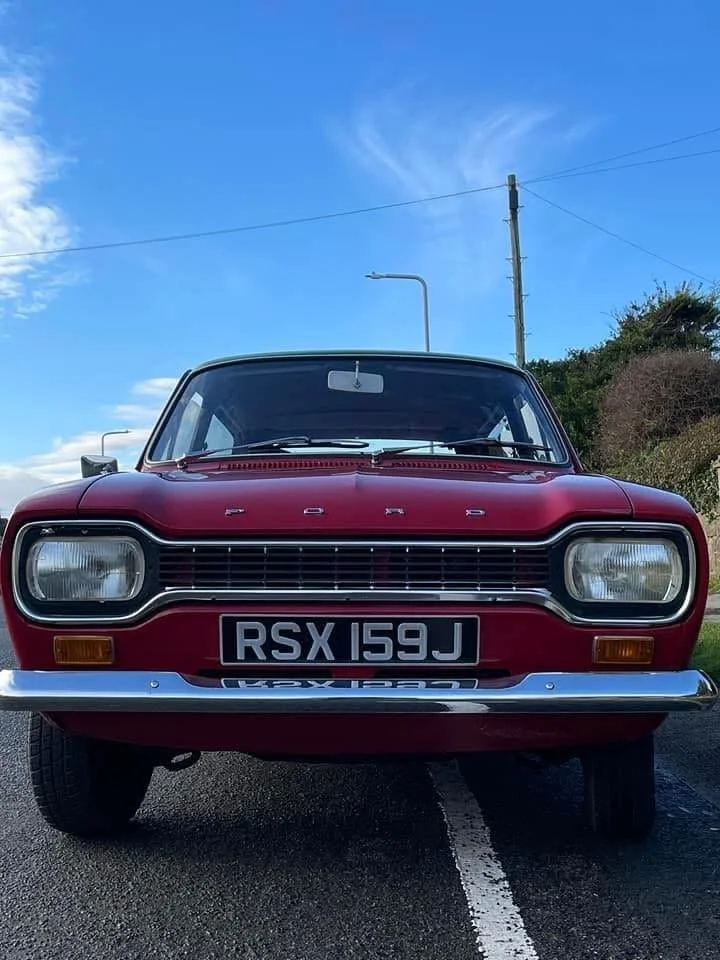
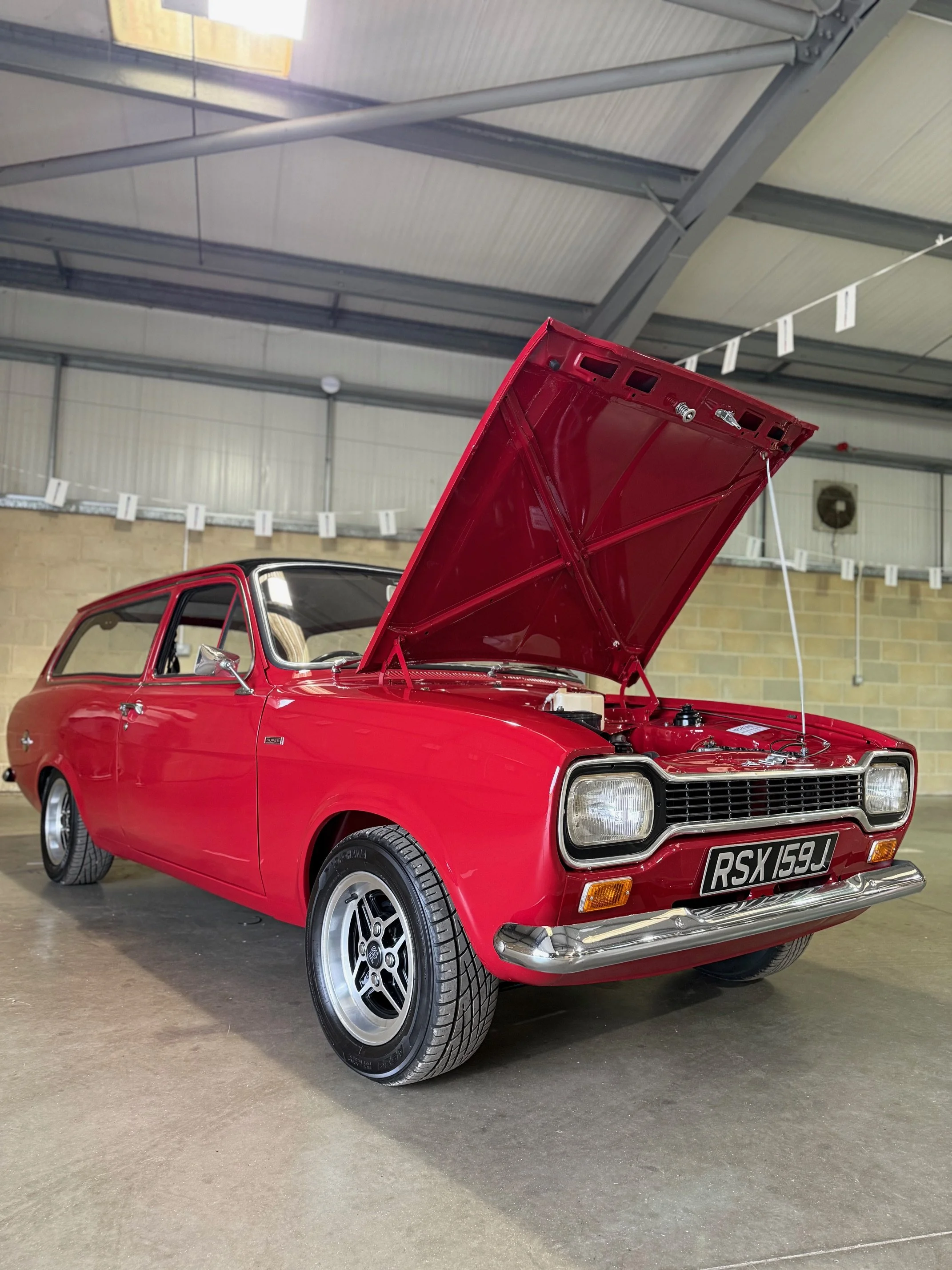
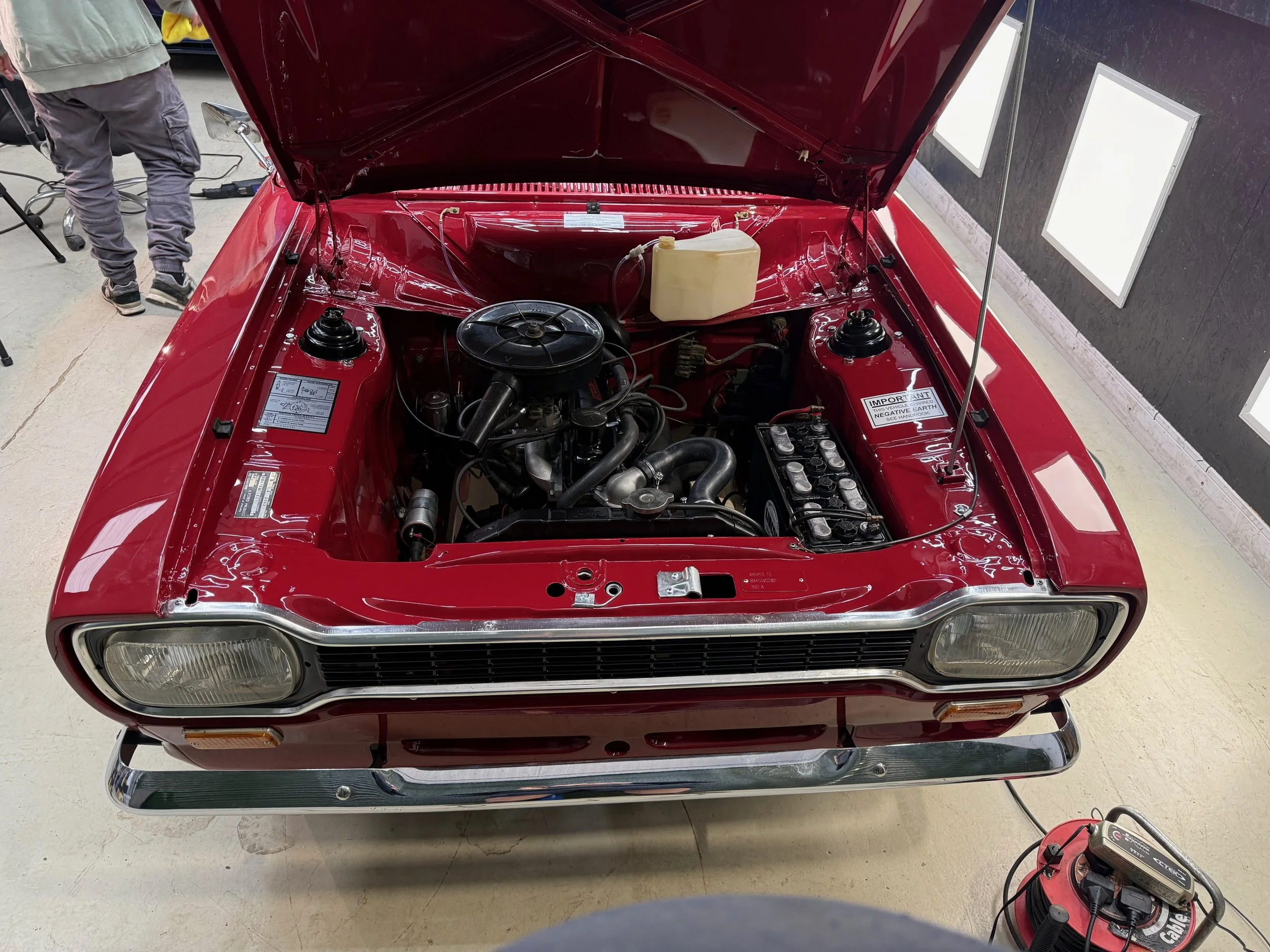
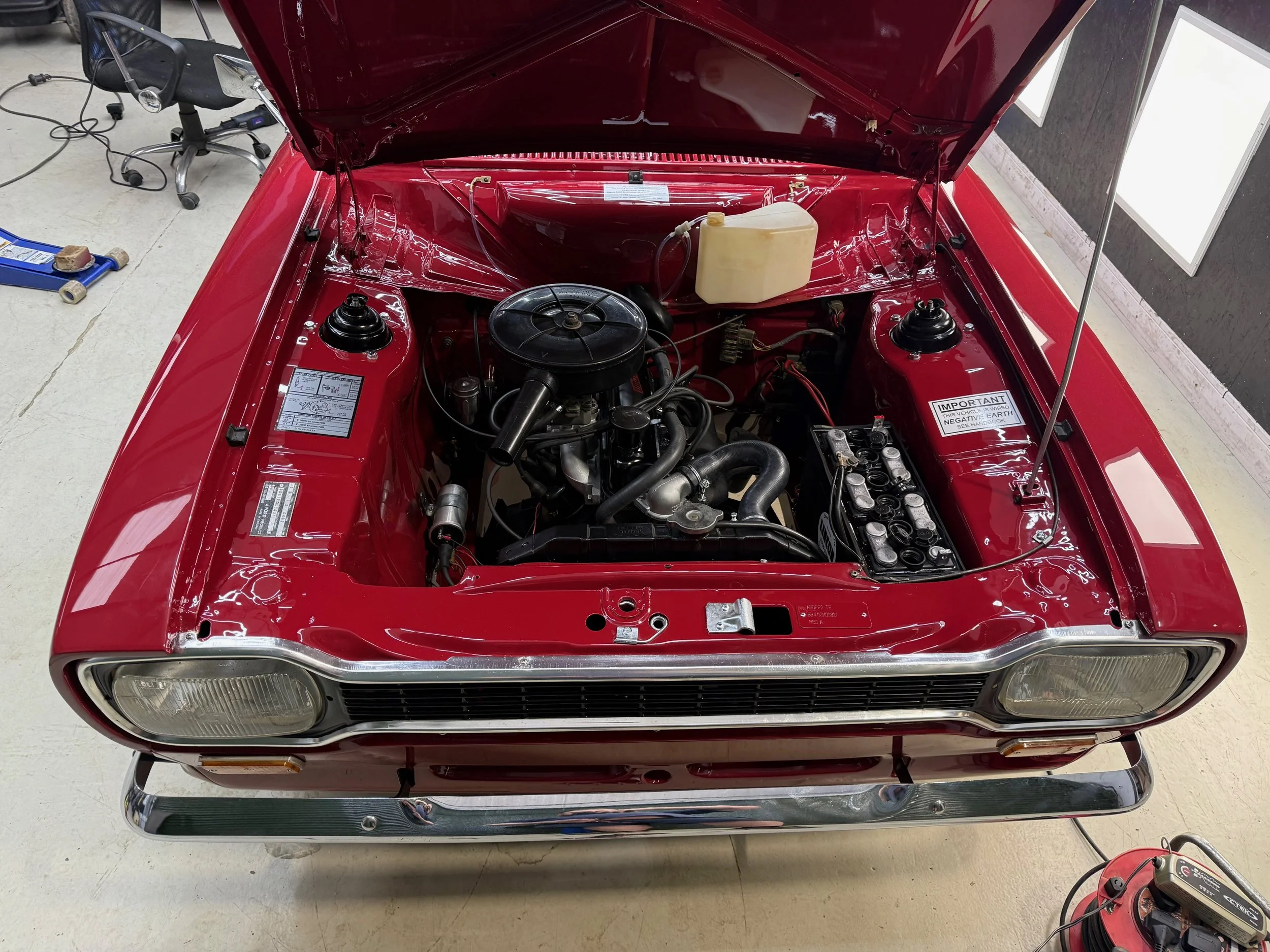
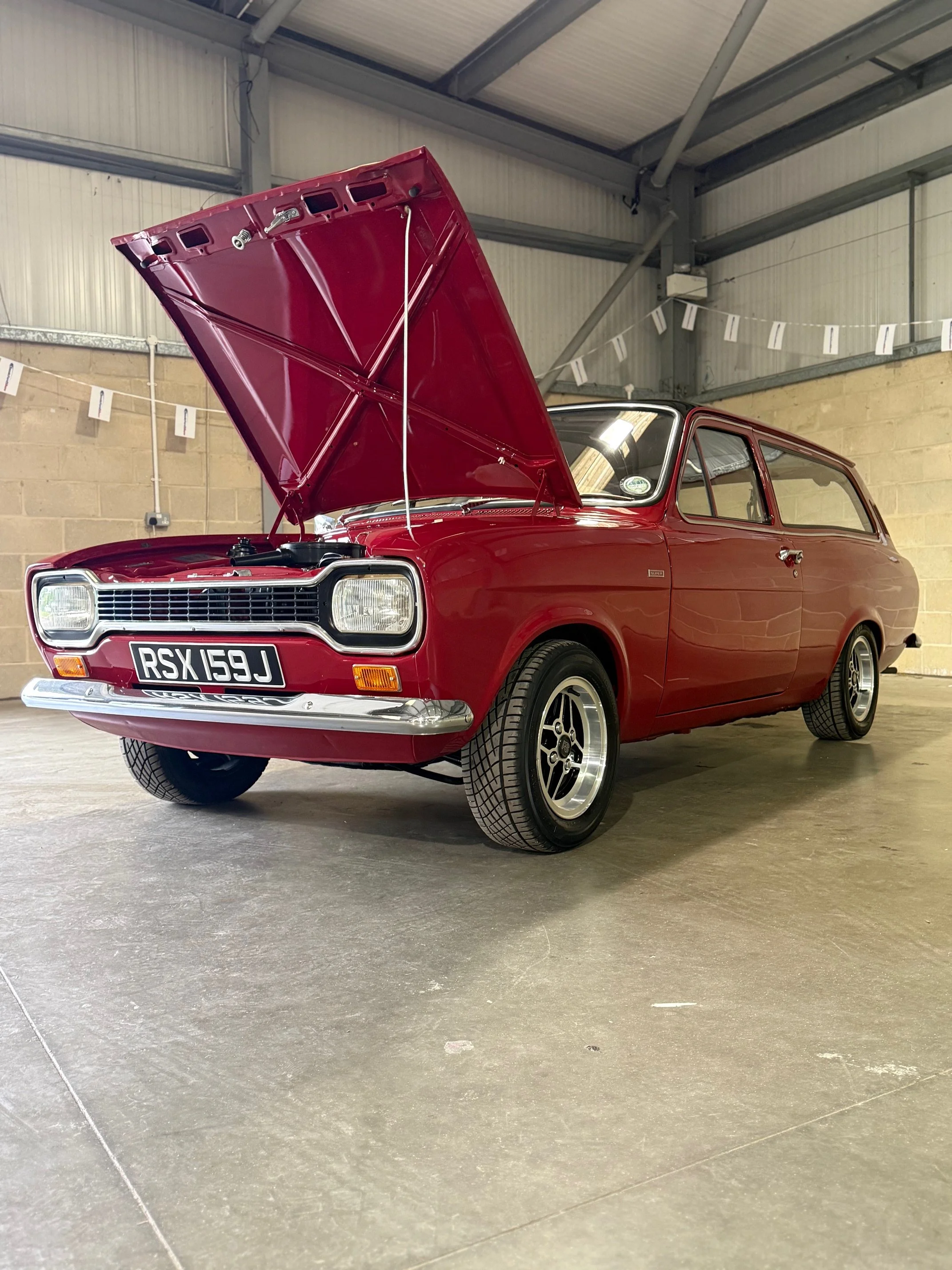
1970 ford escort 1100 super estate.
At Precision Panel Craft, we dedicate a considerable amount of time to research, understanding the original manufacturing techniques and paying particular attention to even the smallest of details. It is this approach that enables us to achieve an exceptionally high standard of restoration, whilst preserving the originality and character of each vehicle. We take great pride in treating every vehicle entrusted to us as if it were our own.
Since opening our doors in January 2020, our customers’ projects have always taken priority, leaving very little opportunity to undertake a restoration of our own. However, towards the end of 2025 and into the early months of 2026, we were able to dedicate some time around our existing customer commitments to a project particularly close to home – my dads 1973 Ford Escort 1100 Super Estate.
The Escort was purchased in December 2021 by my mother, who is also a director of Precision Panel Craft, as a Christmas present for my father. This particular project holds a special significance for me personally. Both of my parents are responsible for my passion for classic cars and, through their encouragement, influence and continued support, are the reason Precision Panel Craft is here today.
Having covered just 64,000 miles, the Escort retained a remarkable amount of its original character and charm. From the outset, the intention was to carry out a sympathetic restoration, retaining as much of the original vehicle as possible rather than replacing components unnecessarily.
Metalwork Restoration
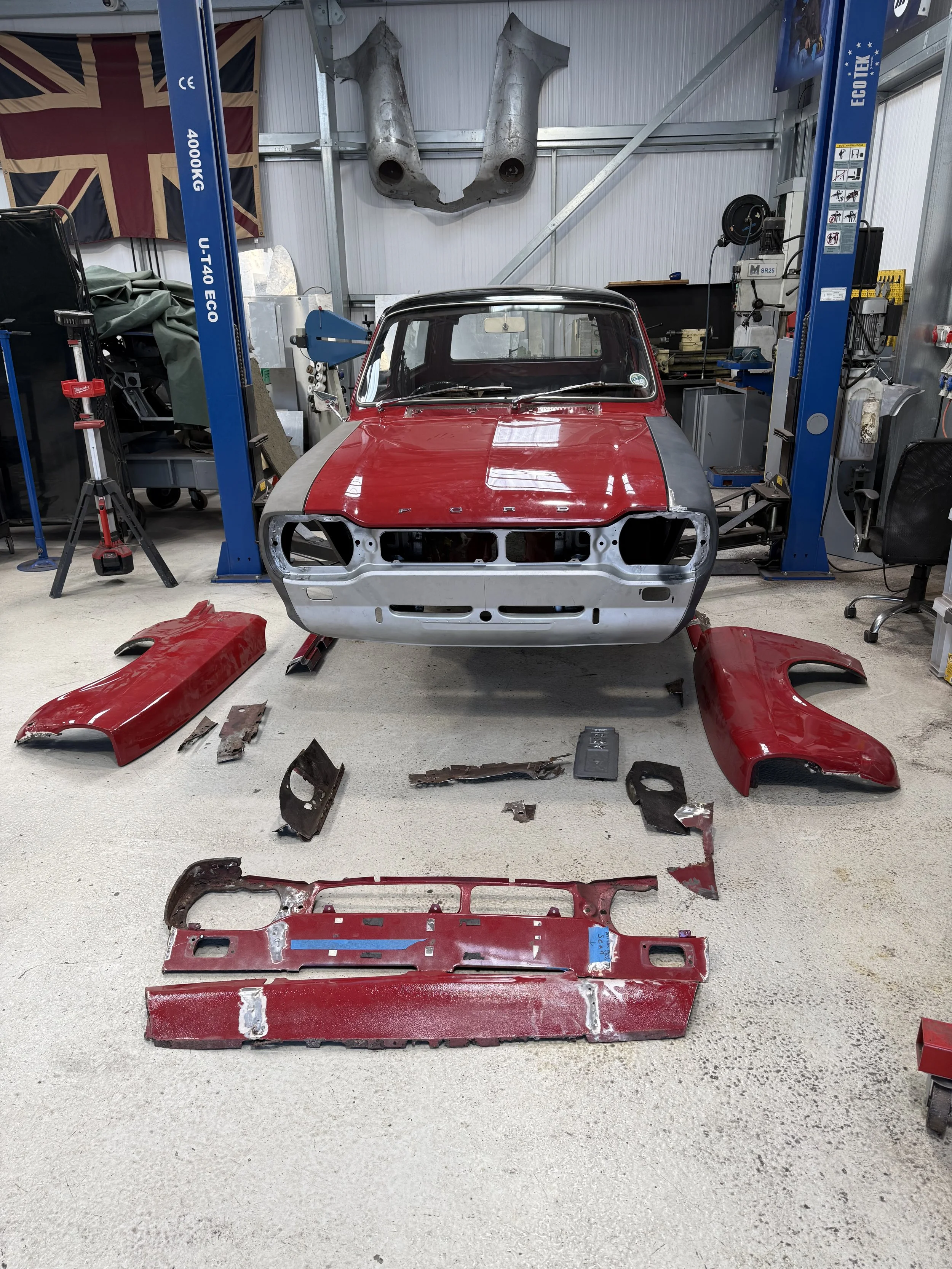
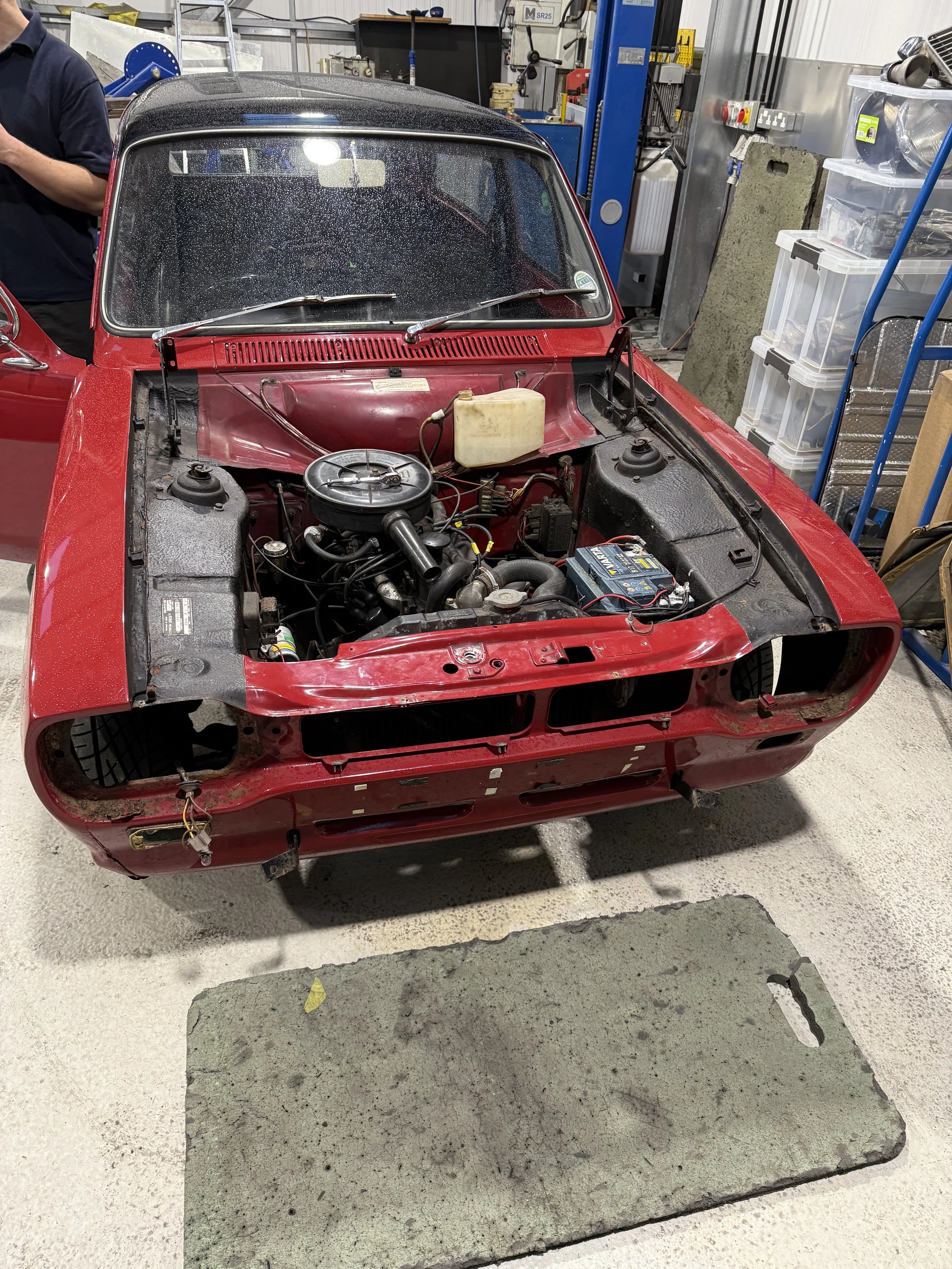
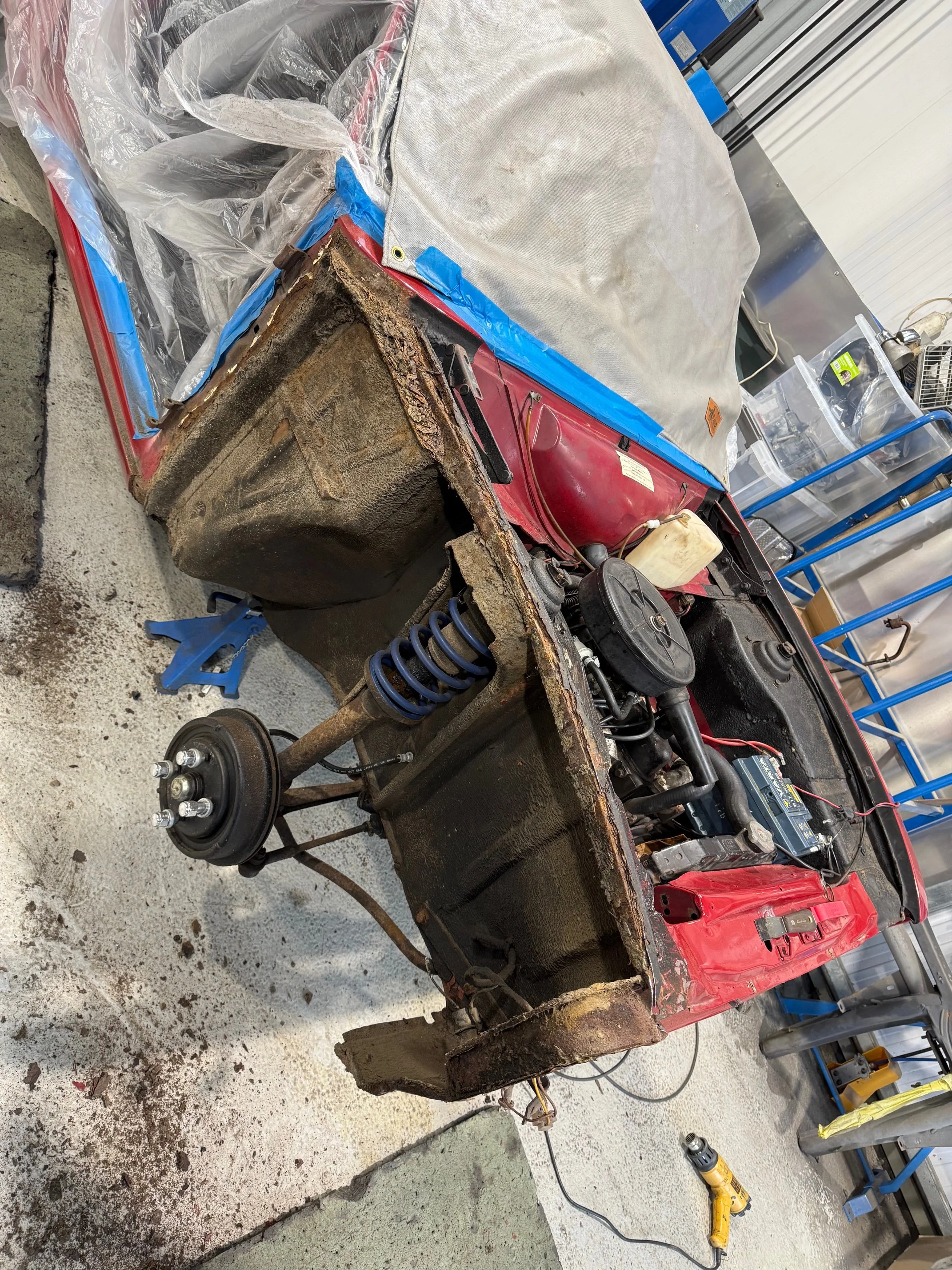
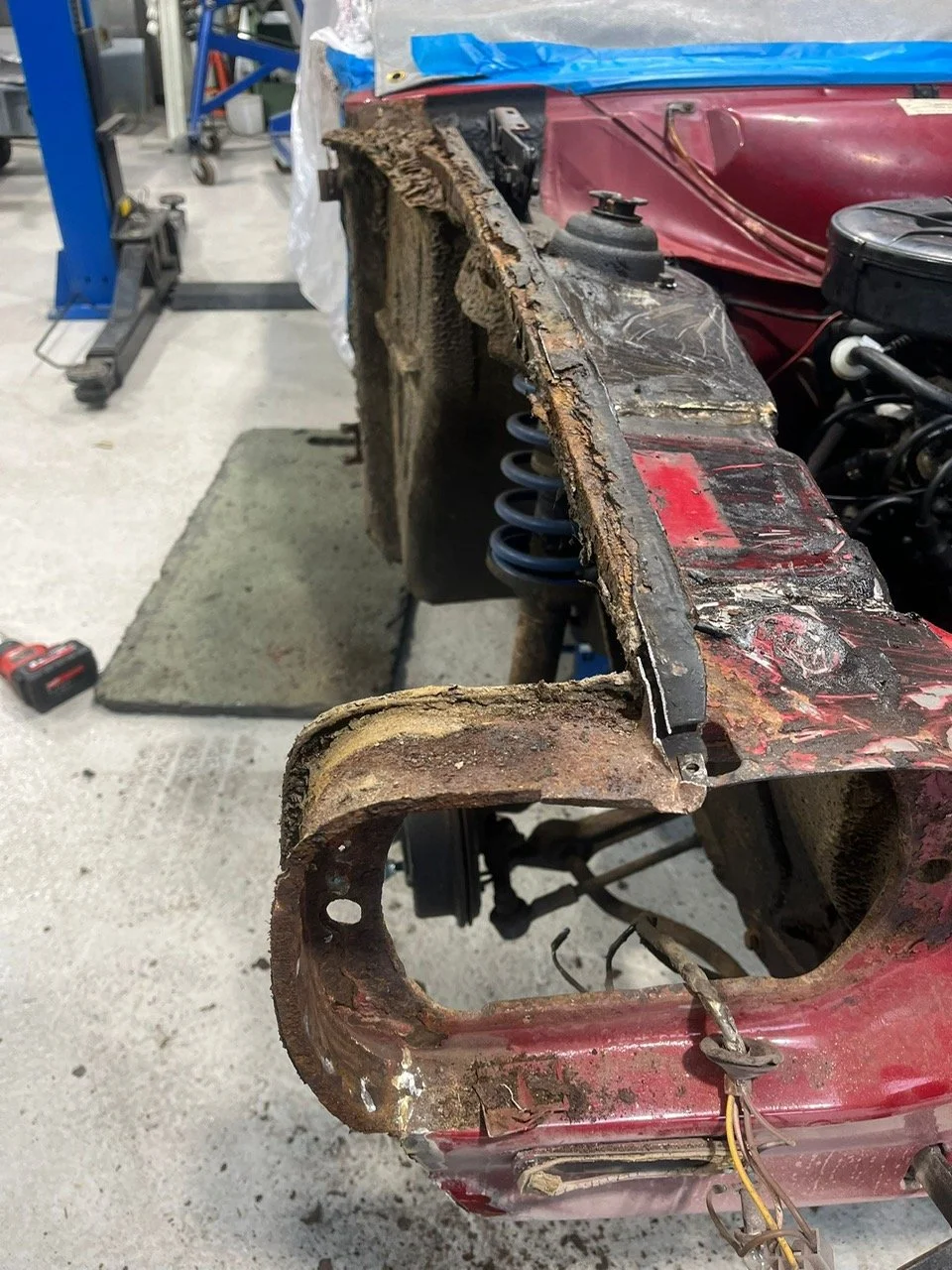
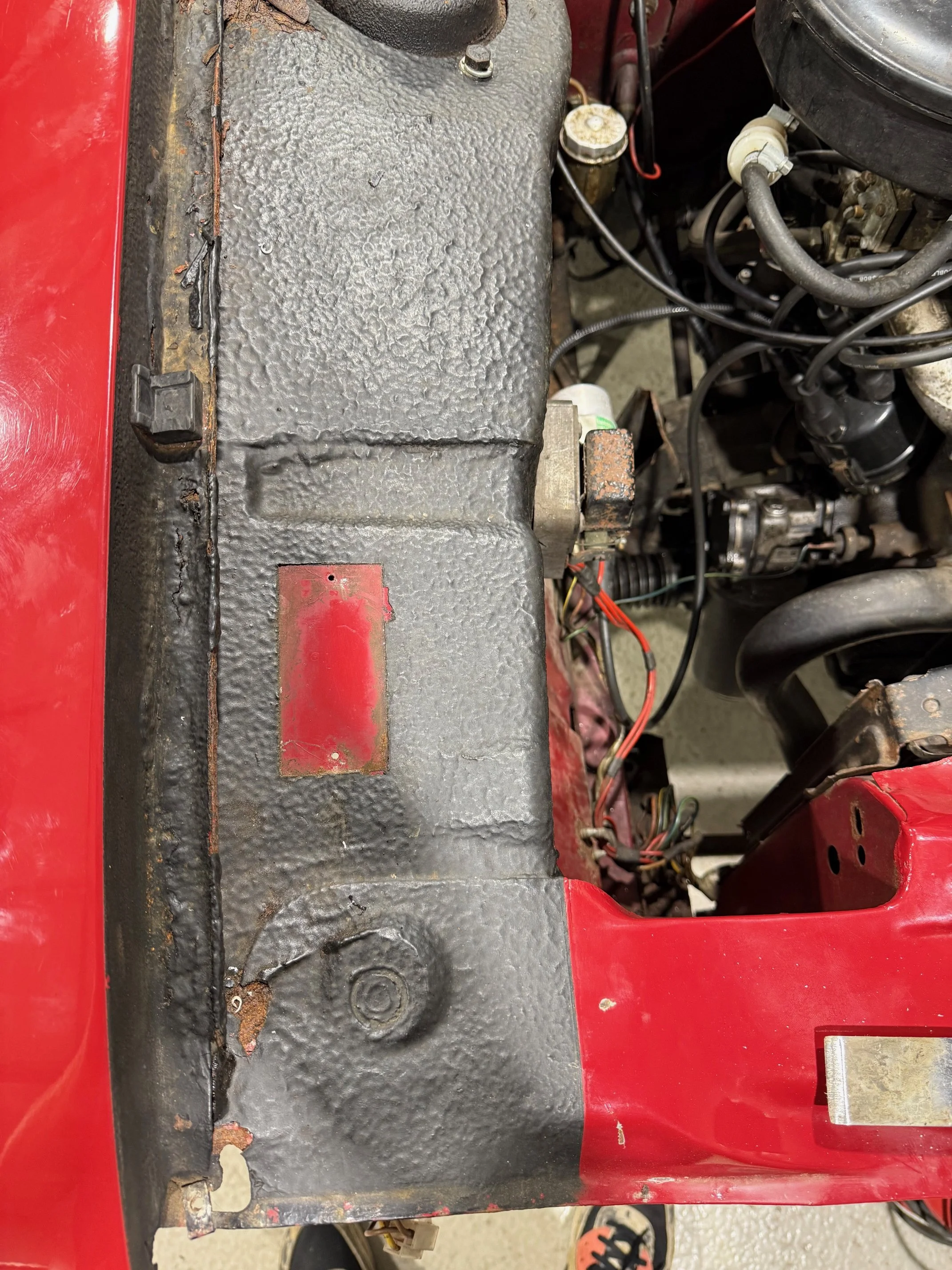
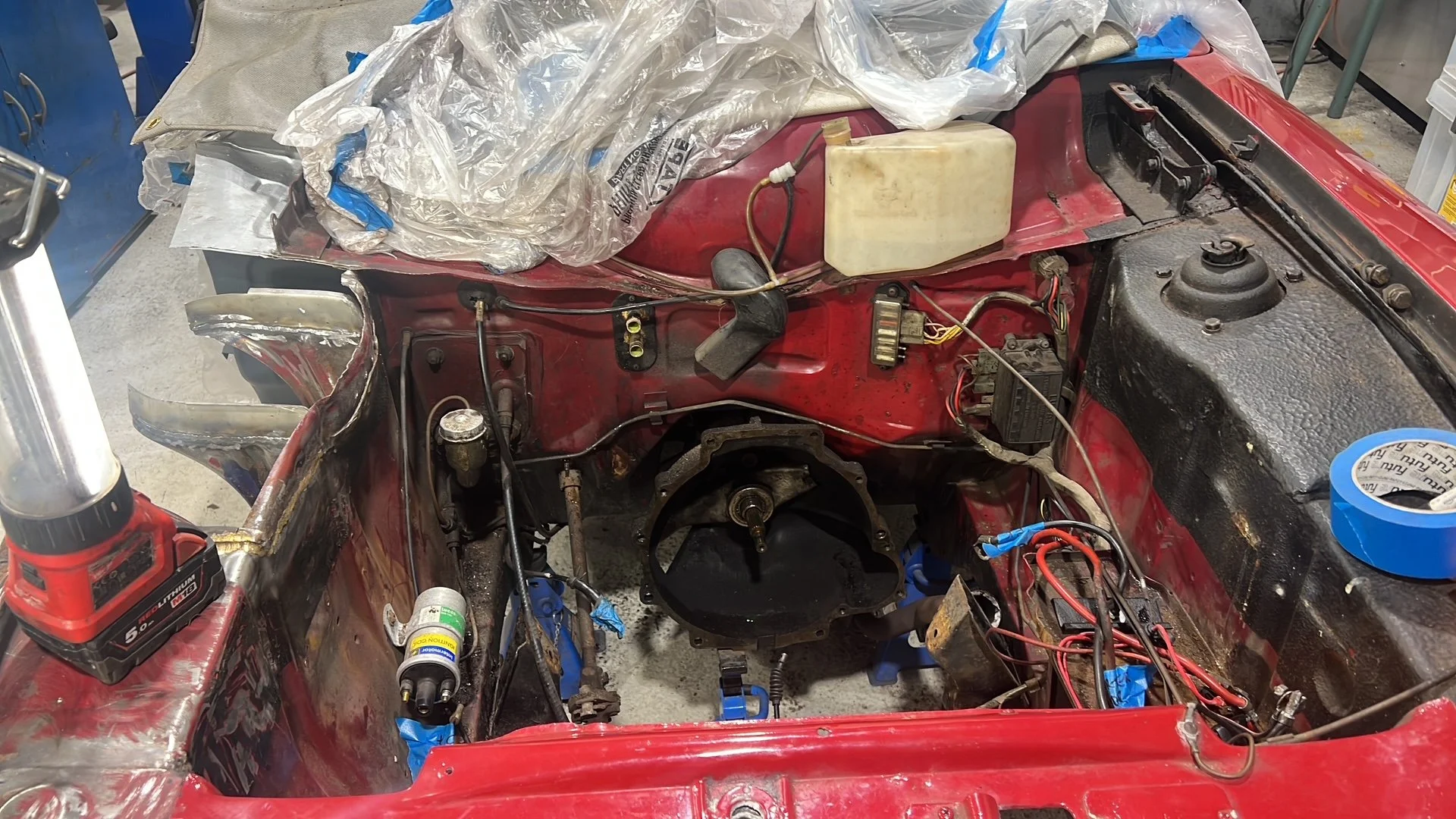
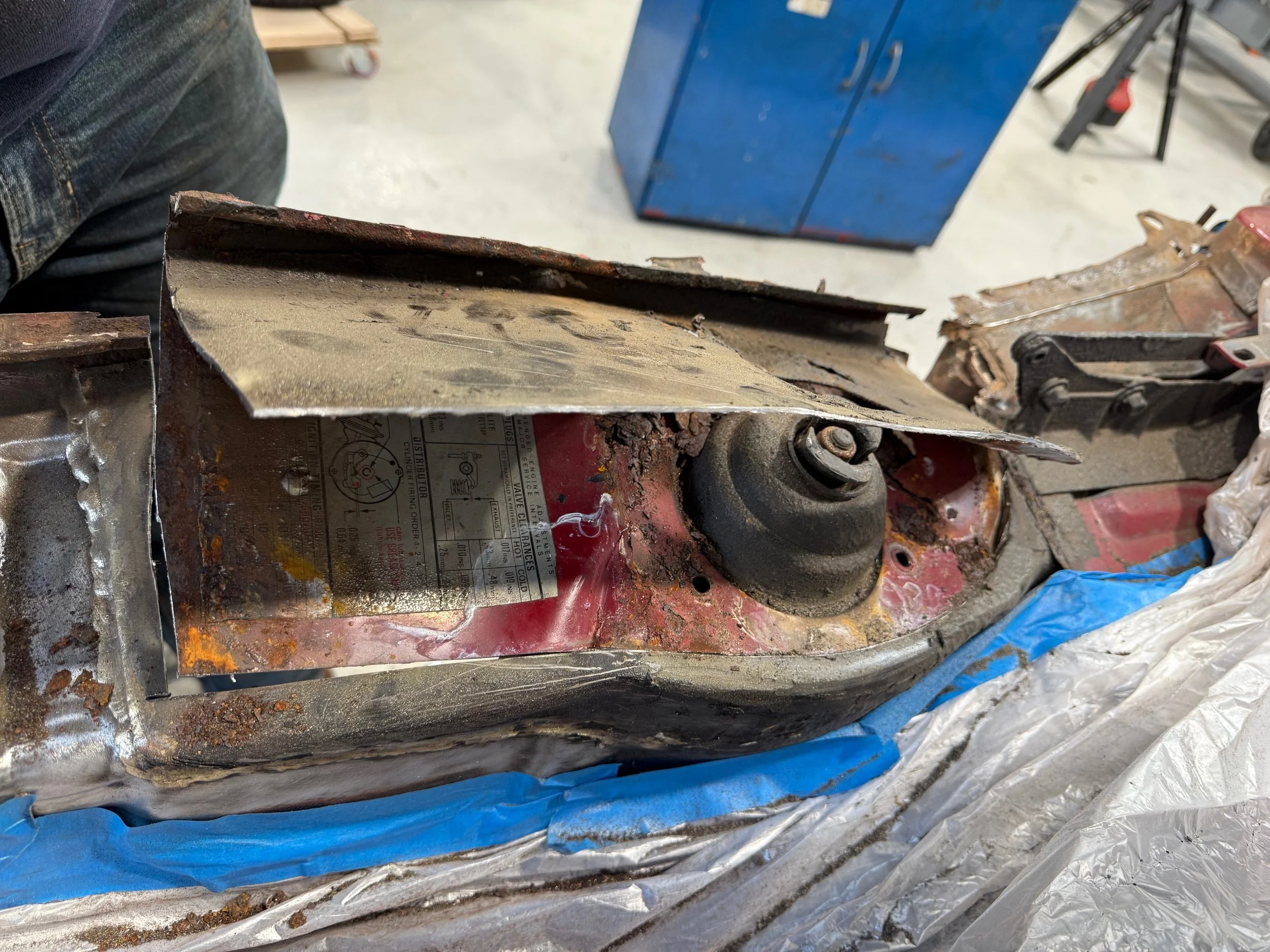
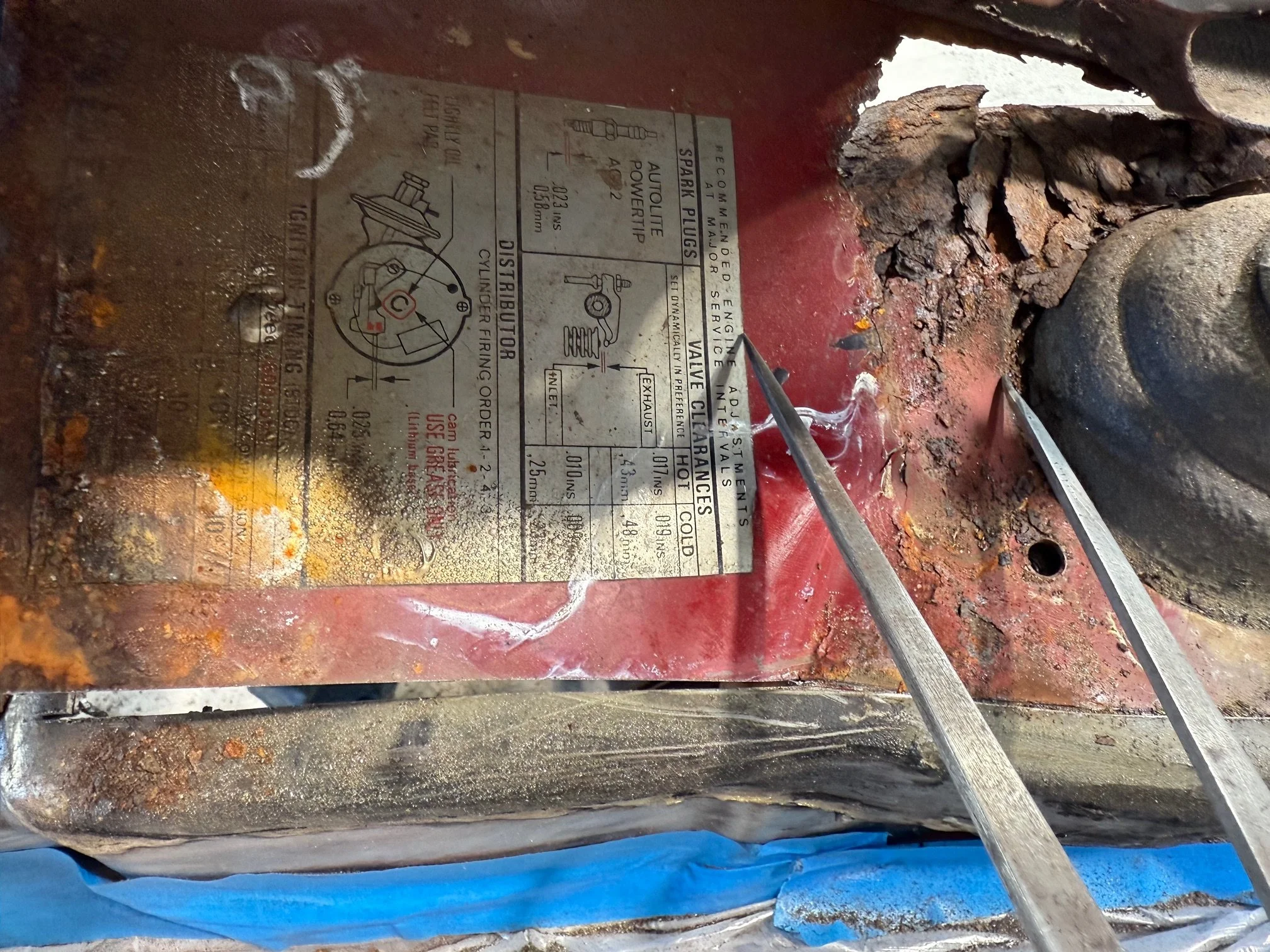
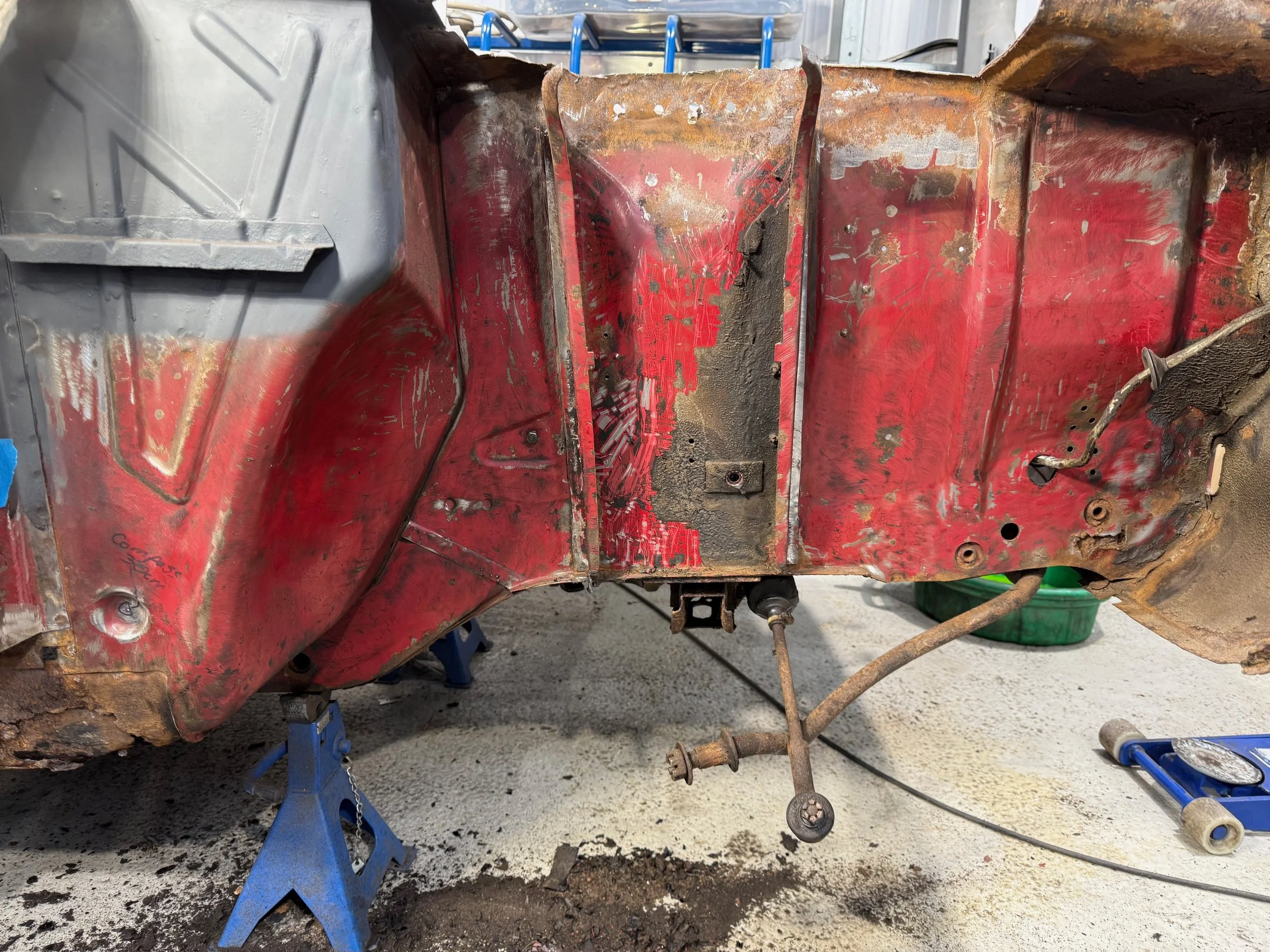
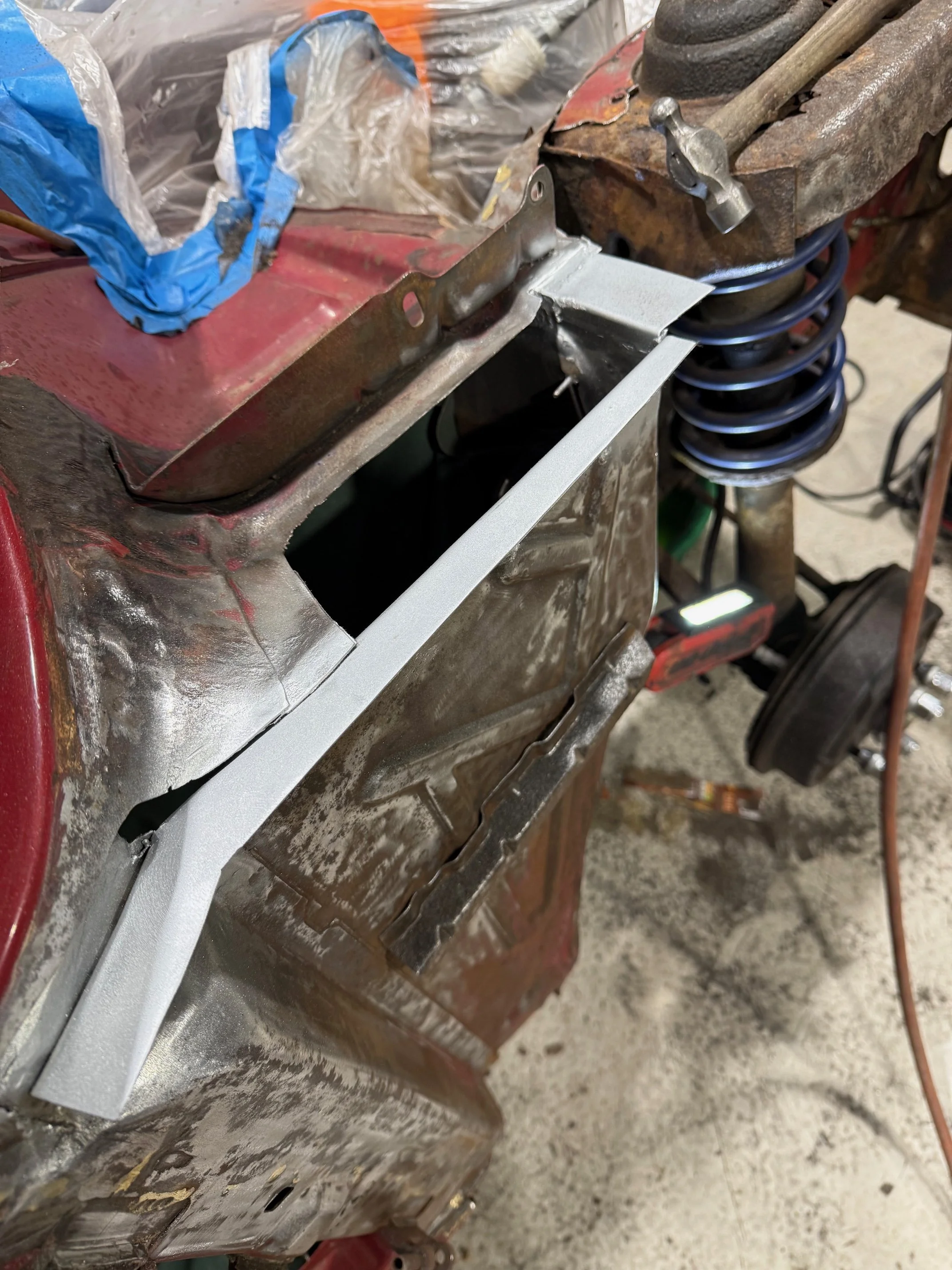
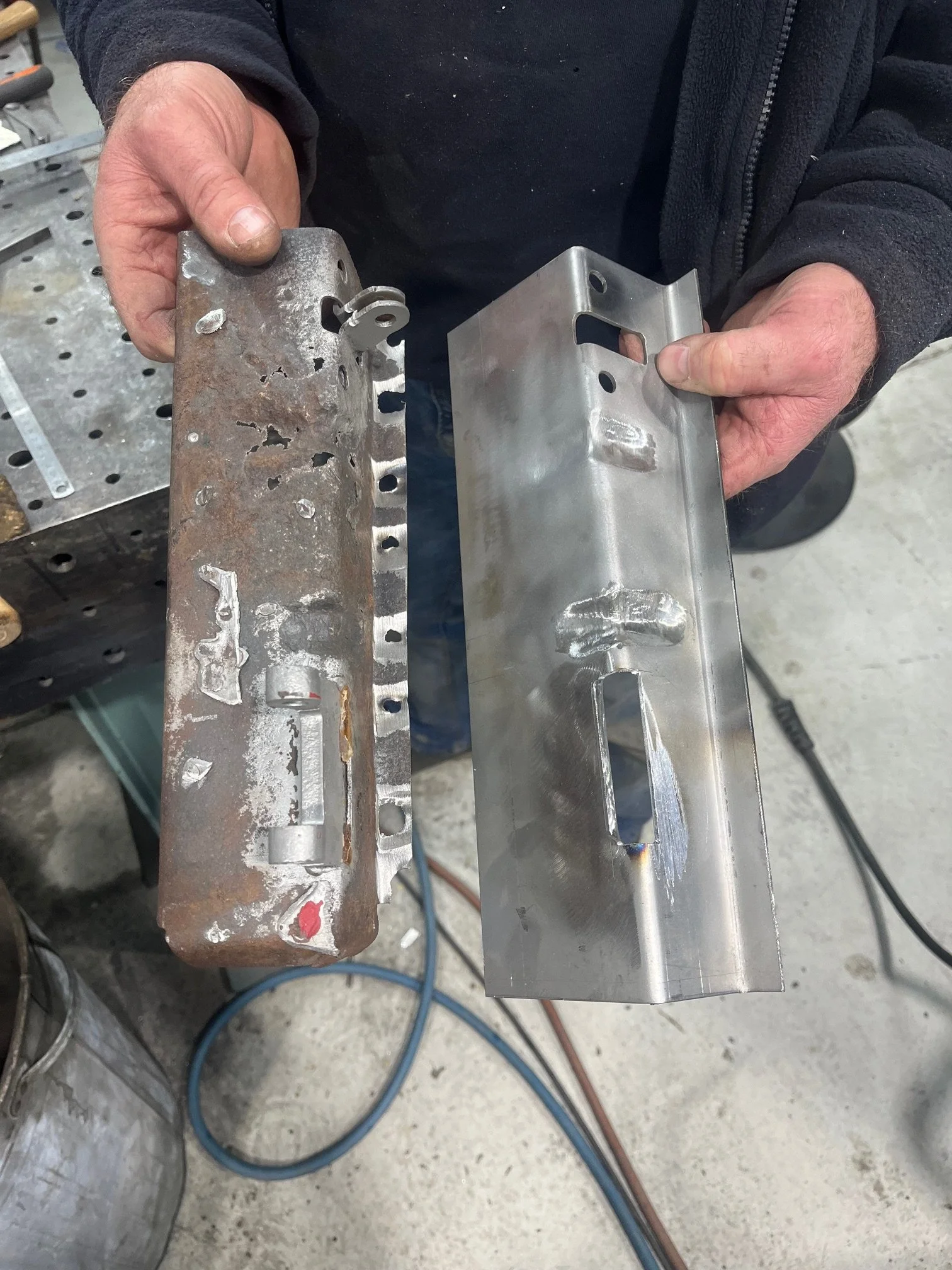
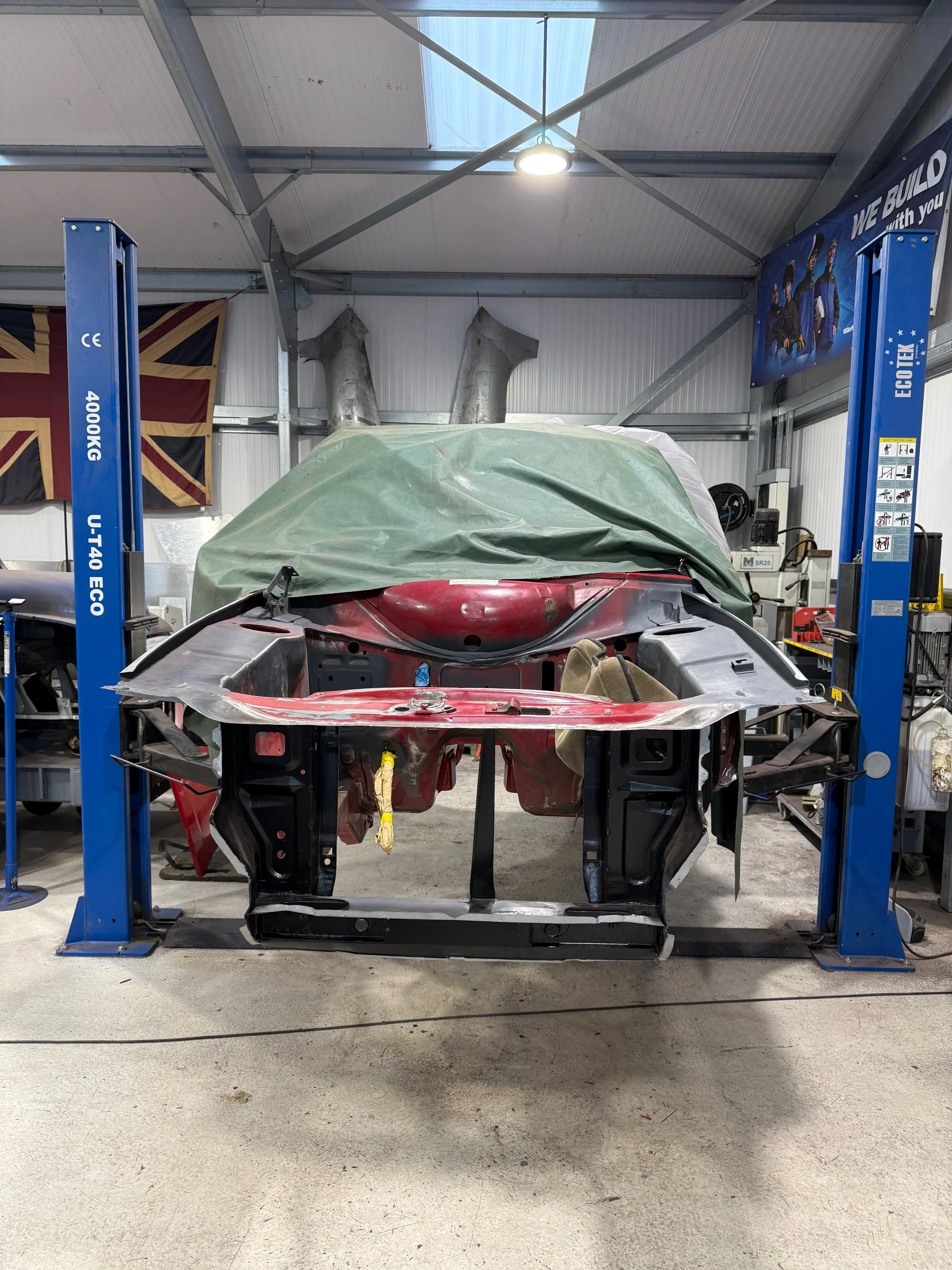
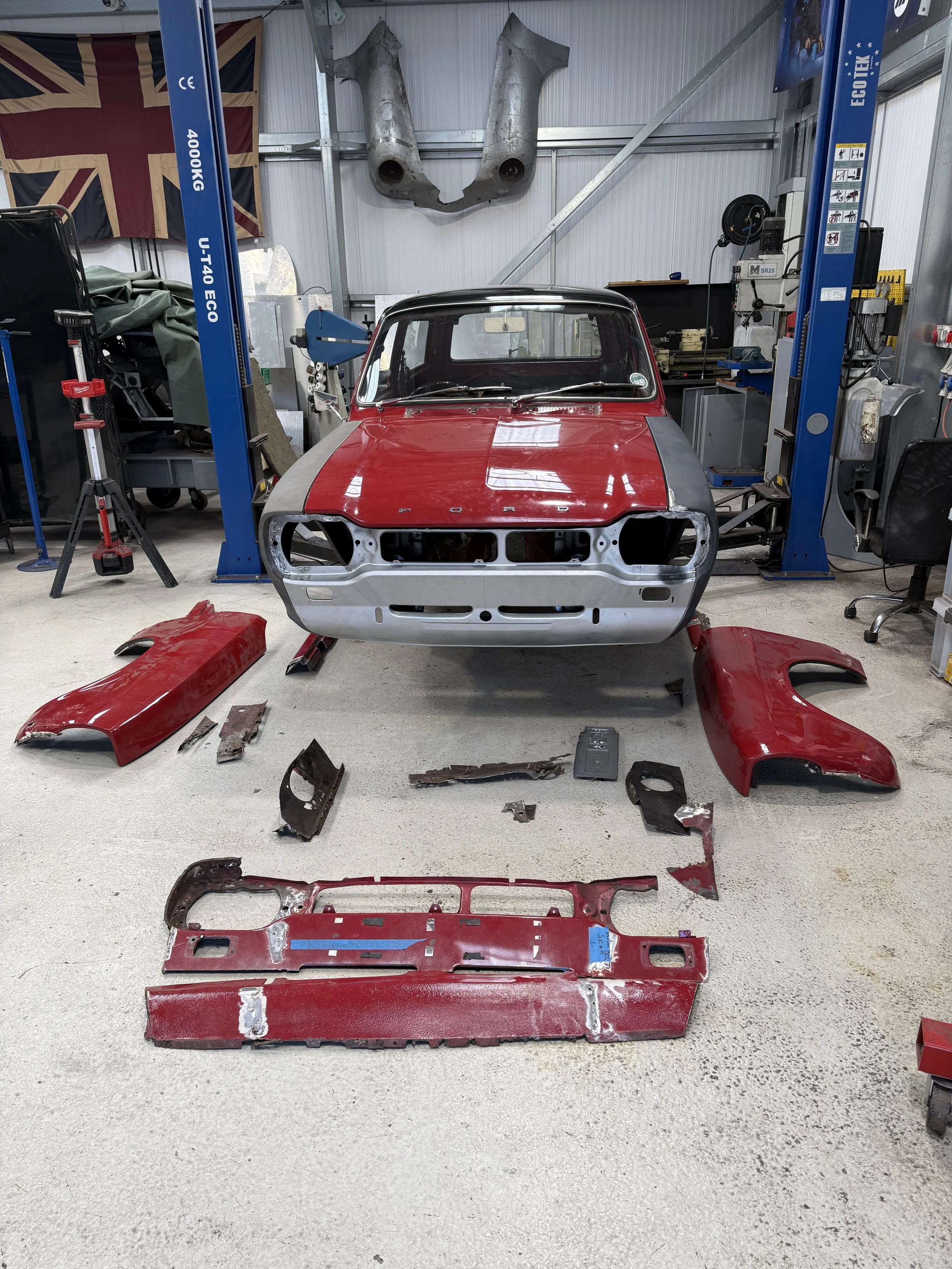
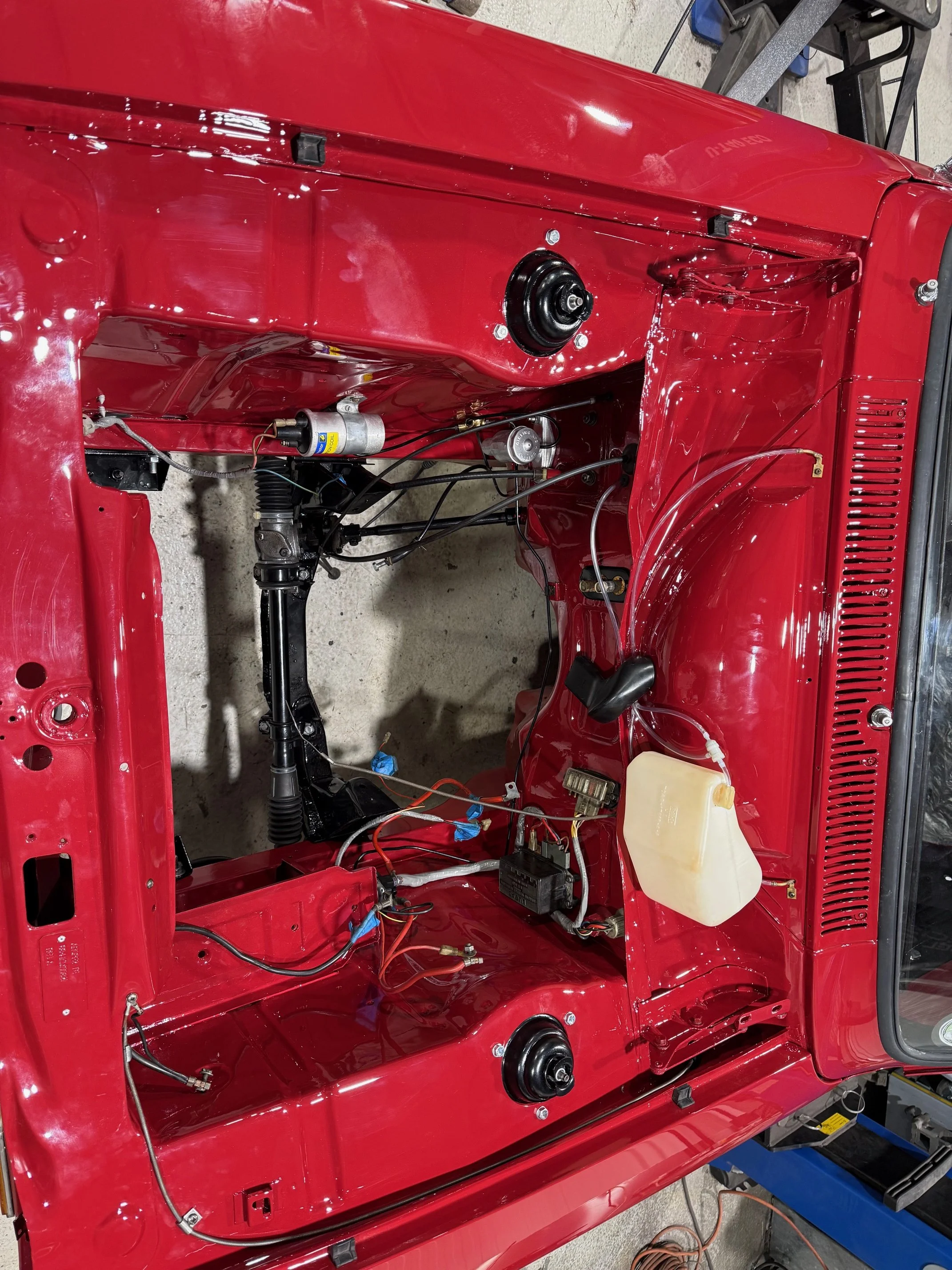
The initial reason for undertaking the restoration was the condition of the front suspension strut top areas , which had previously been concealed beneath underseal within the engine bay – a common area of concern on the Mk1 Escort. Further investigation revealed that more extensive work would be required to restore the front end of the vehicle correctly.
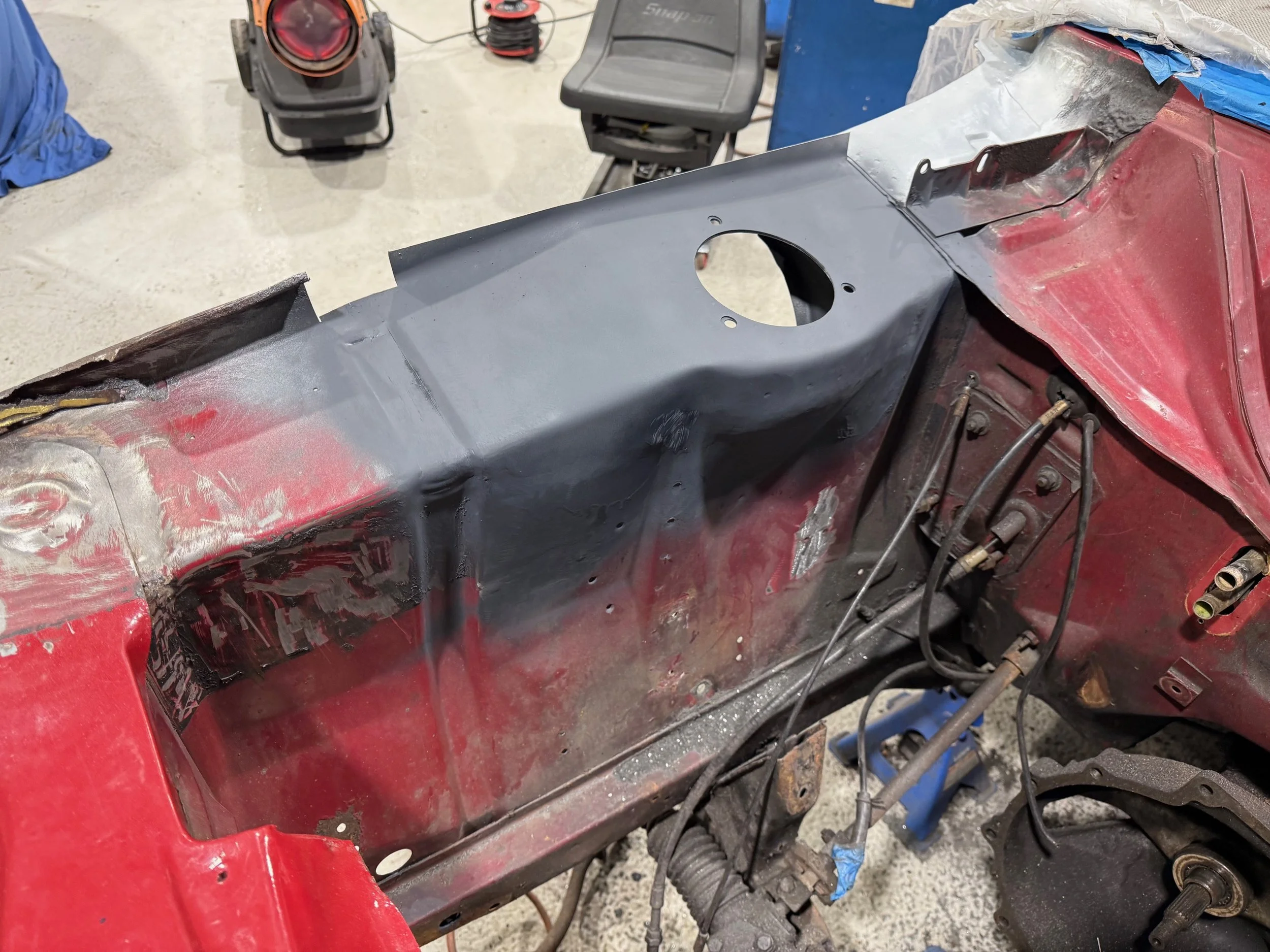
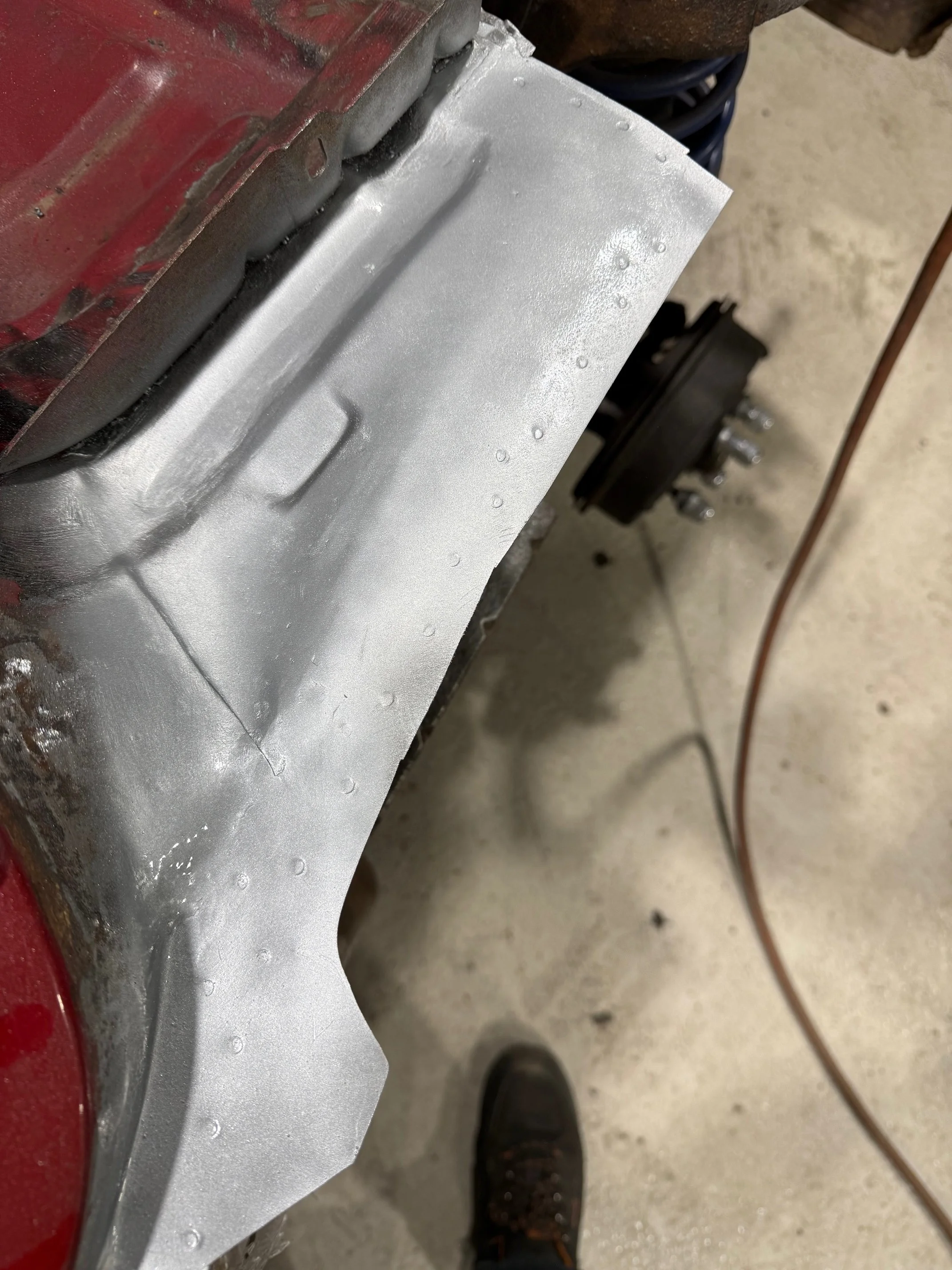
The affected areas of the strut tops were carefully removed, including the original suspension mounting sections, allowing the suspension towers to be thoroughly cleaned and prepared. New sections were manufactured in-house to replicate the original construction, before the original suspension mounting sections were reinstated and welded back into position.
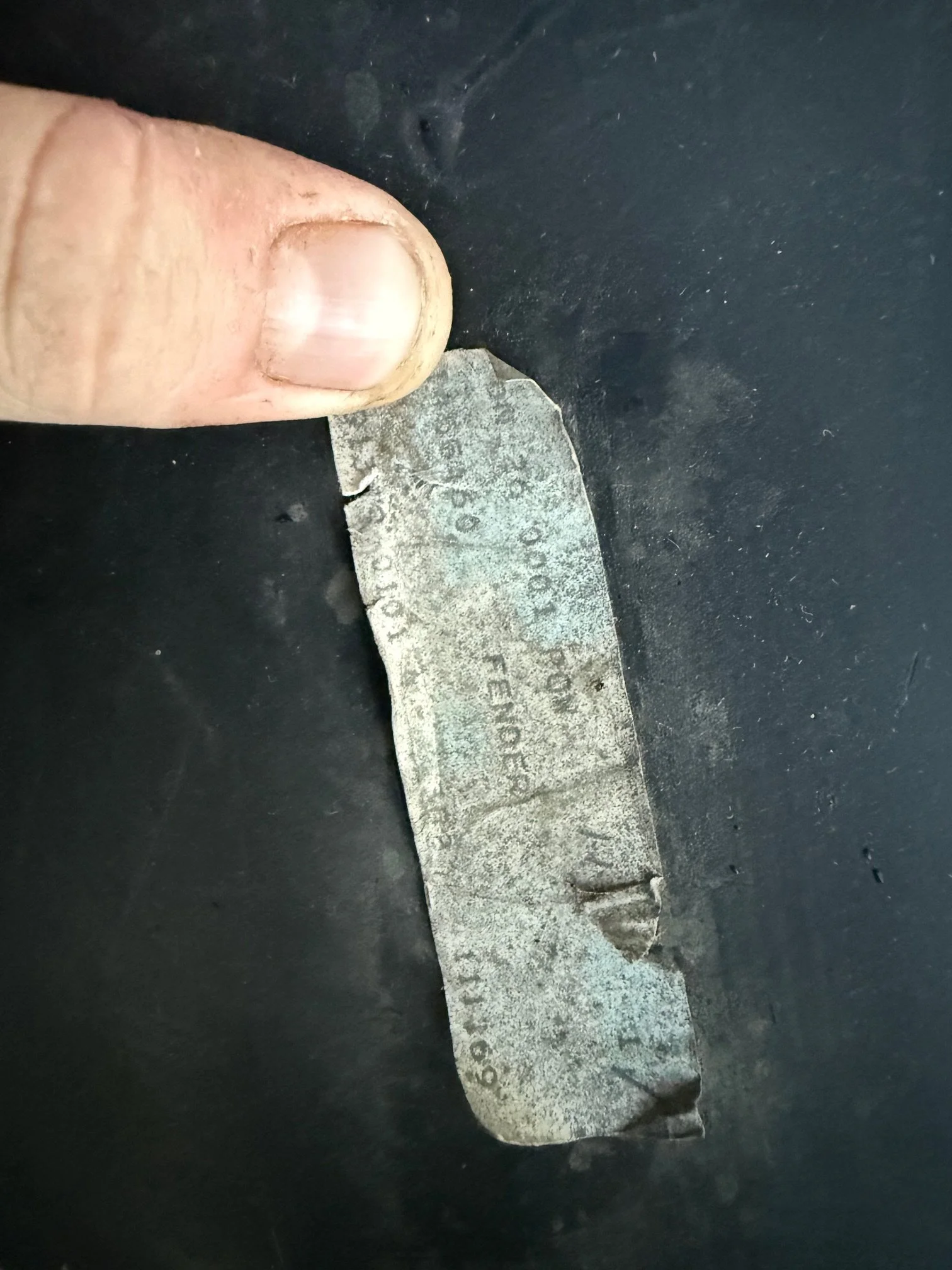
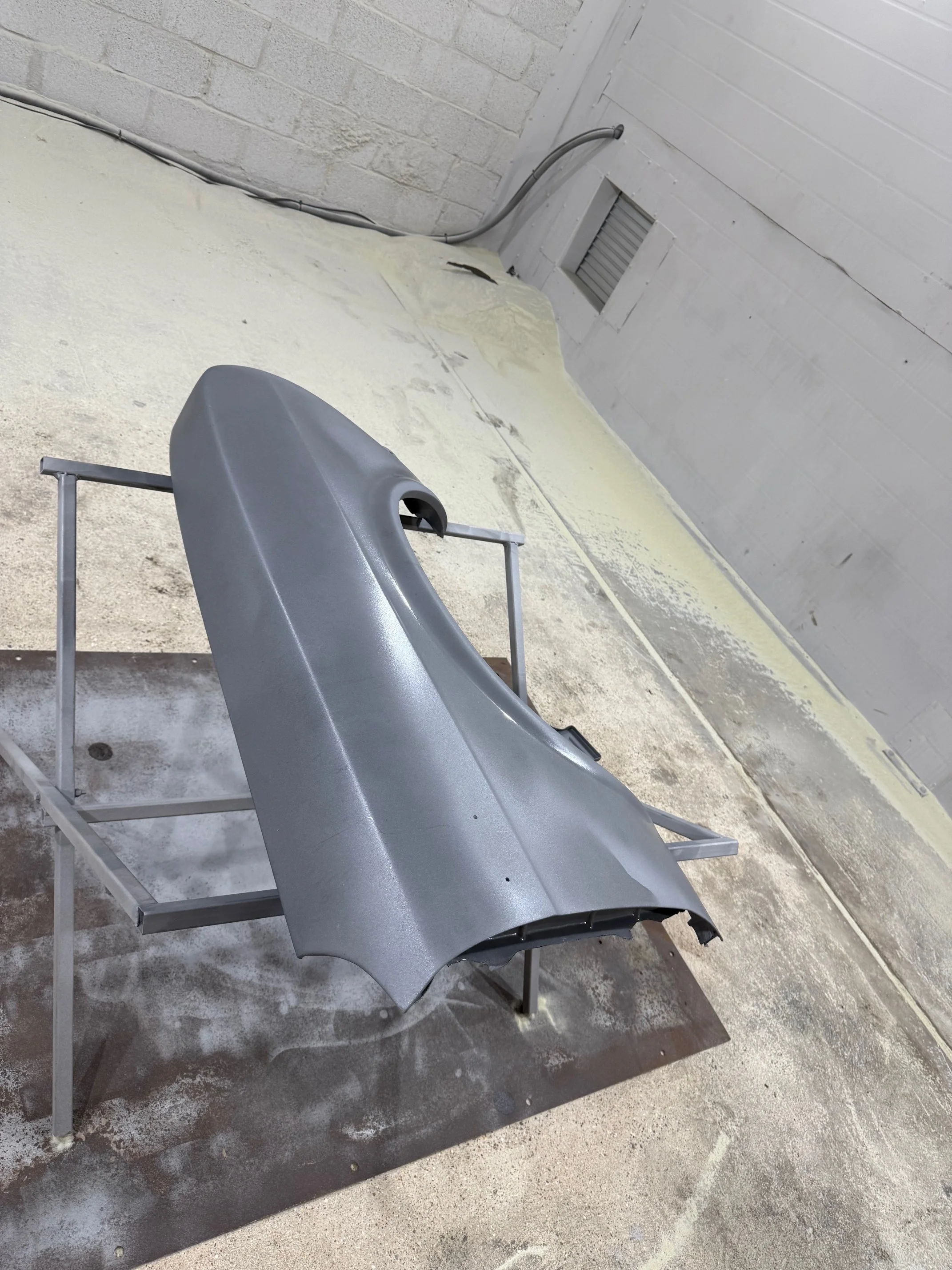
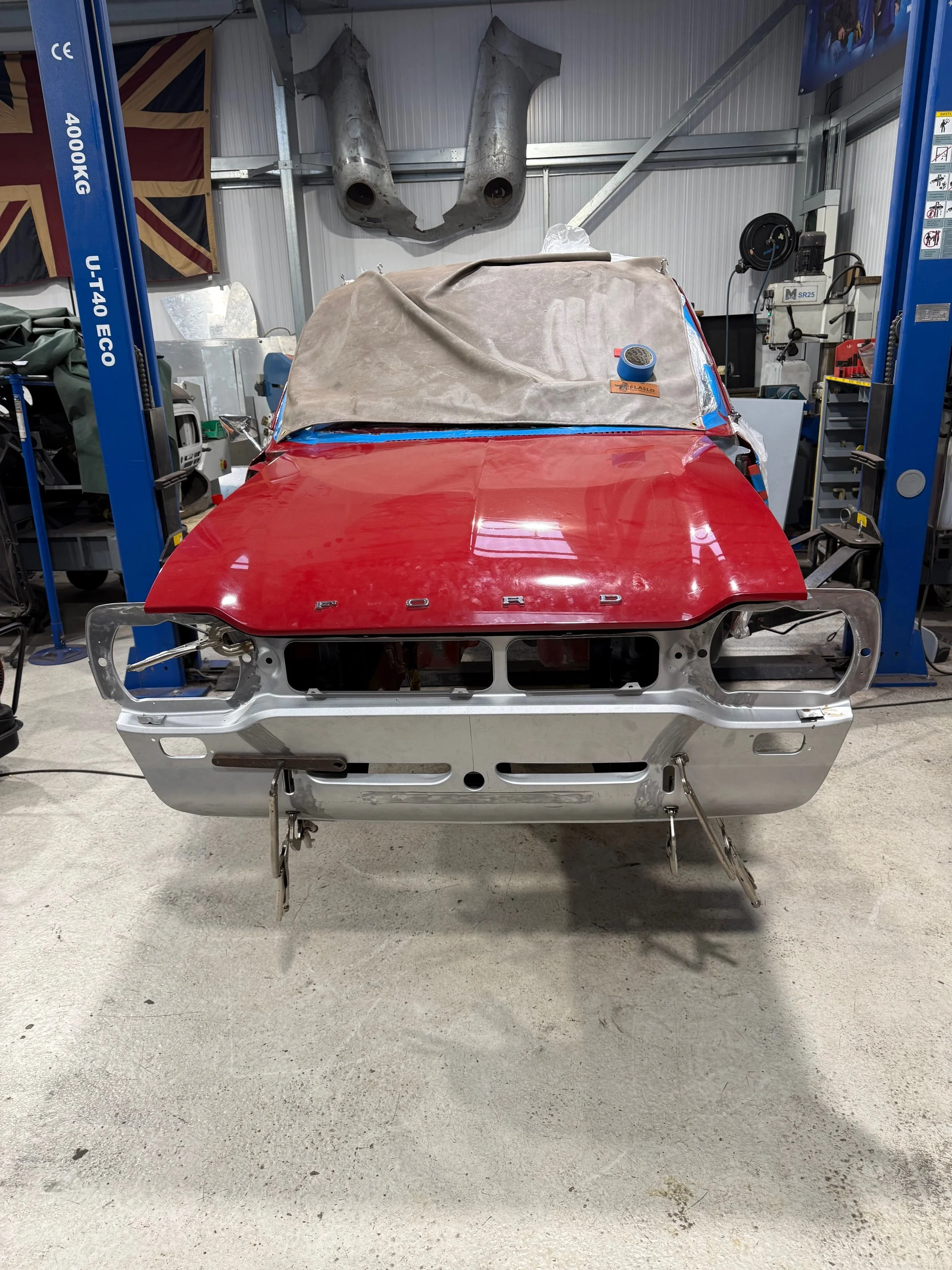
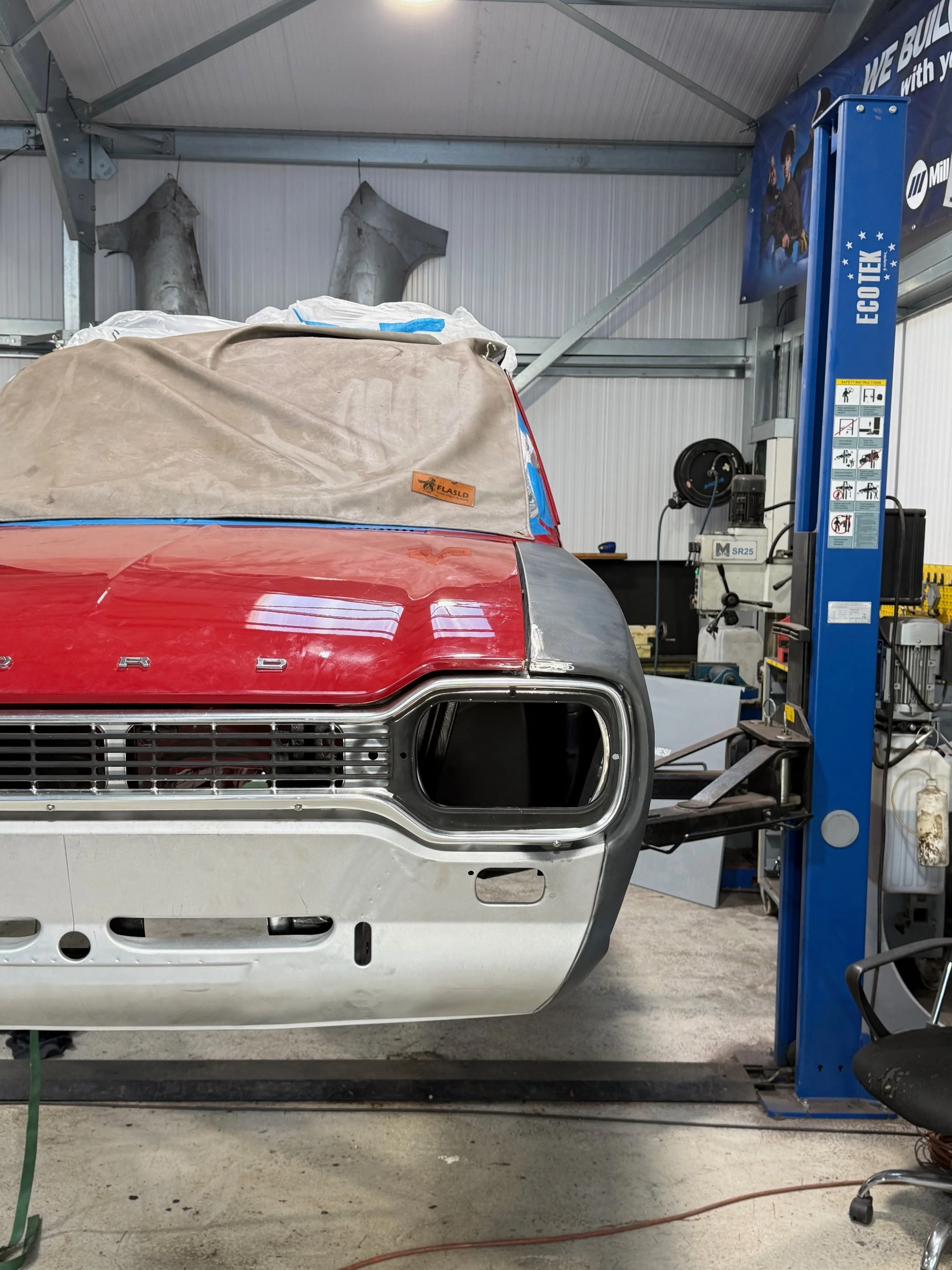
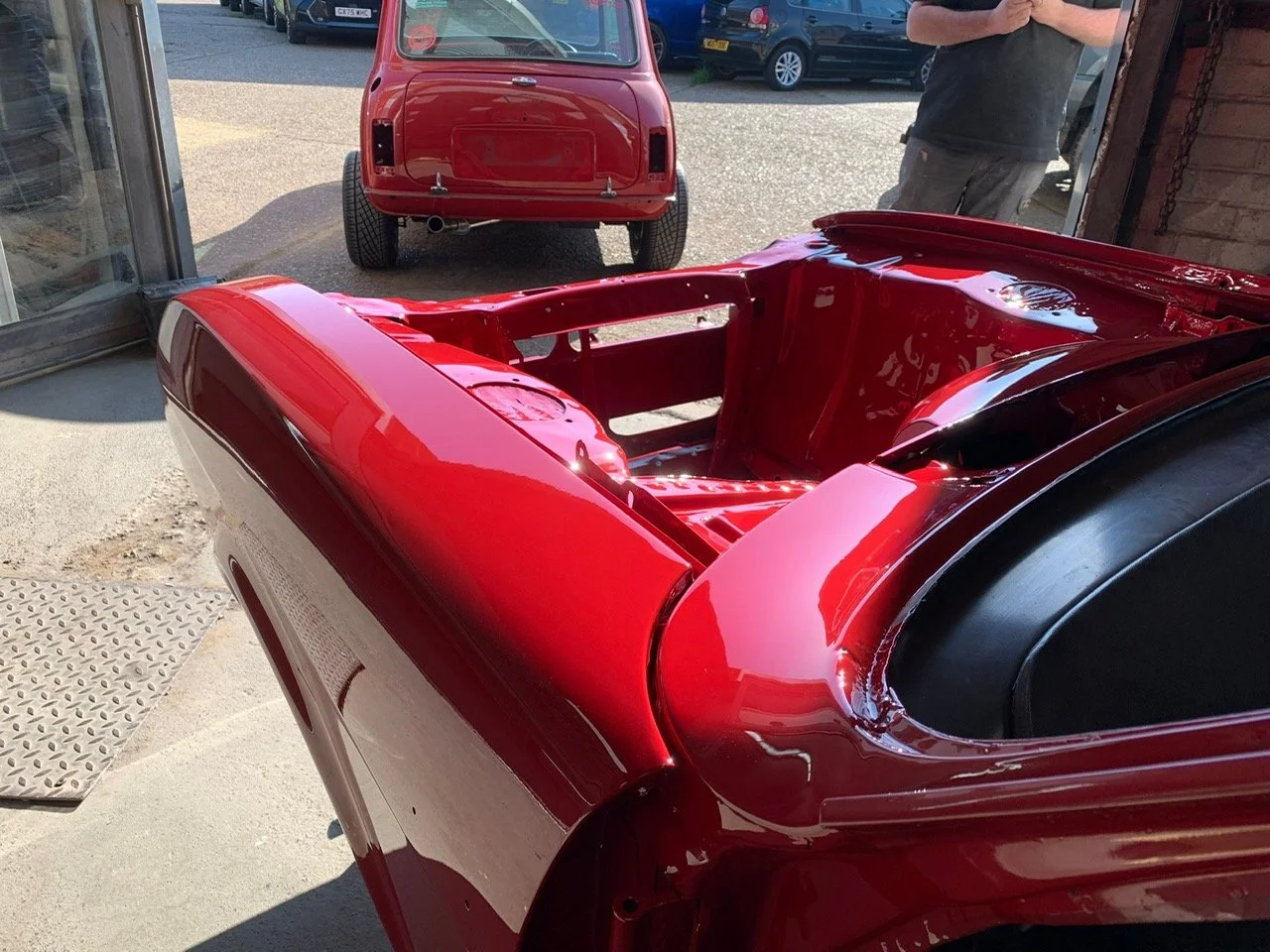
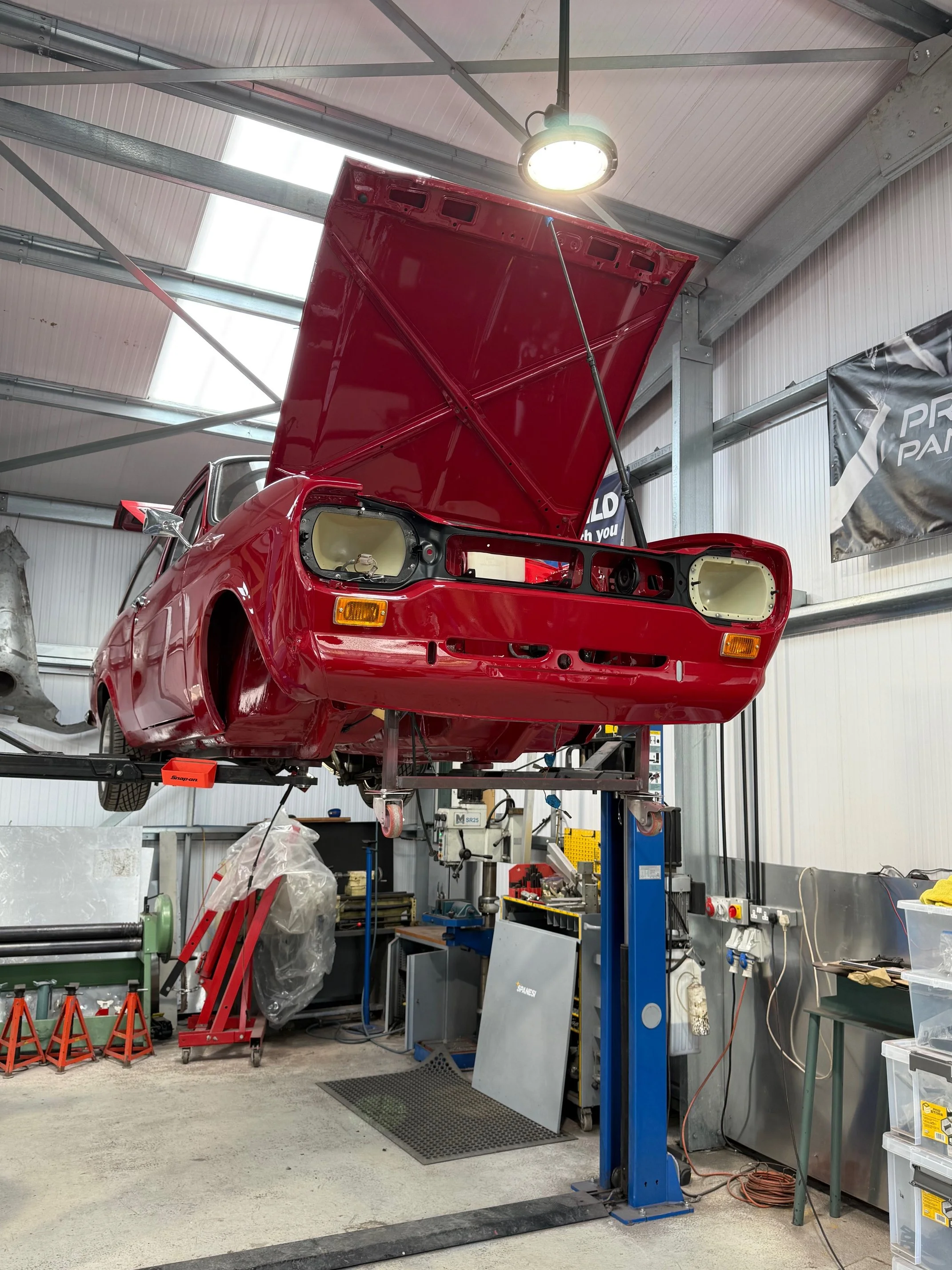
Two genuine new old stock Ford front wings were sourced for the restoration. Alongside a particularly good reproduction front panel manufactured by Magnum which was sourced from Turbo Breakers in Bournemouth. The original bonnet was in exceptionally good condition, requiring no metalwork restoration, and was therefore retained.
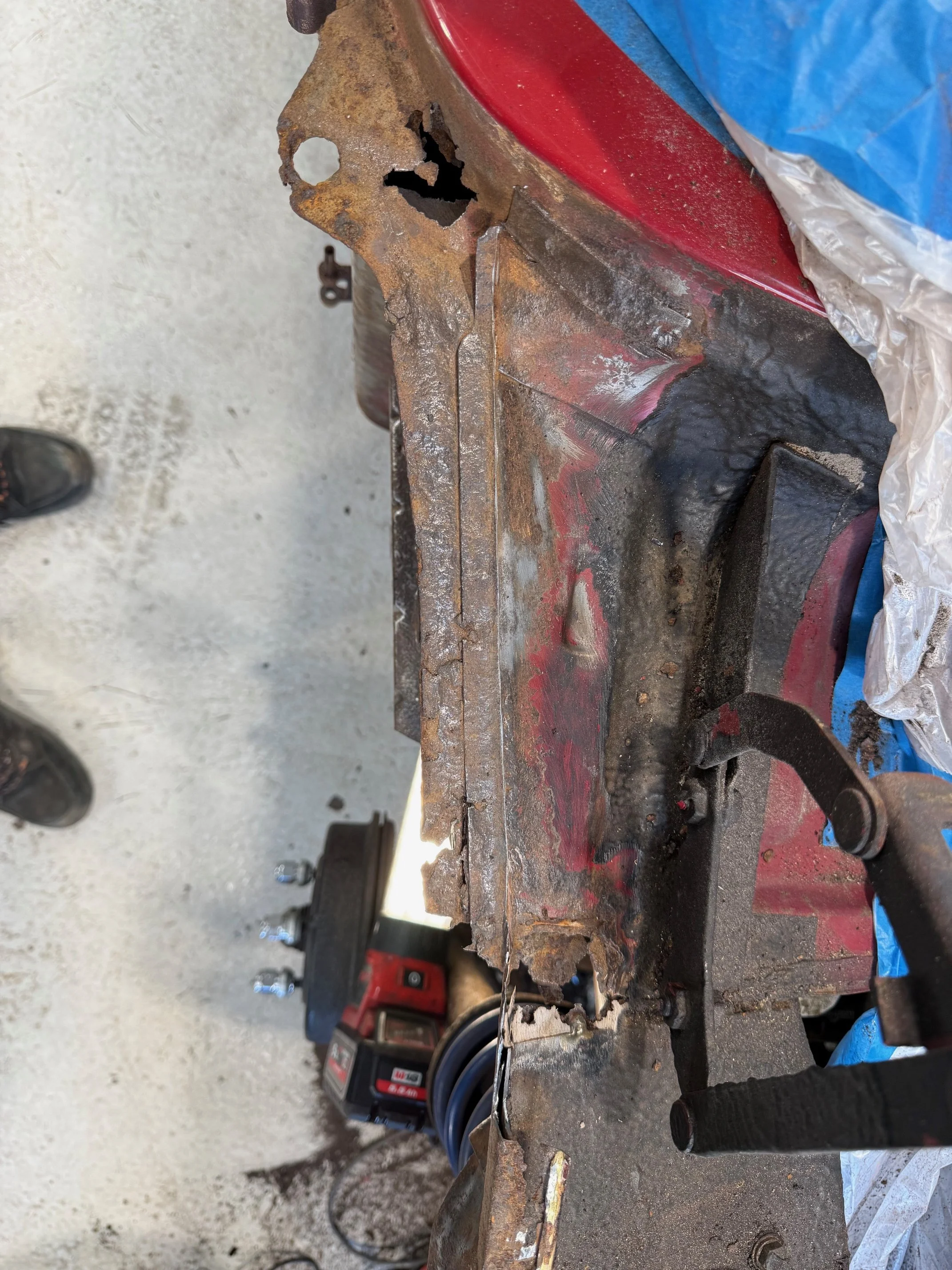
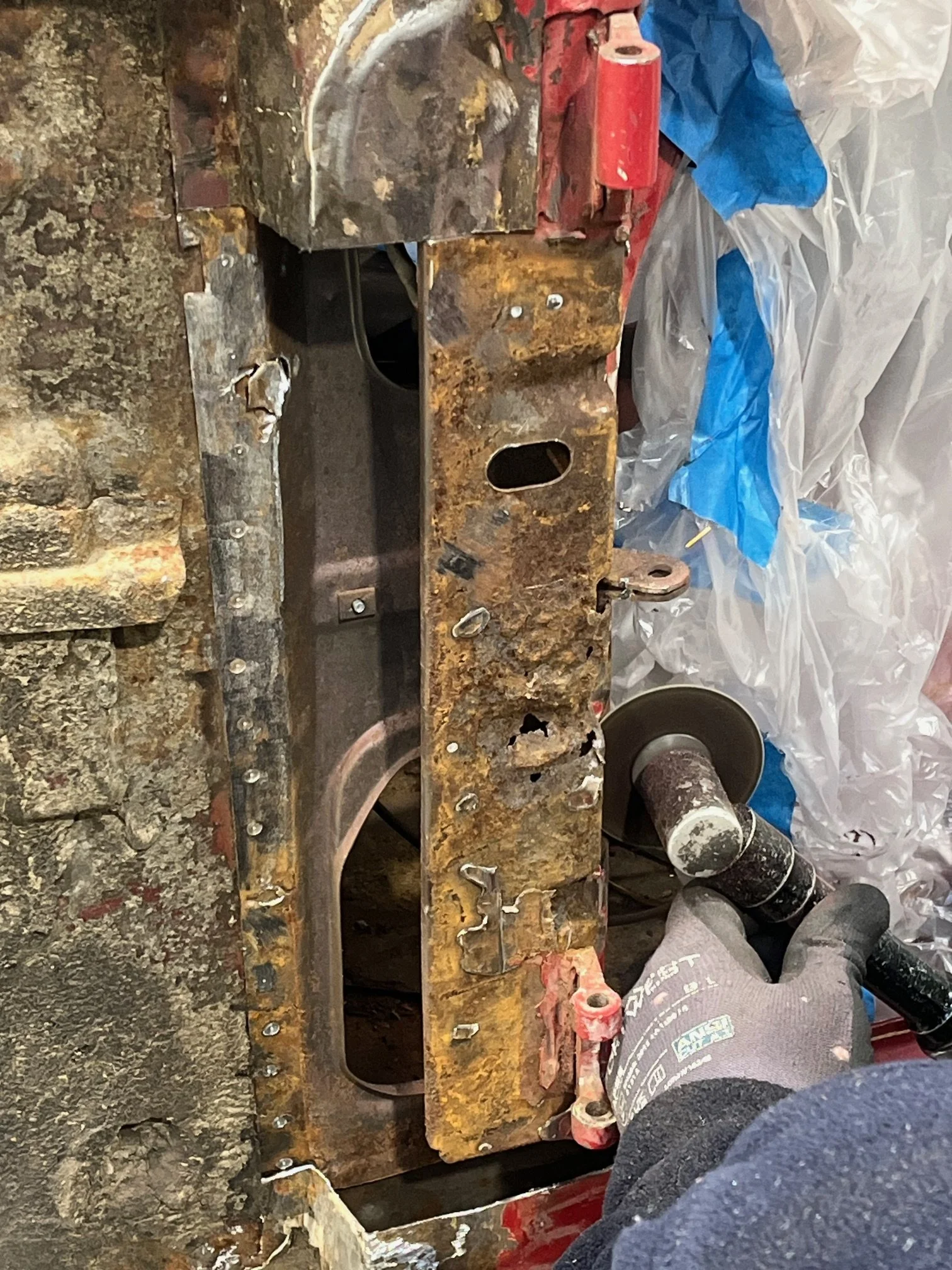
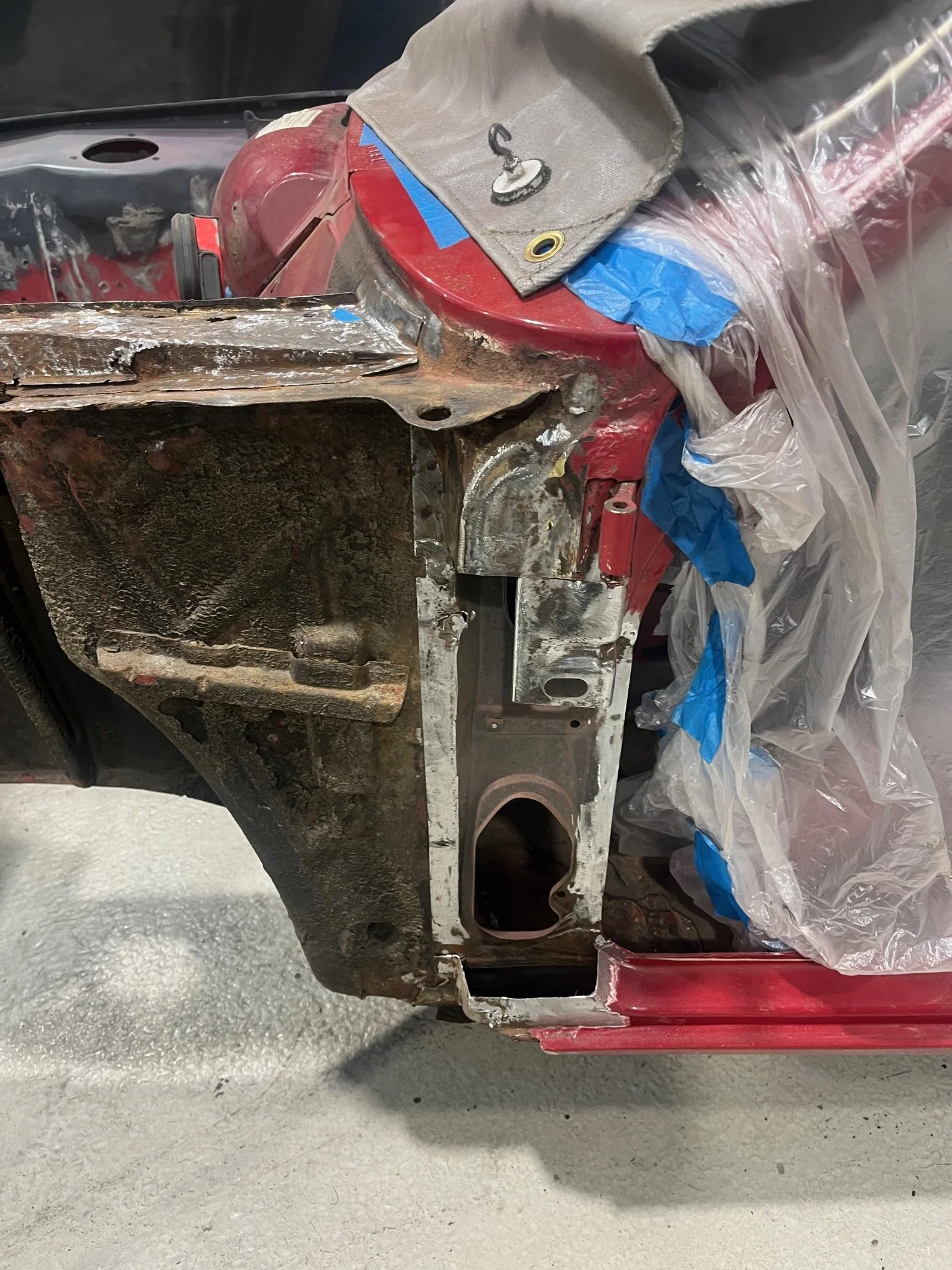
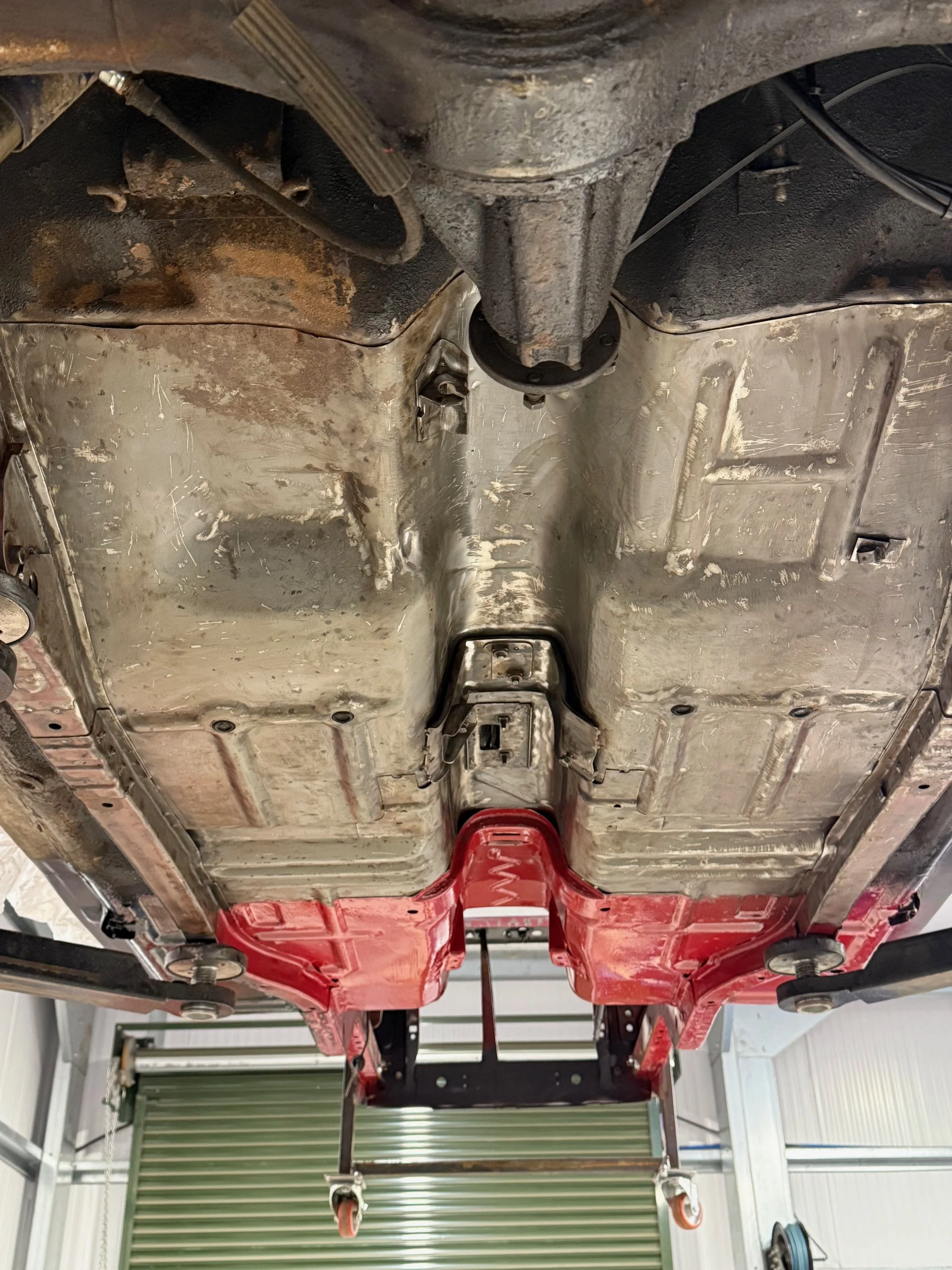
The nearside A-pillar required extensive reconstruction, with the inner strengthening section and outer A-pillar manufactured entirely in-house, extending upwards to just below the upper door hinge. The lower section of the offside A-pillar also required restoration, alongside a small section of the adjoining floor pan, extending rearwards from the A-pillar. Only the outermost two inches of the floor pan required replacement, allowing the remainder of the original factory panel to be preserved.
Further corrosion was addressed around the upper A-pillar assemblies, where they meet the bulkhead and scuttle panel. The adjoining flitch panels were also manufactured in-house, accurately replicating the dimensions, profiles and construction of the original panels.
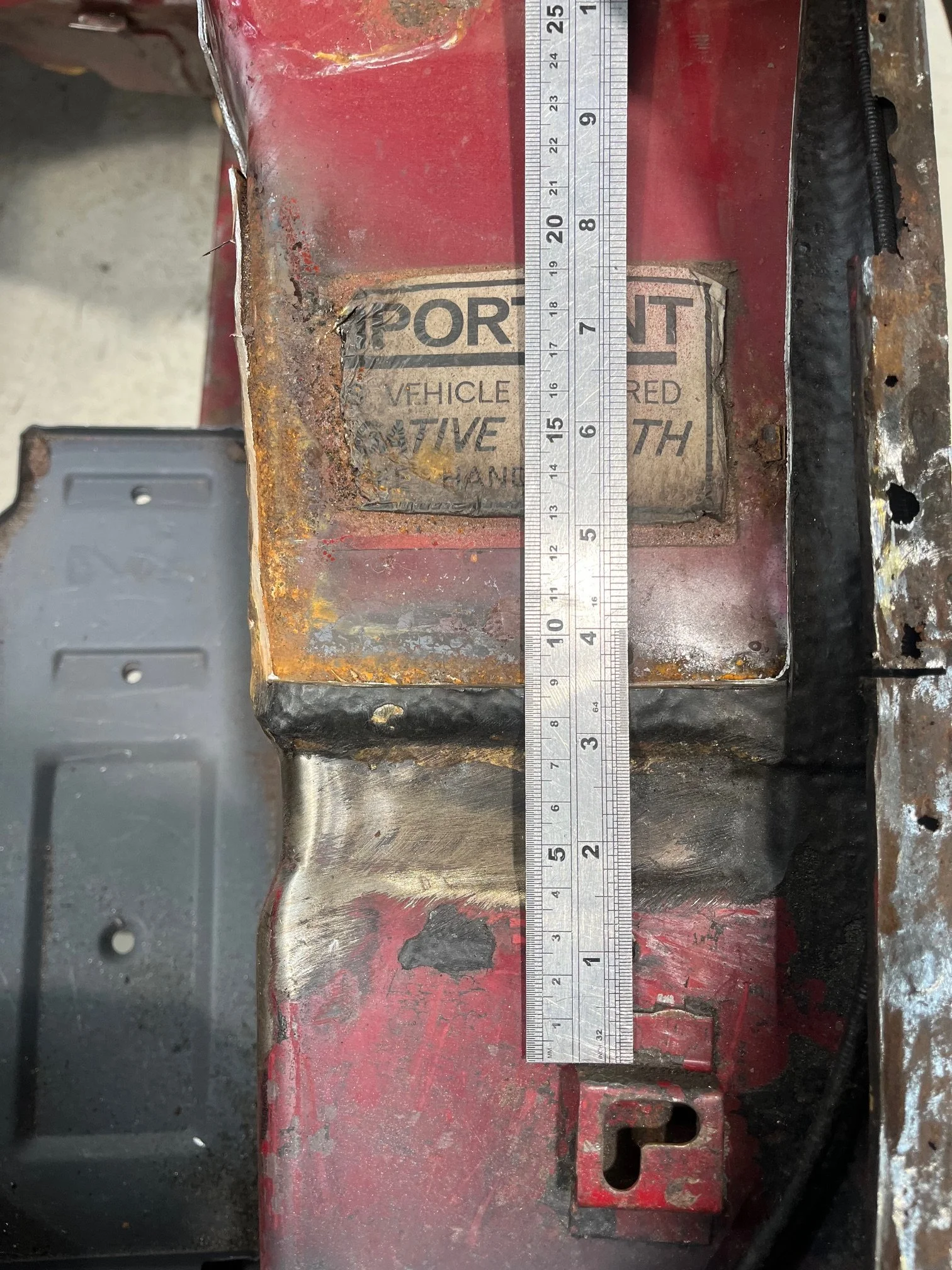
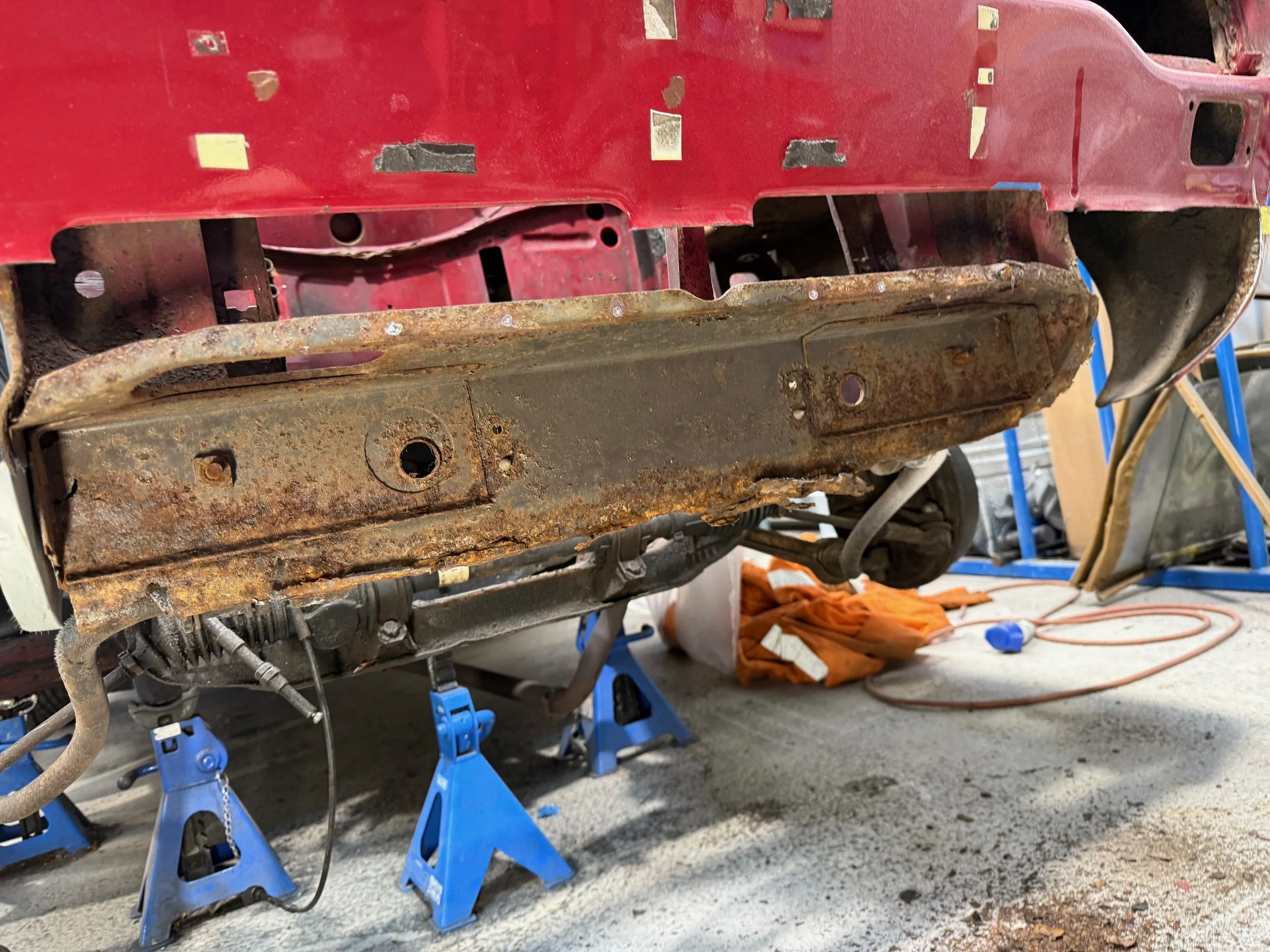
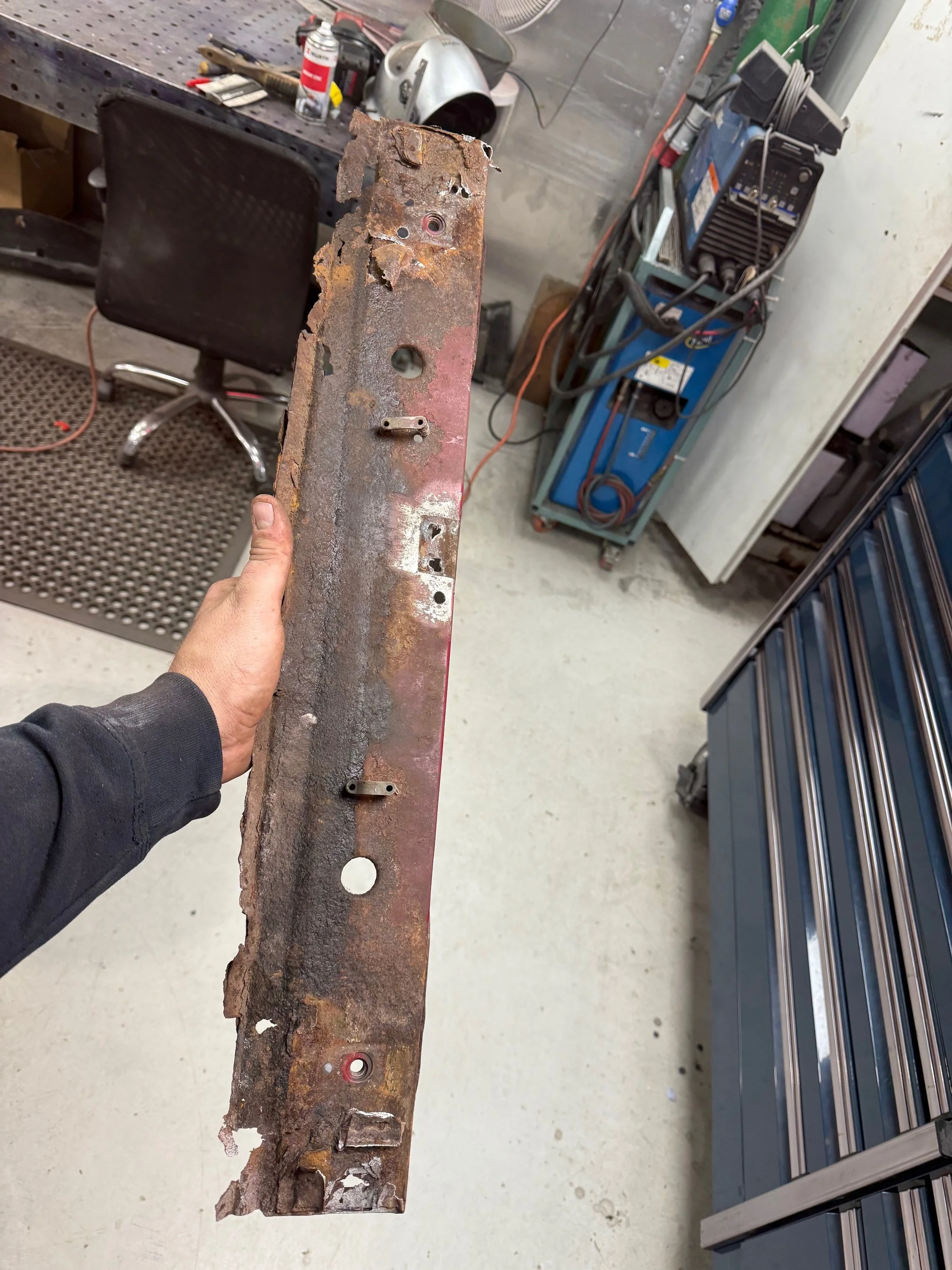
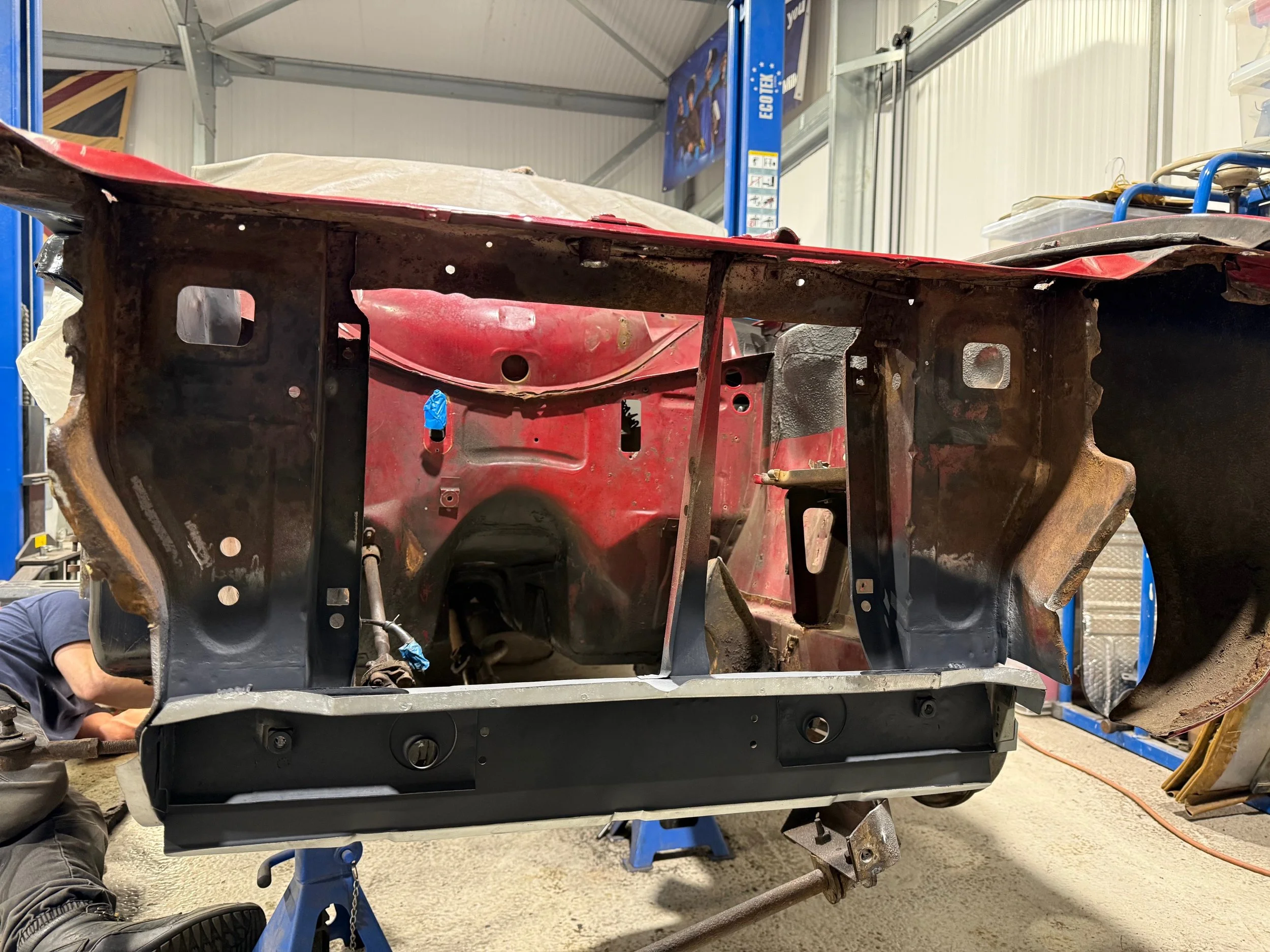
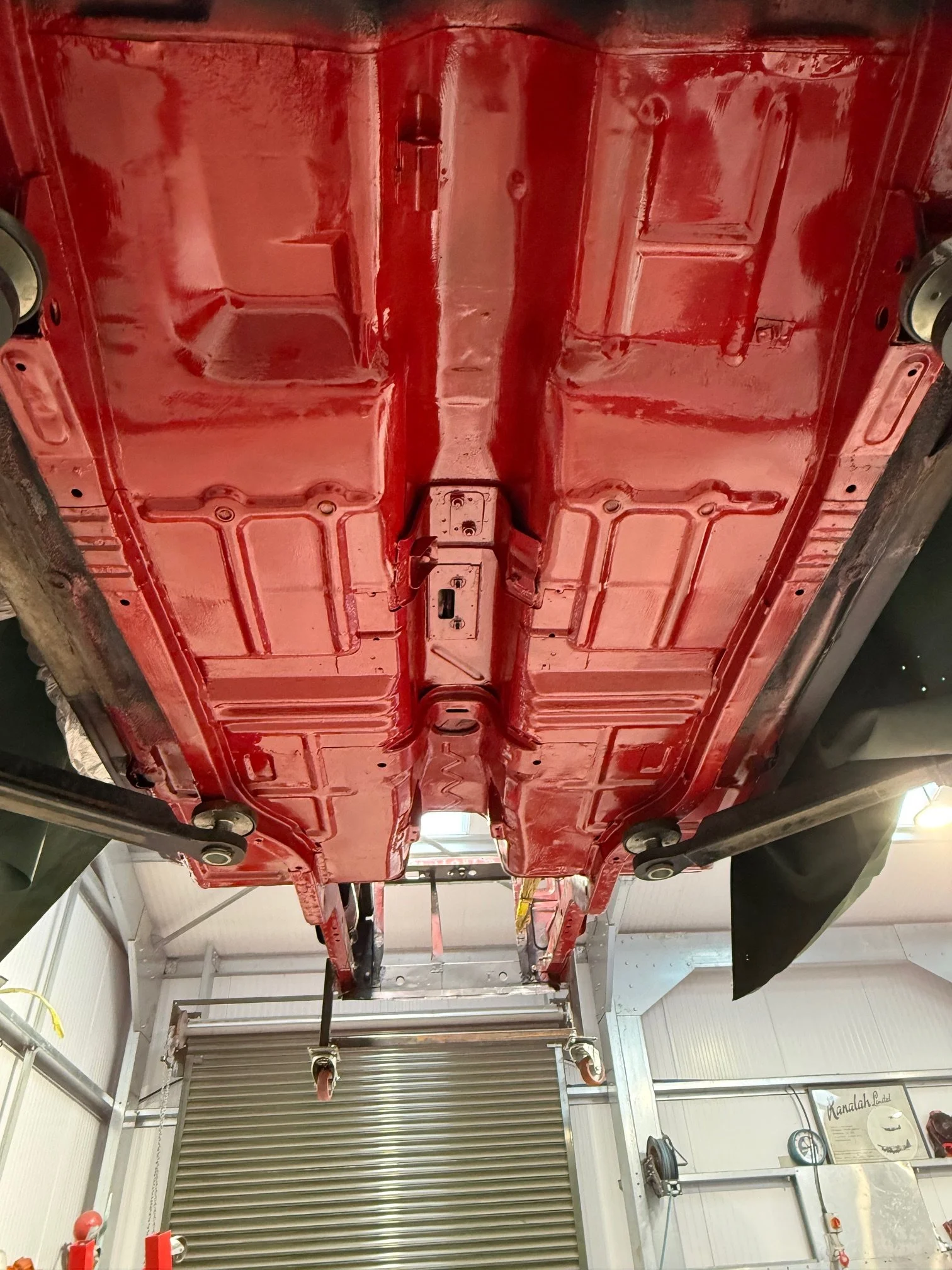
The inner front crossmember, situated behind the lower section of the front panel, was carefully restored rather than replaced in its entirety. Localised sections of new material were introduced where necessary, allowing as much of the original Ford metalwork as possible to be retained.
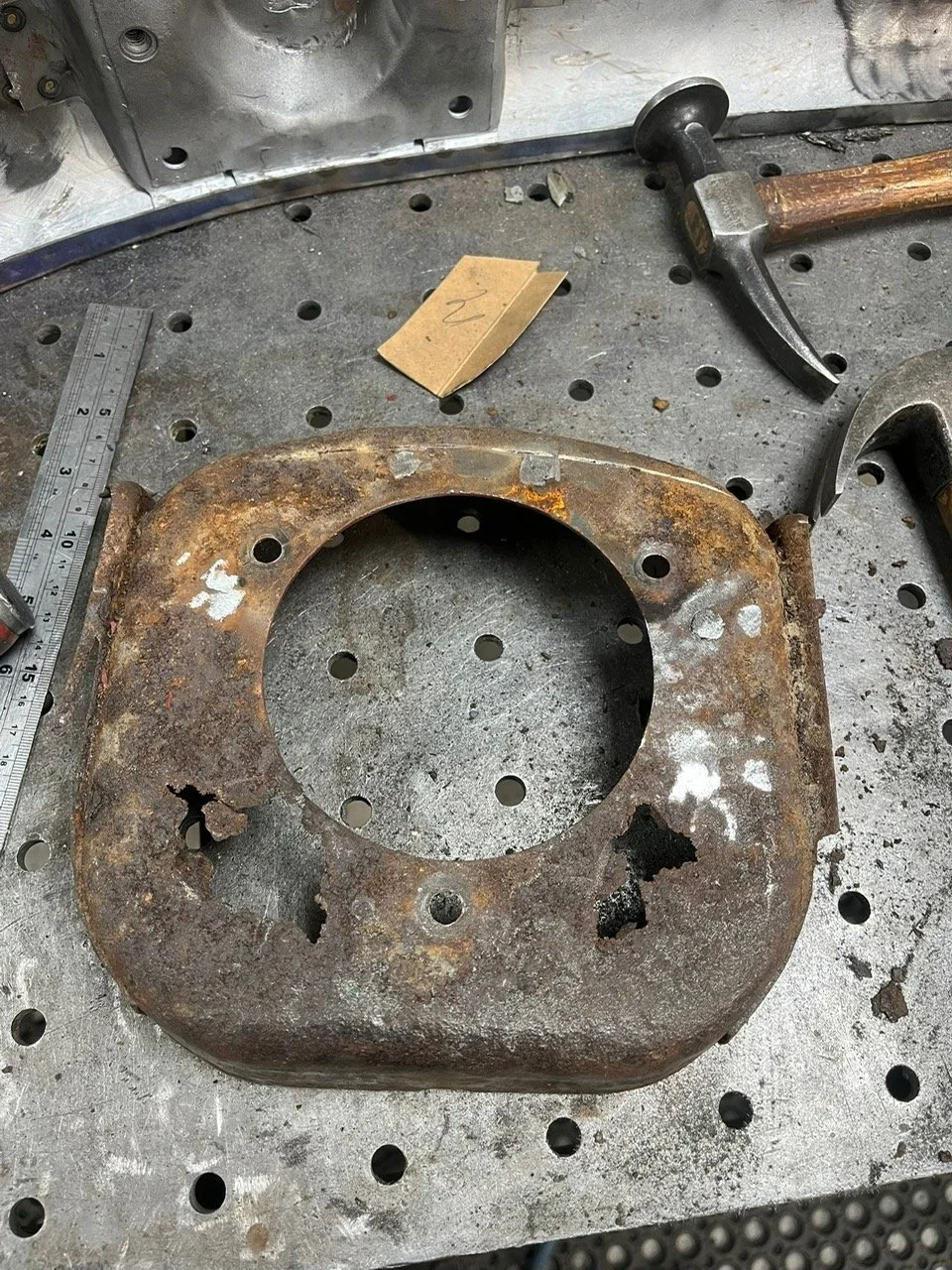
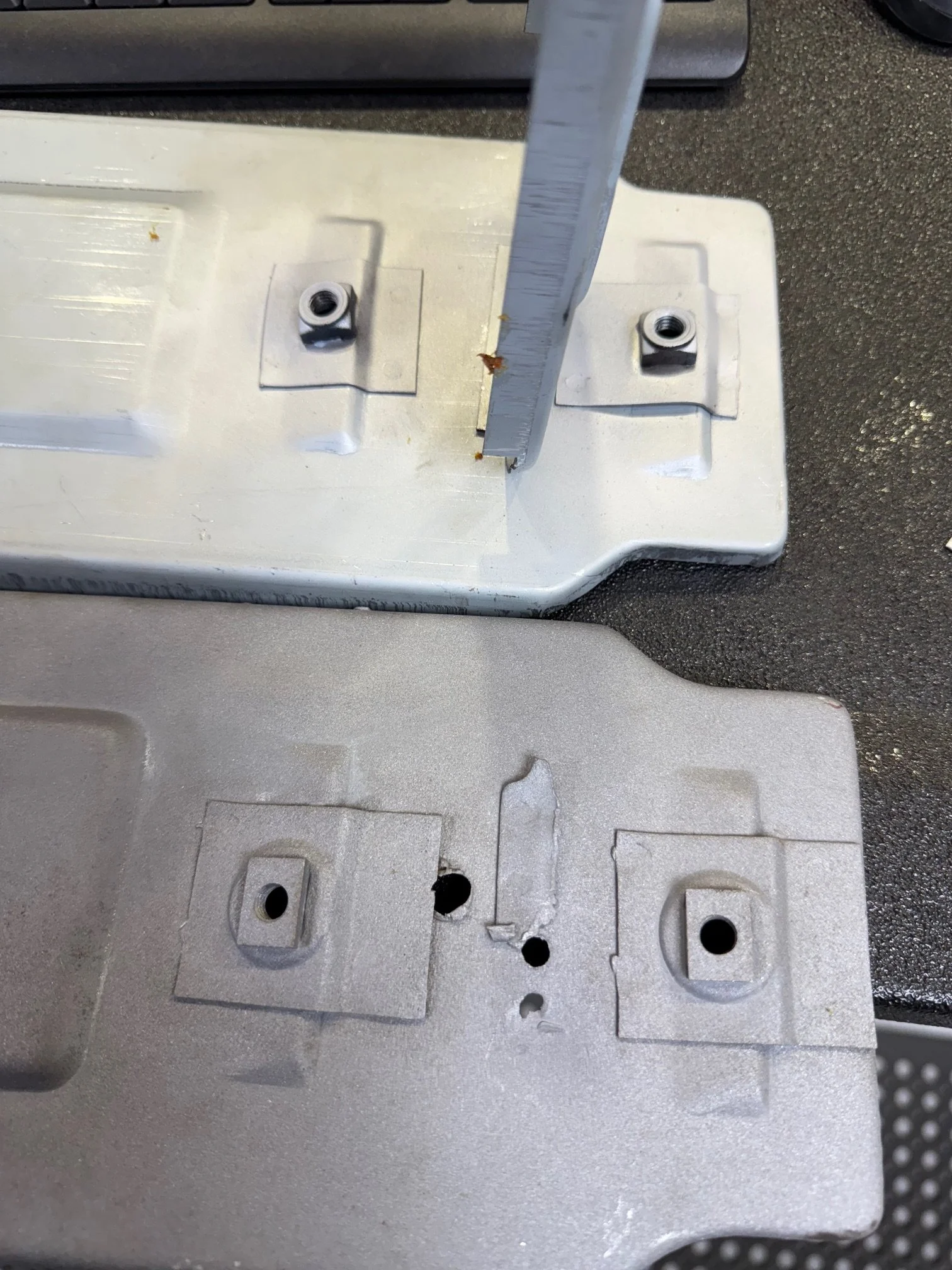
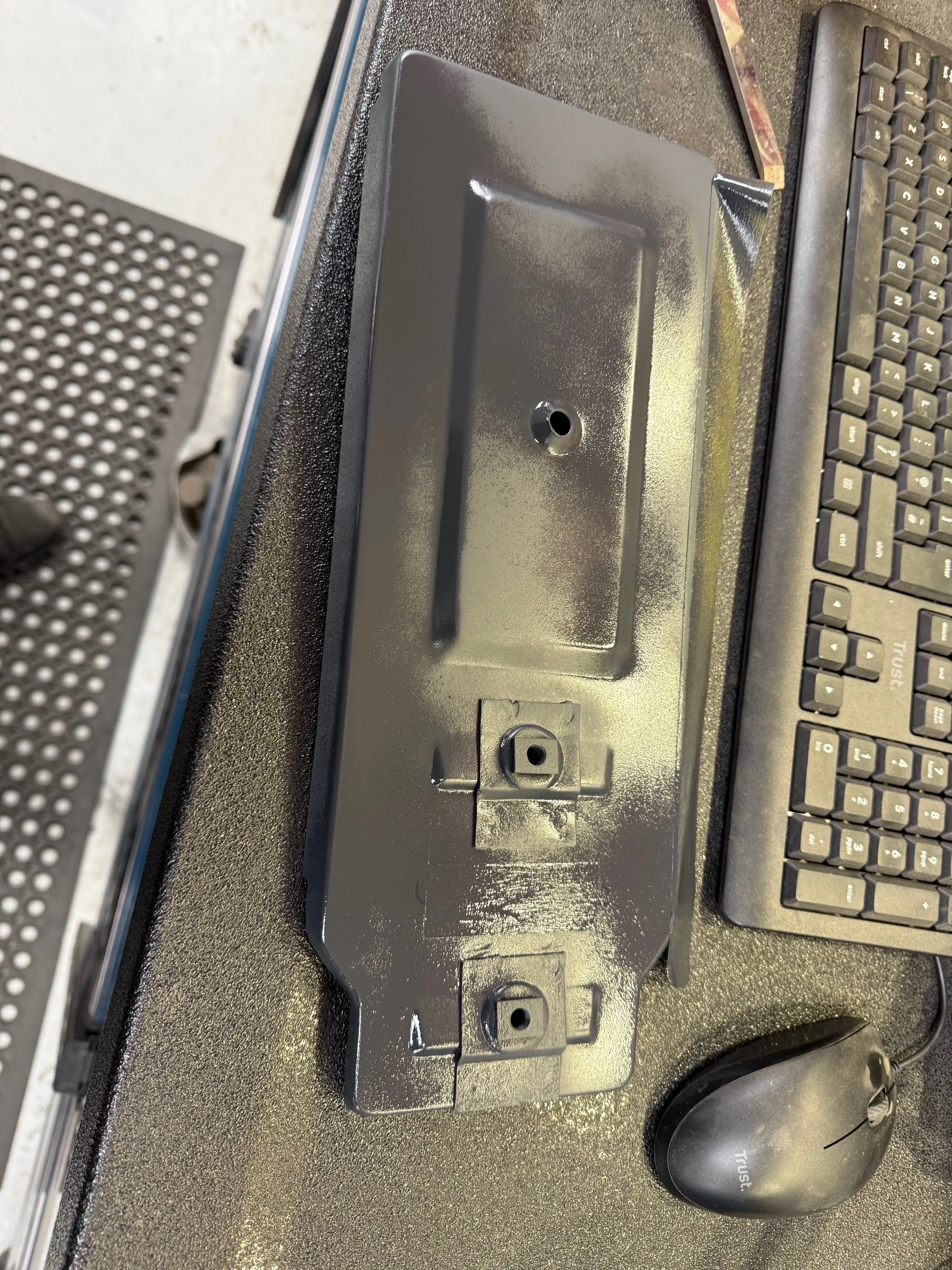
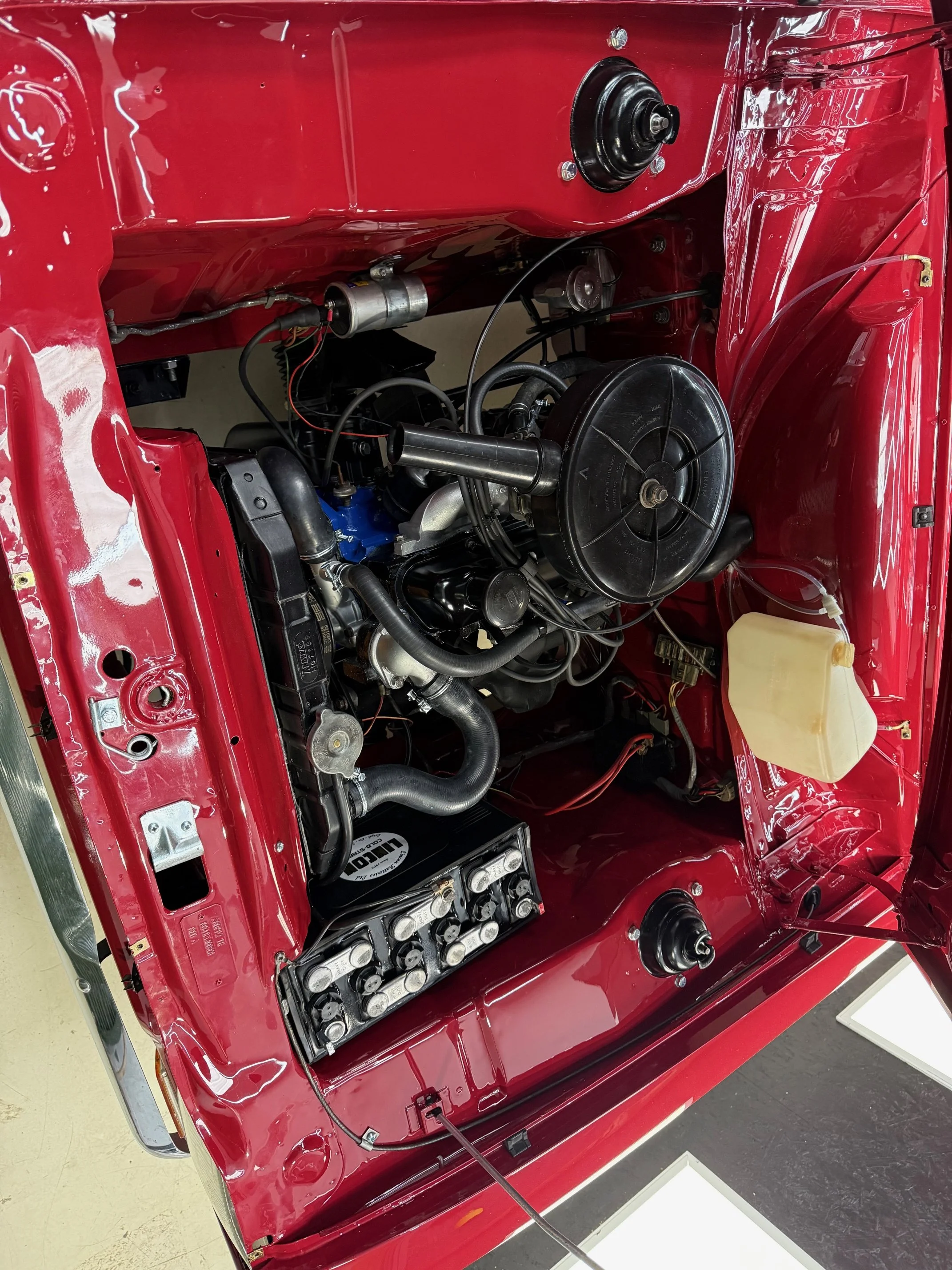
A new battery tray was also fitted. However, the reproduction tray incorporated modern weld nuts for the battery clamp fixings, which differed from the original factory arrangement. The original fixings were therefore carefully removed from the old battery tray and transferred onto the replacement panel. Although a relatively small detail within the overall restoration, it is a particularly good example of our approach to preserving originality.
Throughout the metalwork restoration, considerable attention was paid to the original manufacturing techniques used by Ford, including the positioning of factory spot welds, panel joints and individual panel profiles. Where new sections were required, these were manufactured and installed with the intention of replicating the original construction as closely as possible.
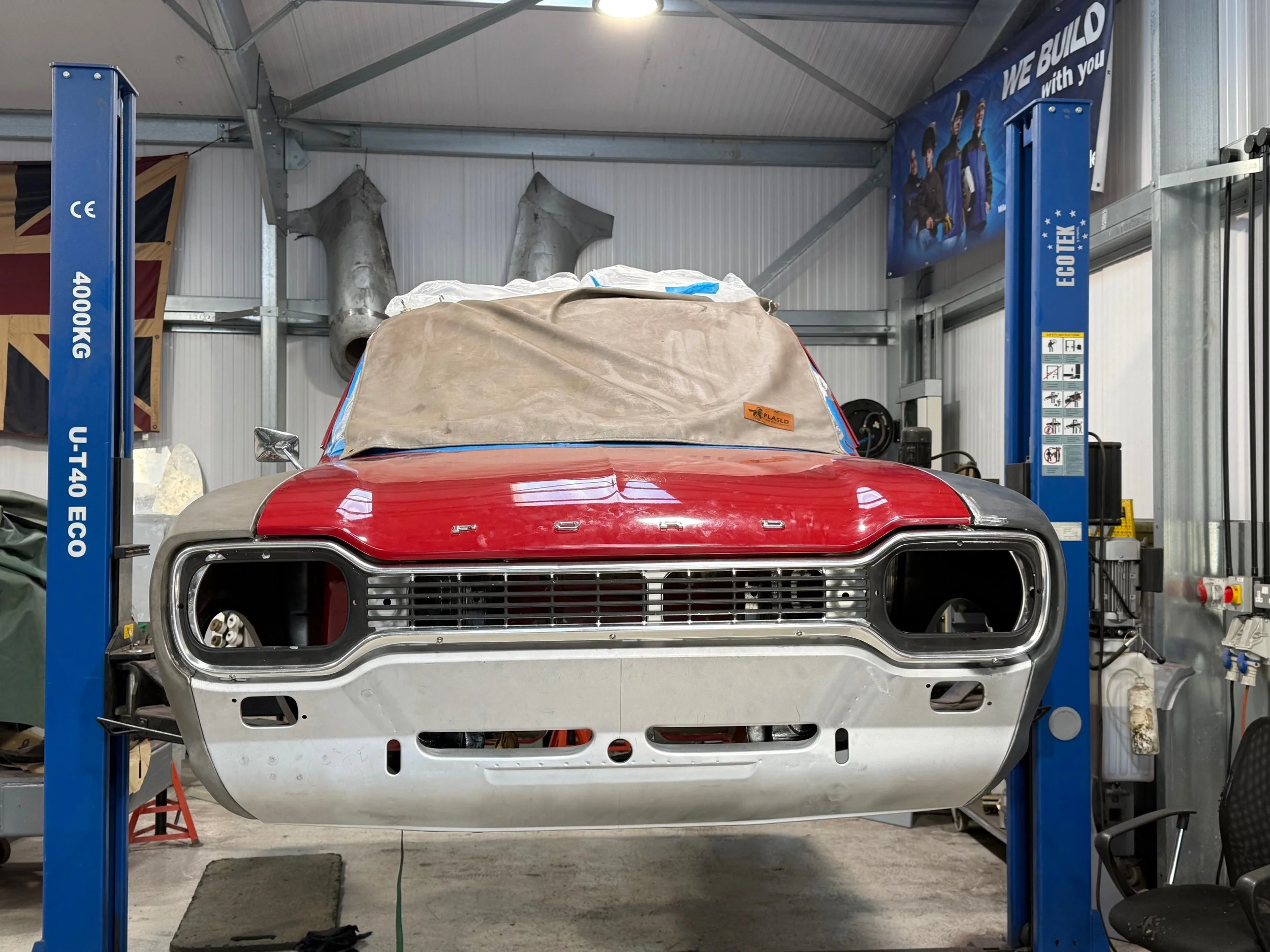
Prior to the vehicle being handed over for paintwork, a comprehensive dry assembly of the front end was undertaken. This included the installation of the front bumper, indicators, headlamps and radiator grille, ensuring that the alignment, fitment and relationship between the individual components were correct before the refinishing process commenced.
Paint Preparation & Refinishing
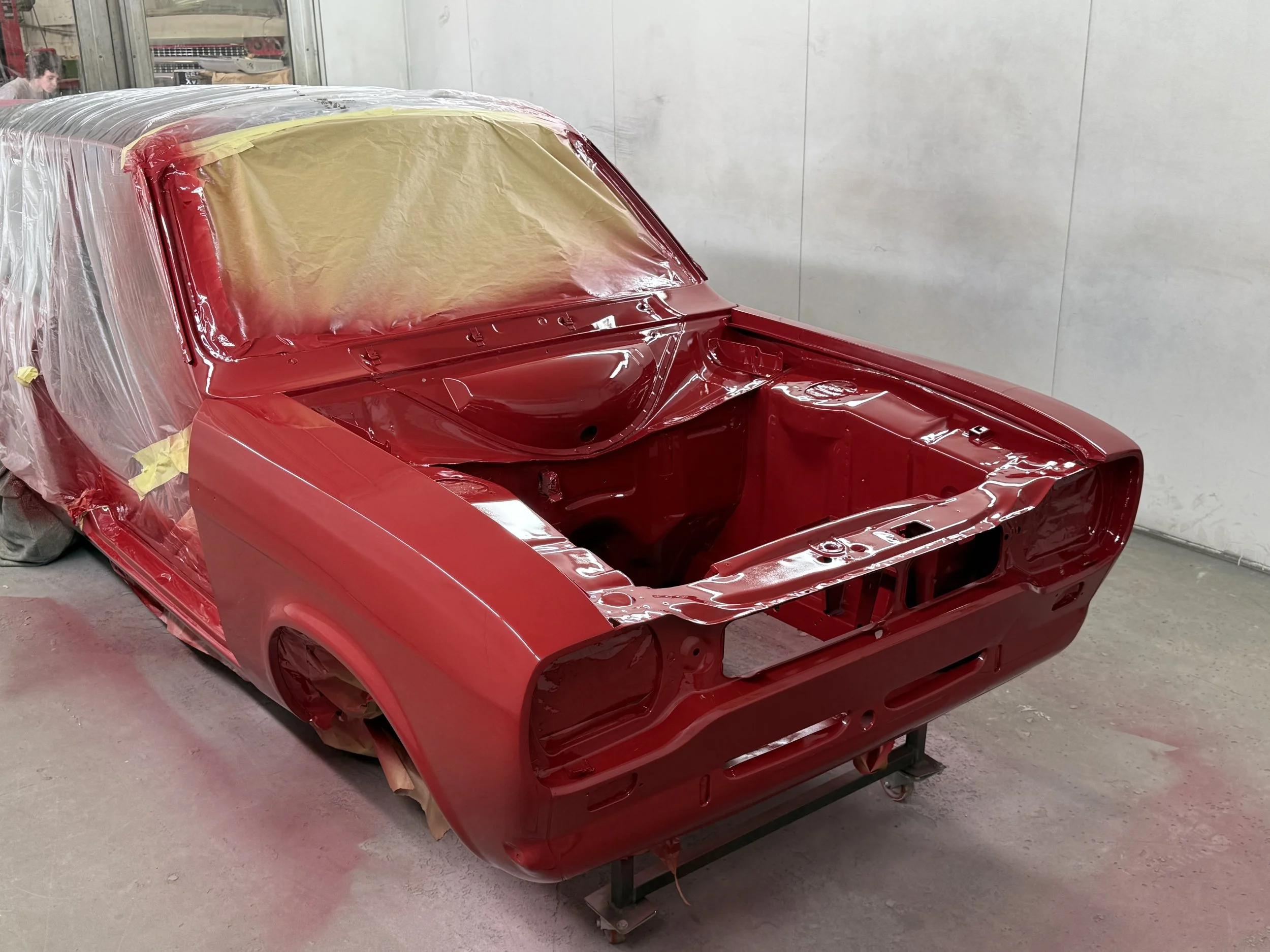
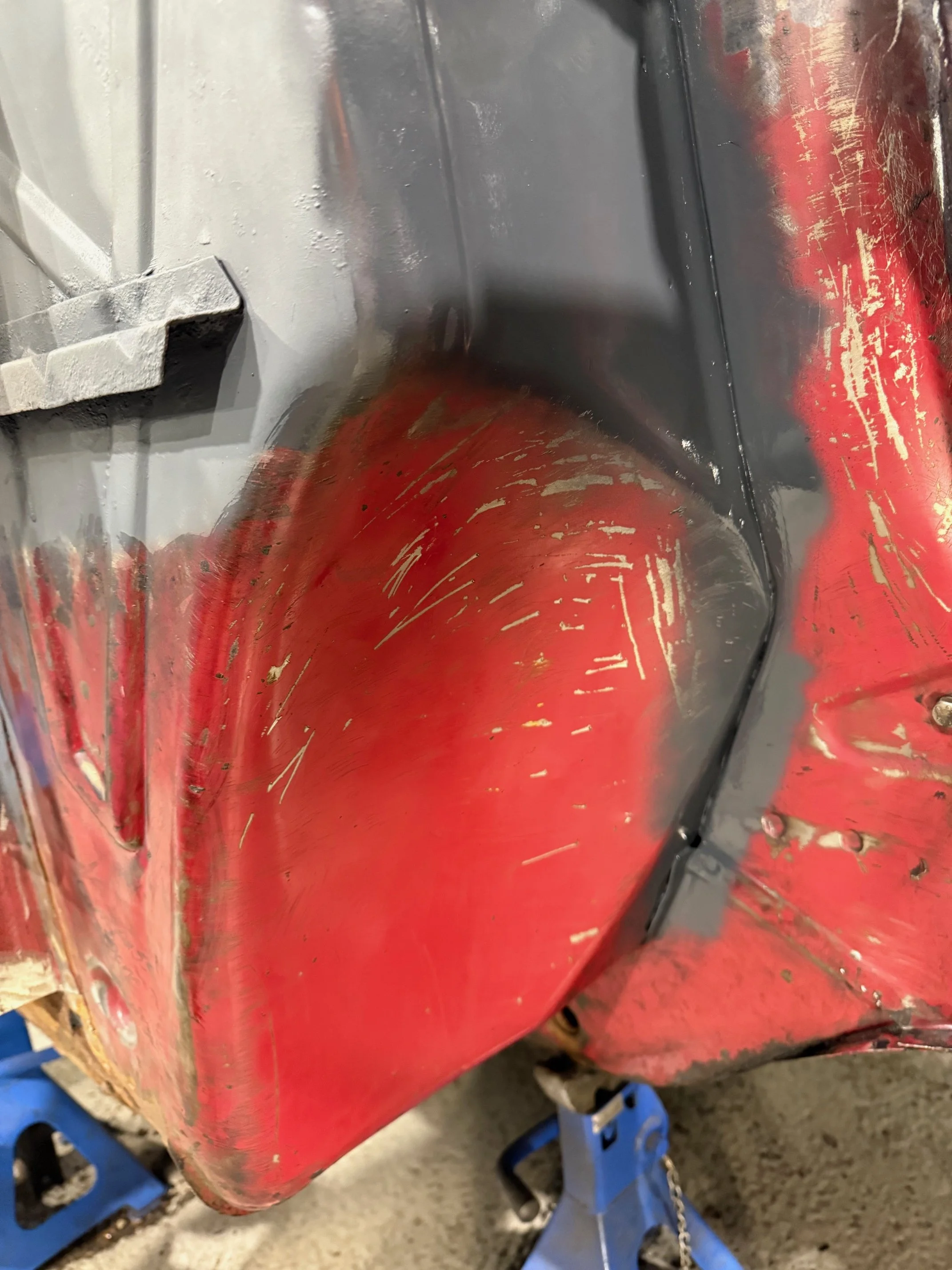
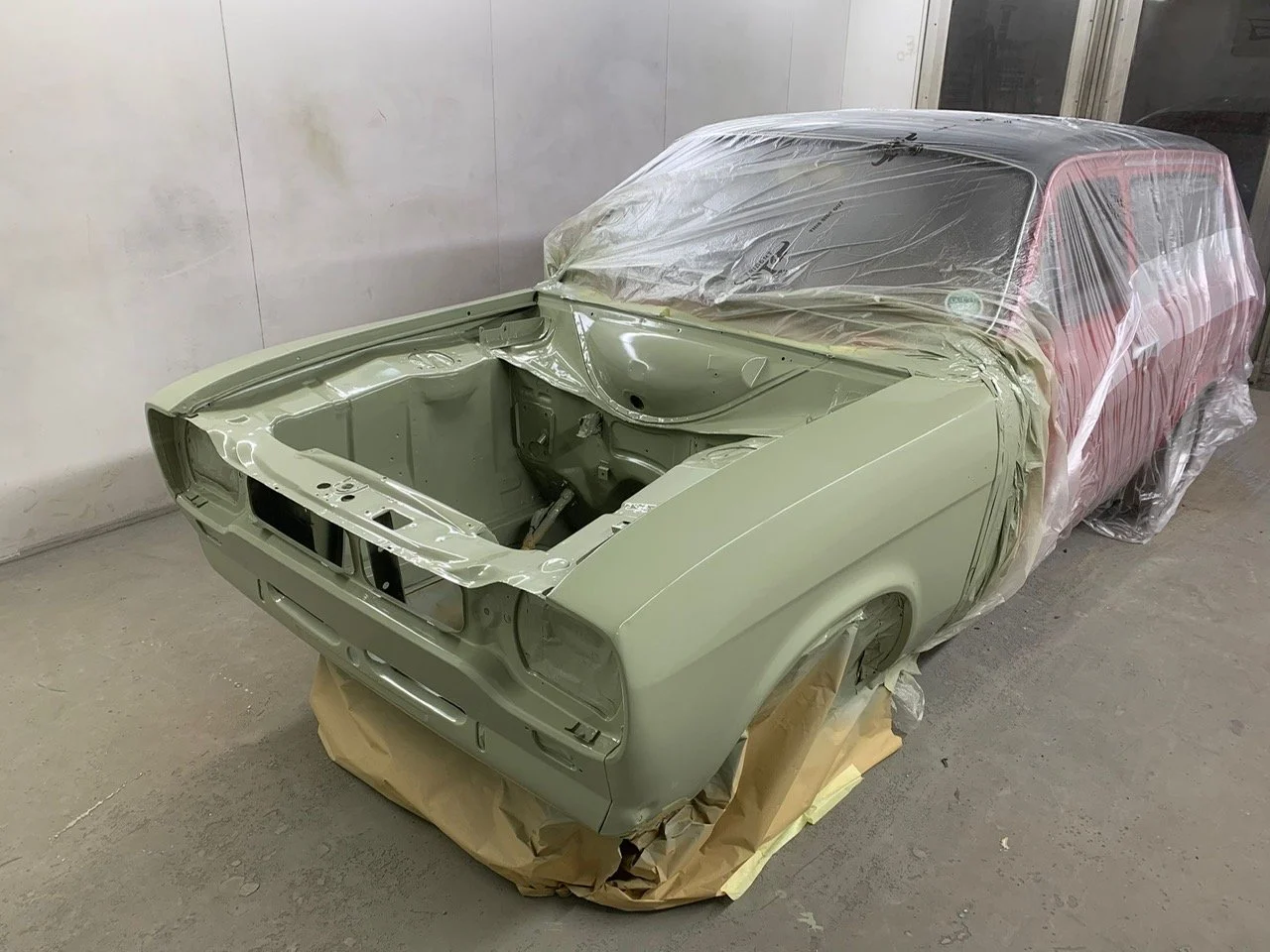
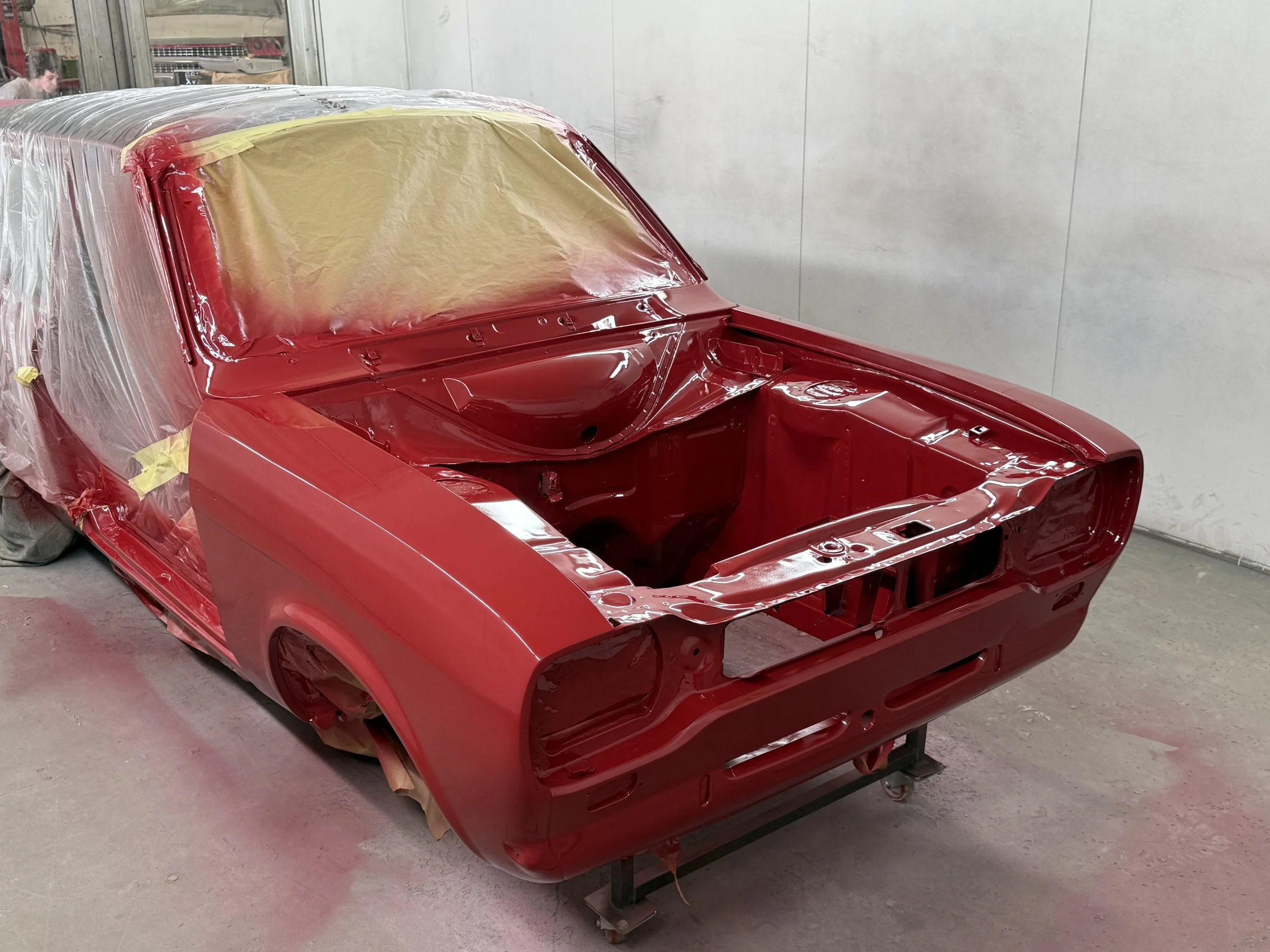
Following the completion of the metalwork restoration at Precision Panel Craft, the Escort was handed over to our friends at Painting Classic Cars to undergo the paint preparation and refinishing process, utilising the specialist NOVOL for Classic Cars product system.
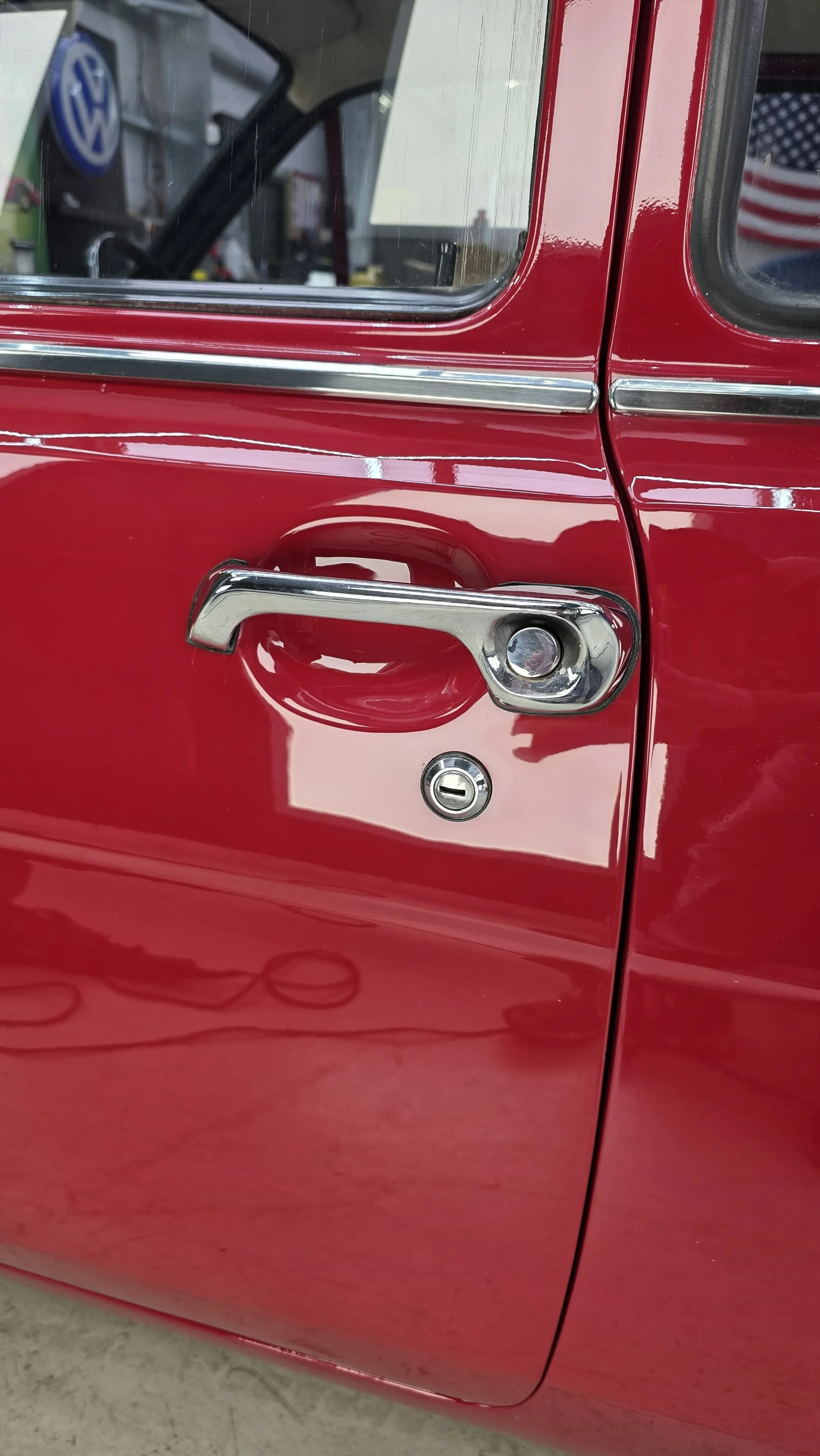
As with the metalwork, it was particularly important that the vehicle was not over-restored during the paint process. Whilst achieving an exceptionally high standard of finish, care was taken to retain the definition of the original panel joints, factory spot welds and manufacturing characteristics that form an important part of the vehicle’s identity.
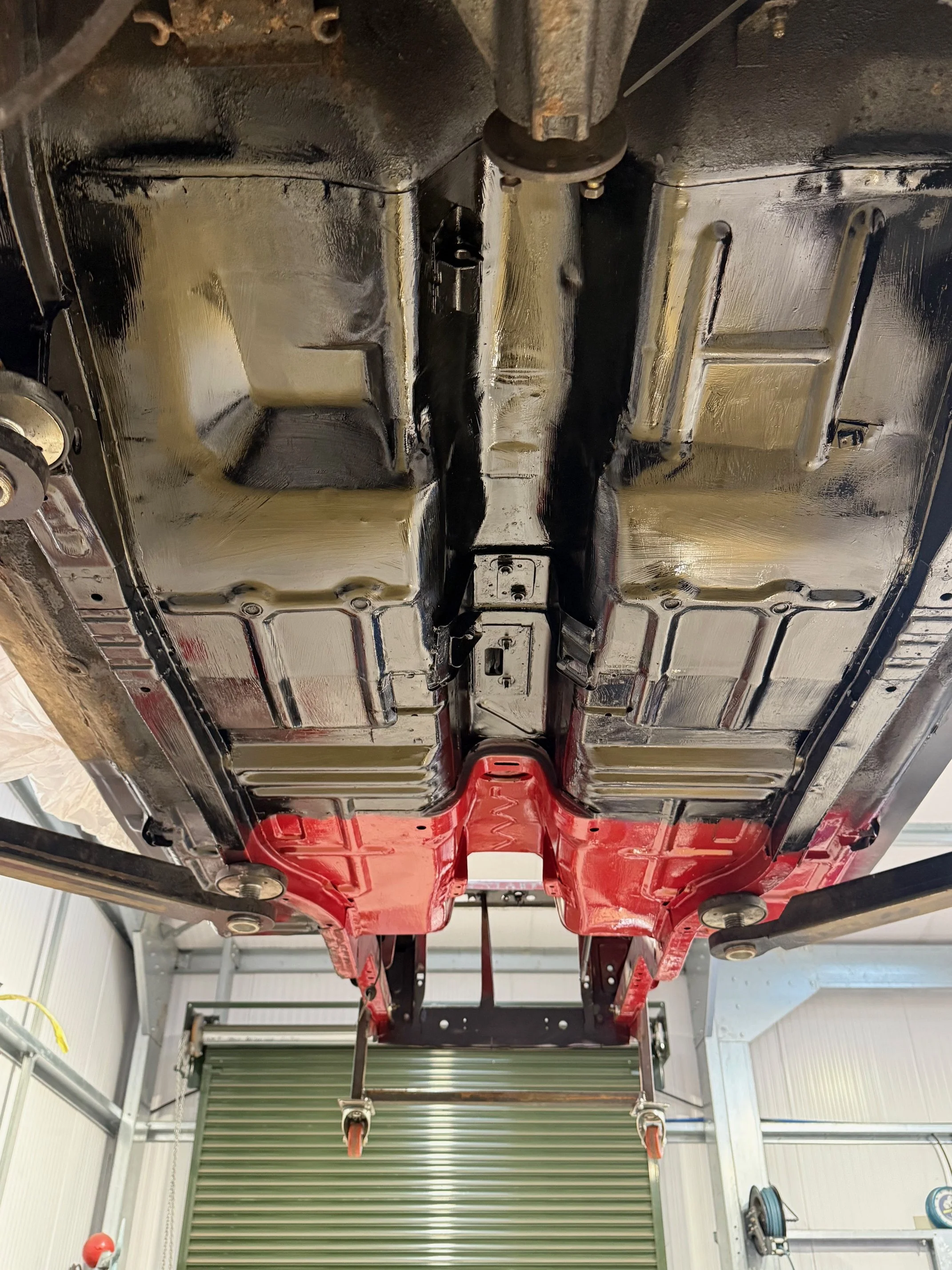
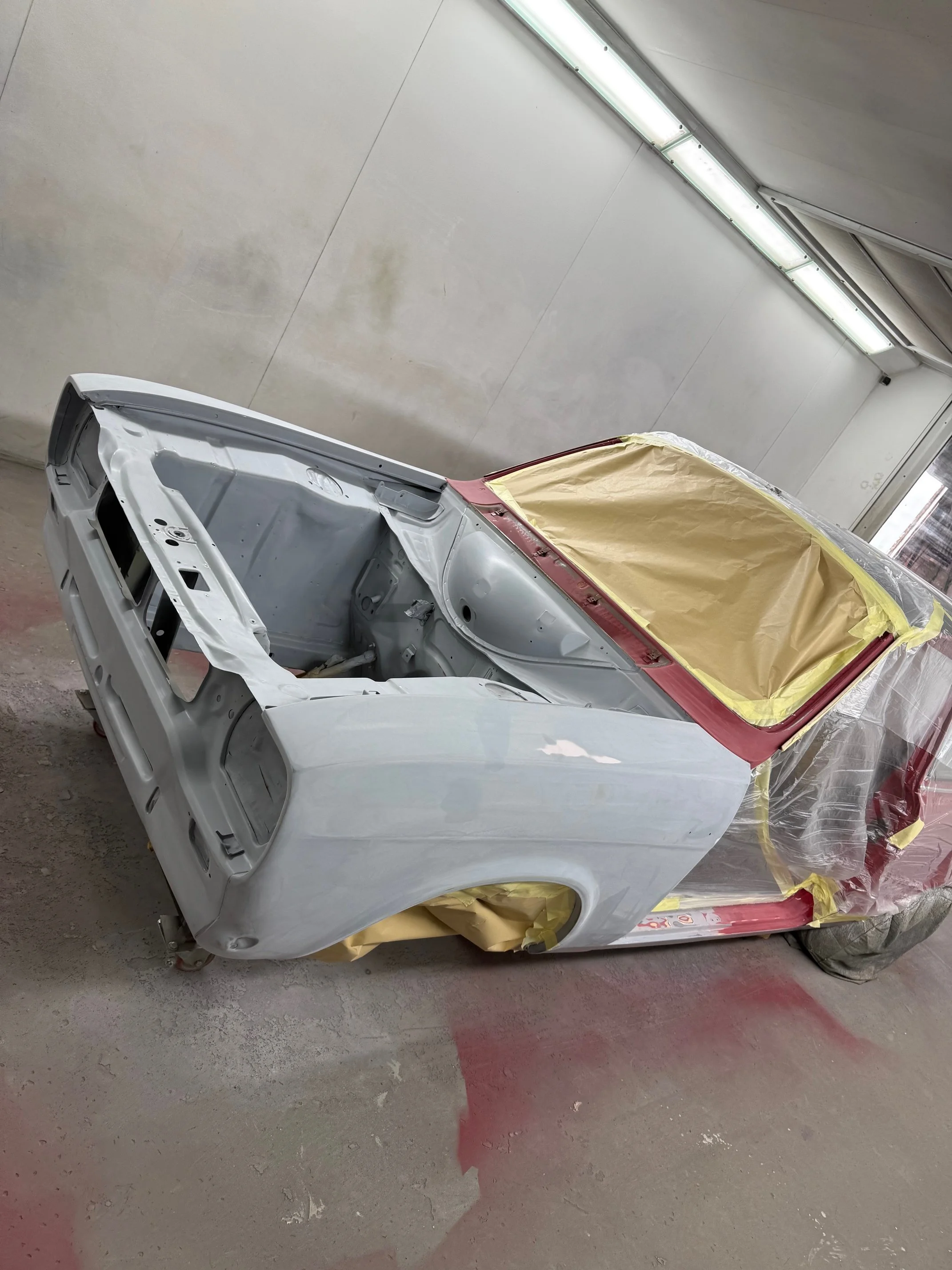
The paint preparation incorporated NOVOL’s specialist green anti-corrosion epoxy primer, providing a protective foundation upon which the subsequent surface levelling was carried out. This was followed by the application of a high-build coating and extensive hand blocking, before a final primer was applied and prepared for the application of colour.
The objective throughout was to achieve an exceptional standard of finish whilst retaining the character of a factory-produced Mk1 Escort, rather than disguising the manufacturing details that make these vehicles so distinctive.
Mechanical Restoration & Final Assembly
The mechanical side of the restoration followed the same sympathetic approach as the bodywork. With the vehicle having covered relatively few miles, there was no intention to undertake unnecessary mechanical modifications or replace serviceable original components.
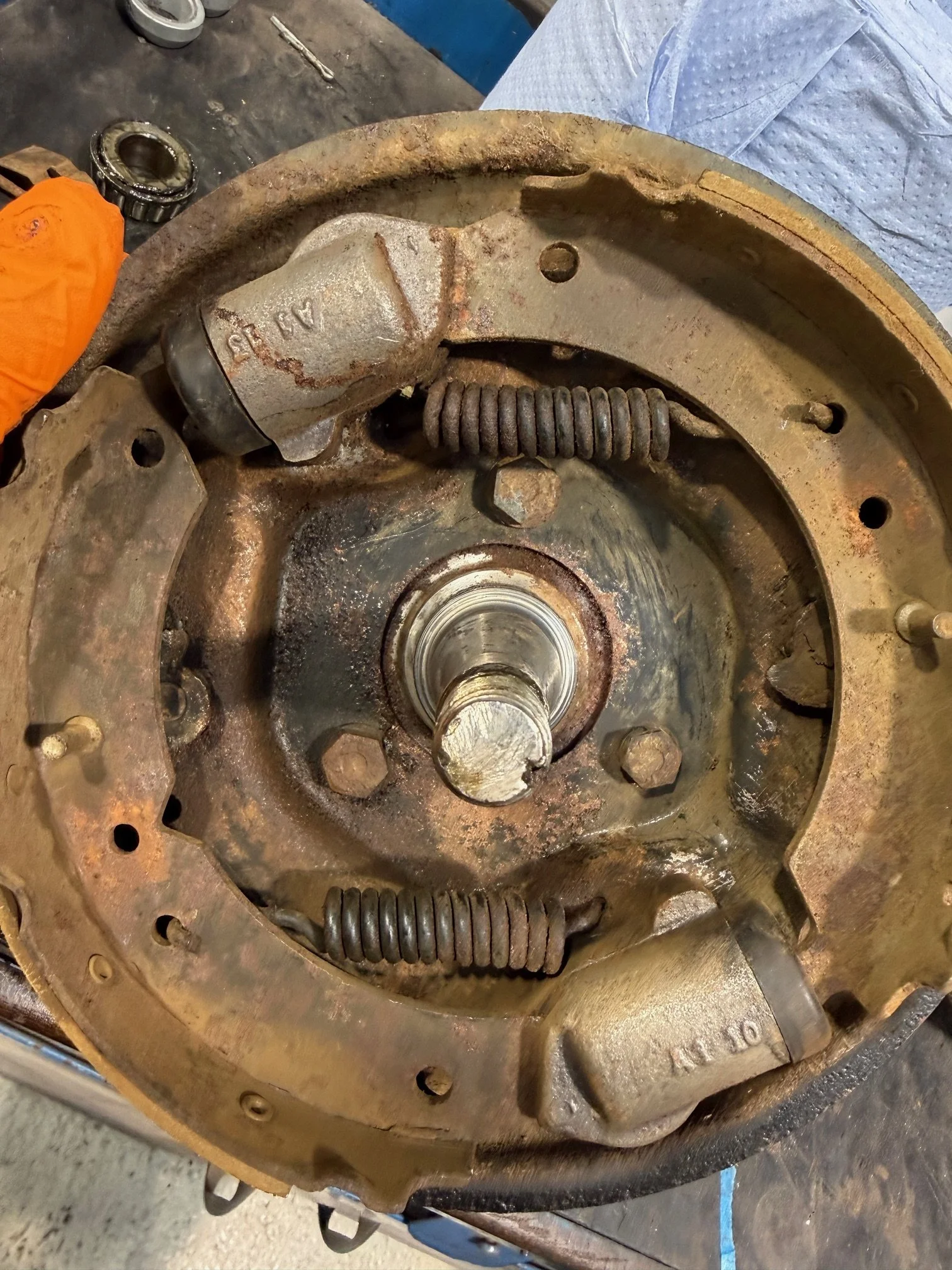
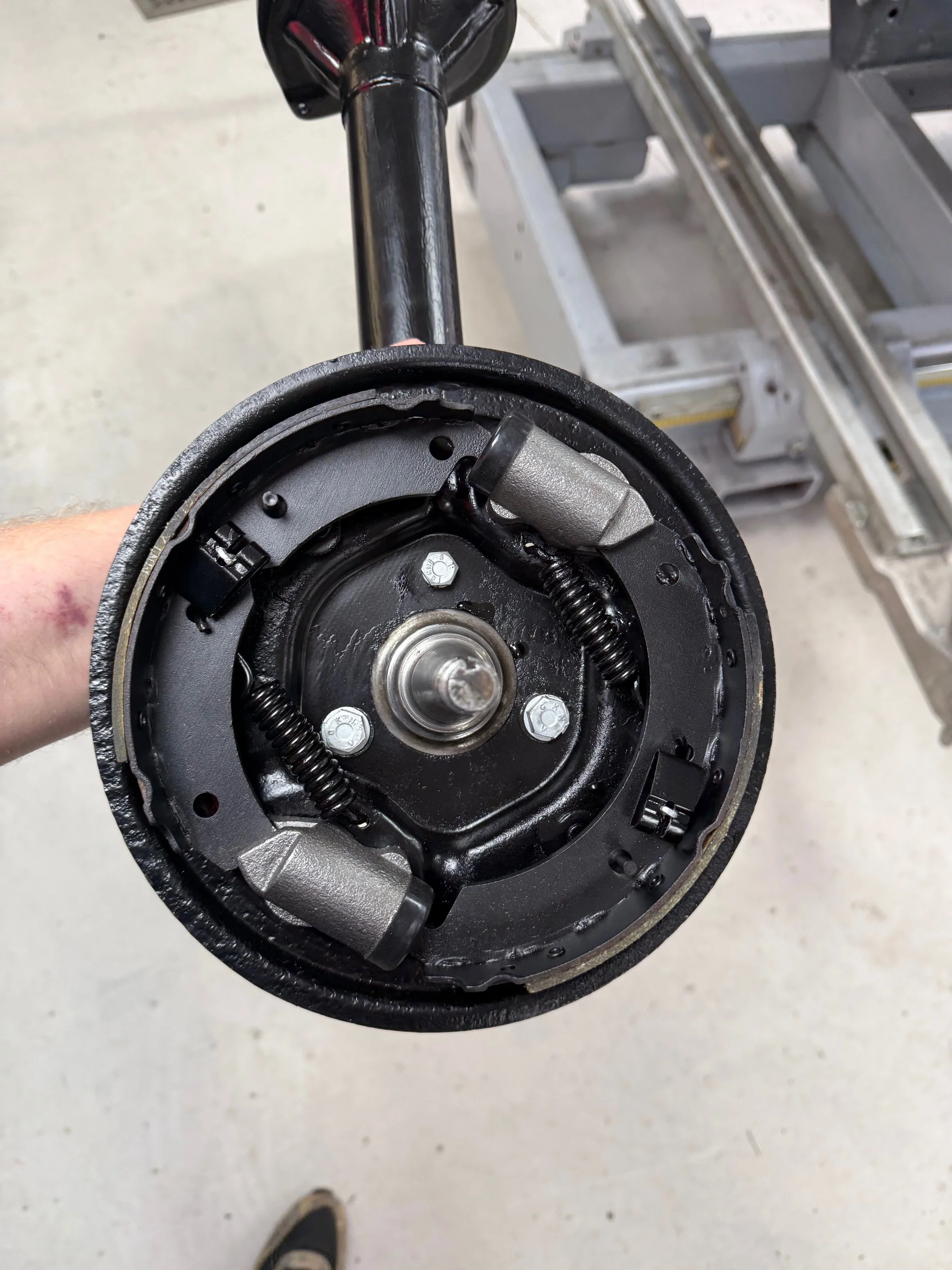
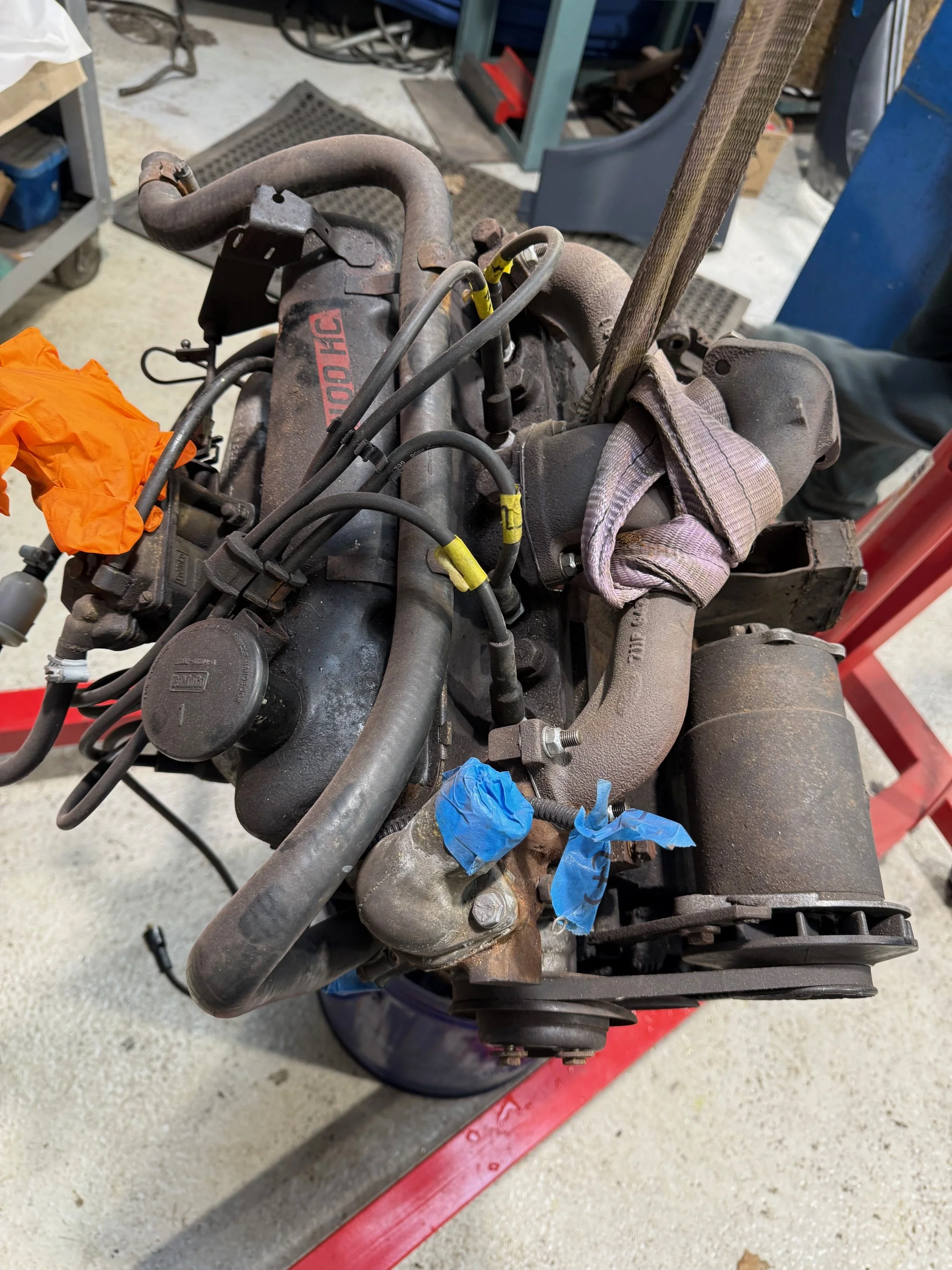
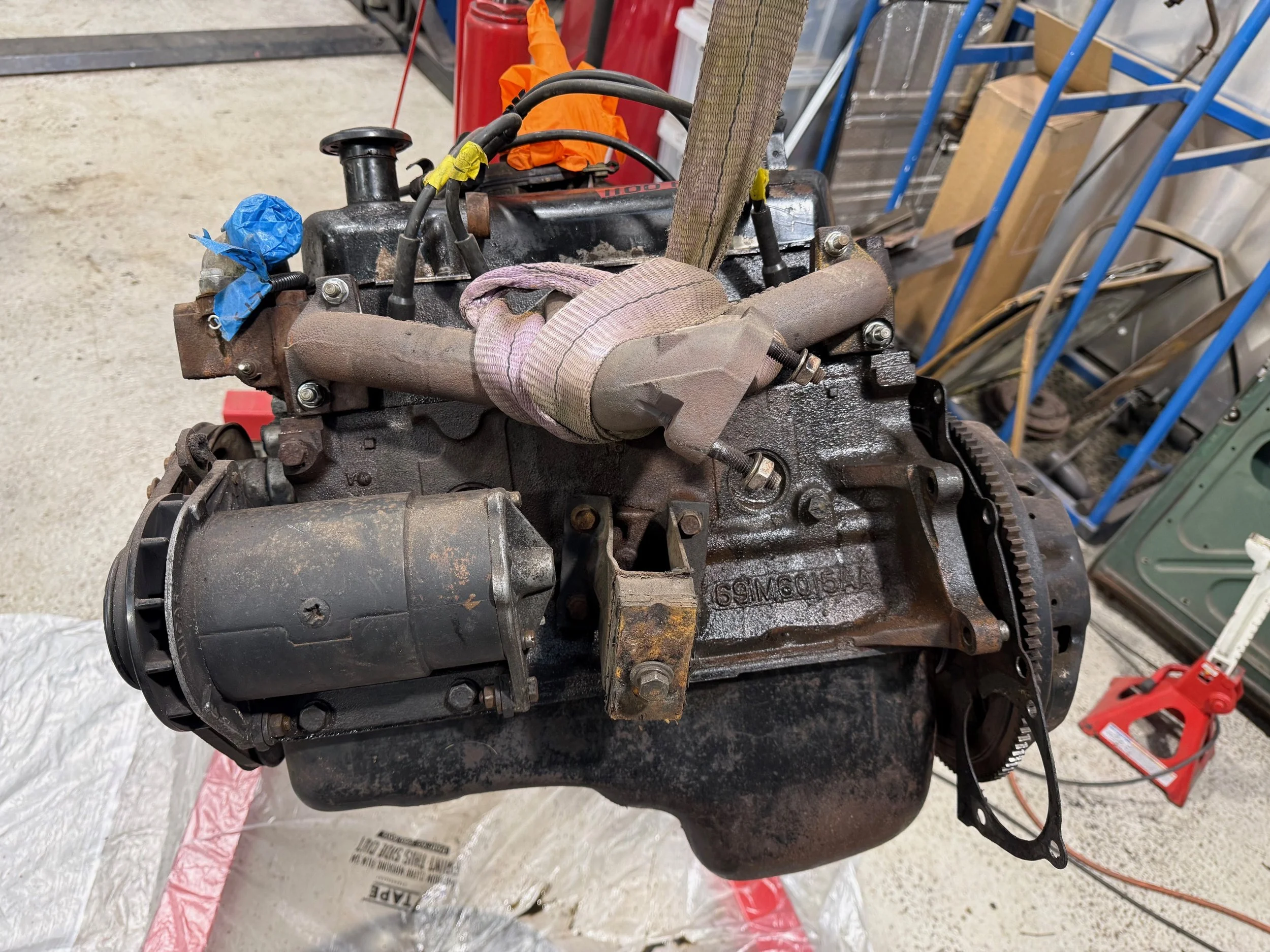
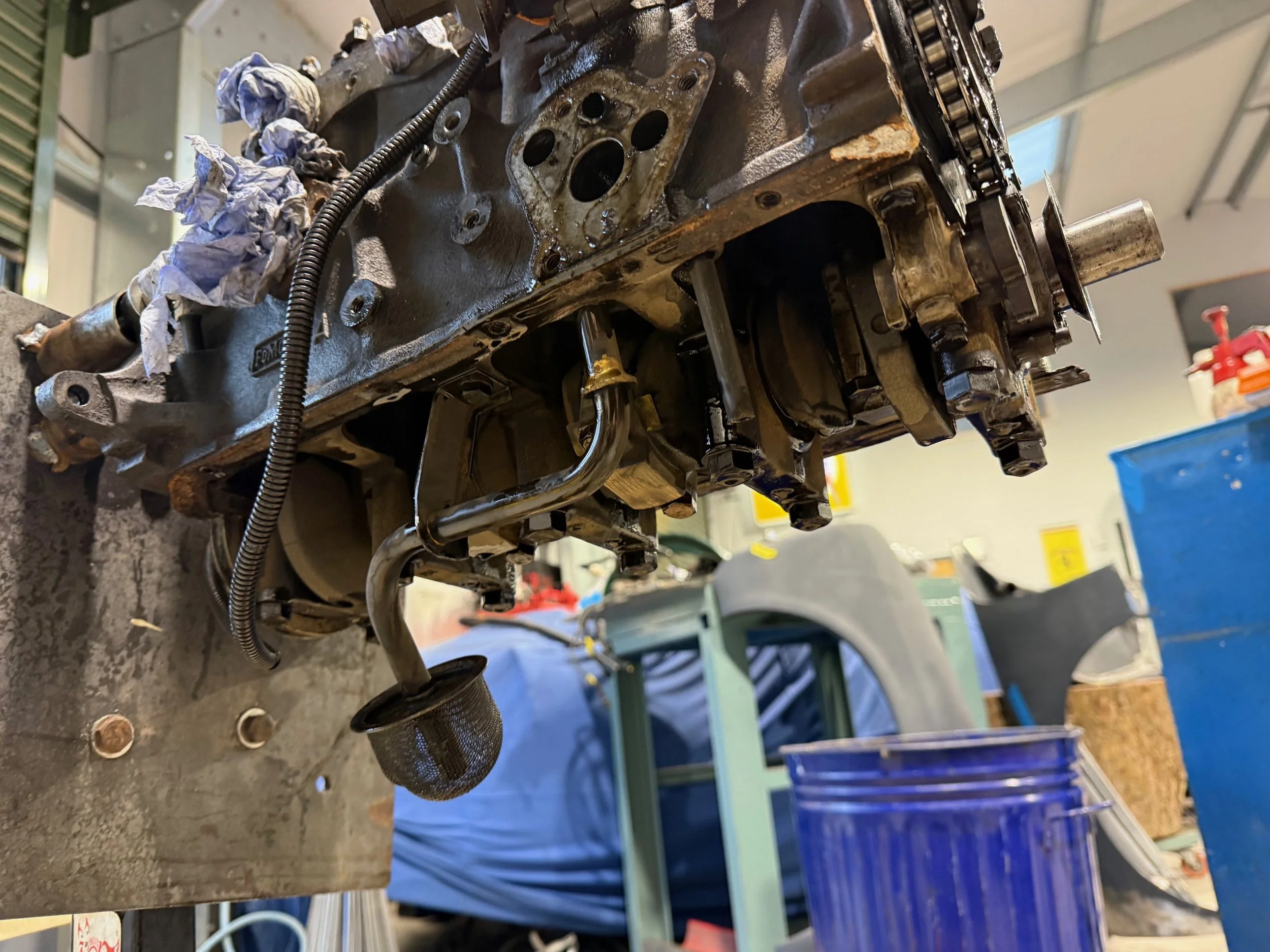
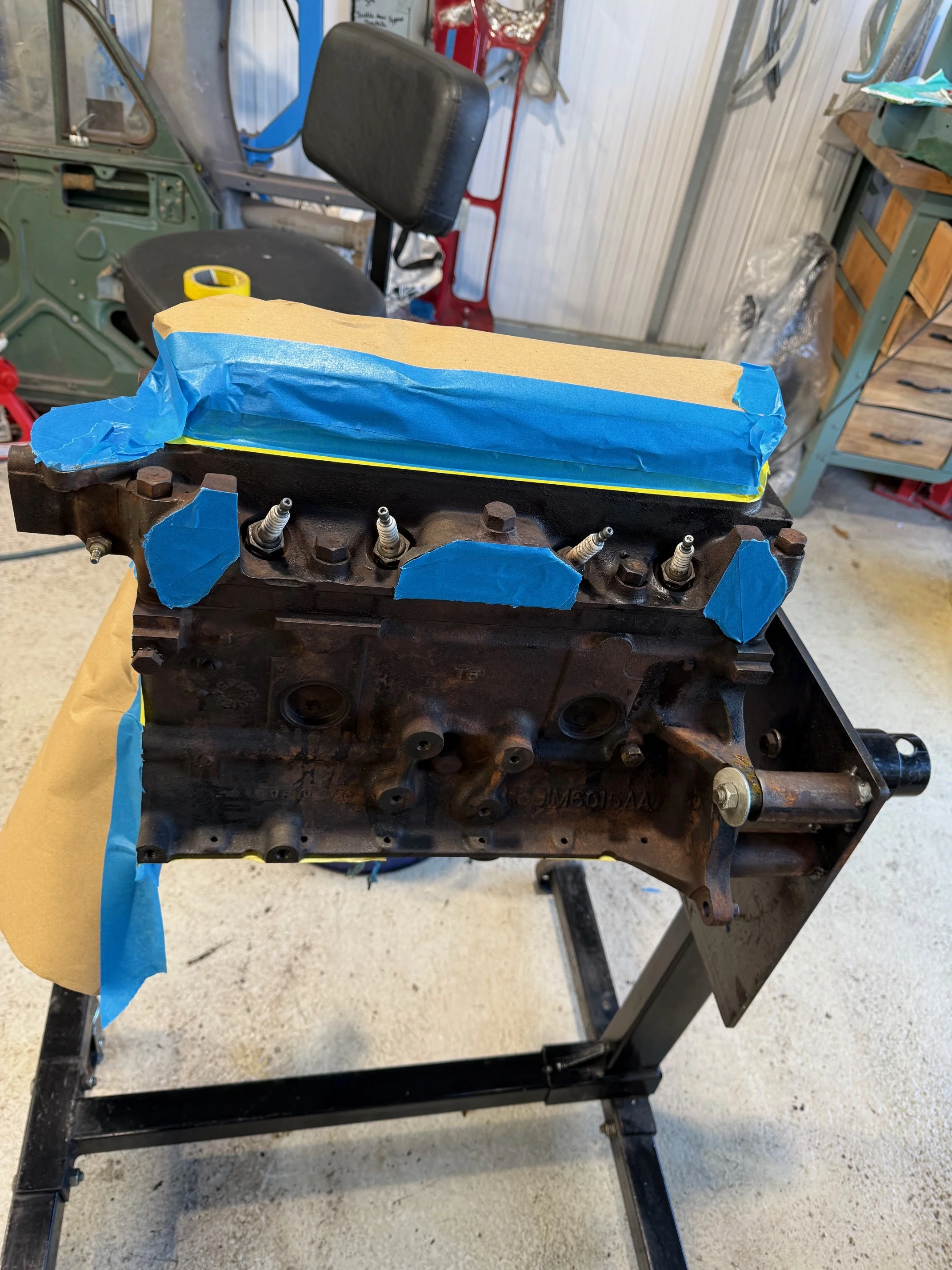
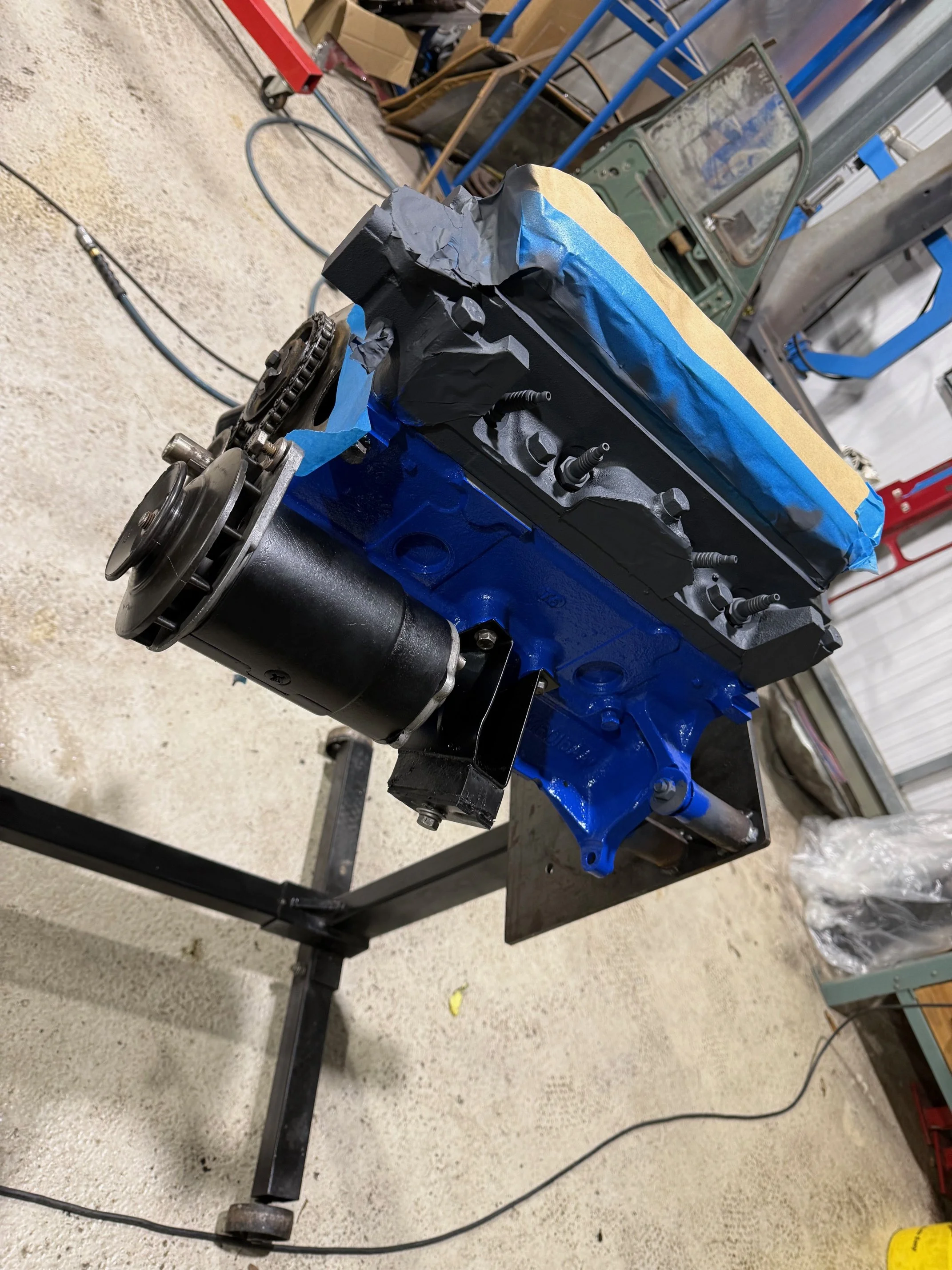
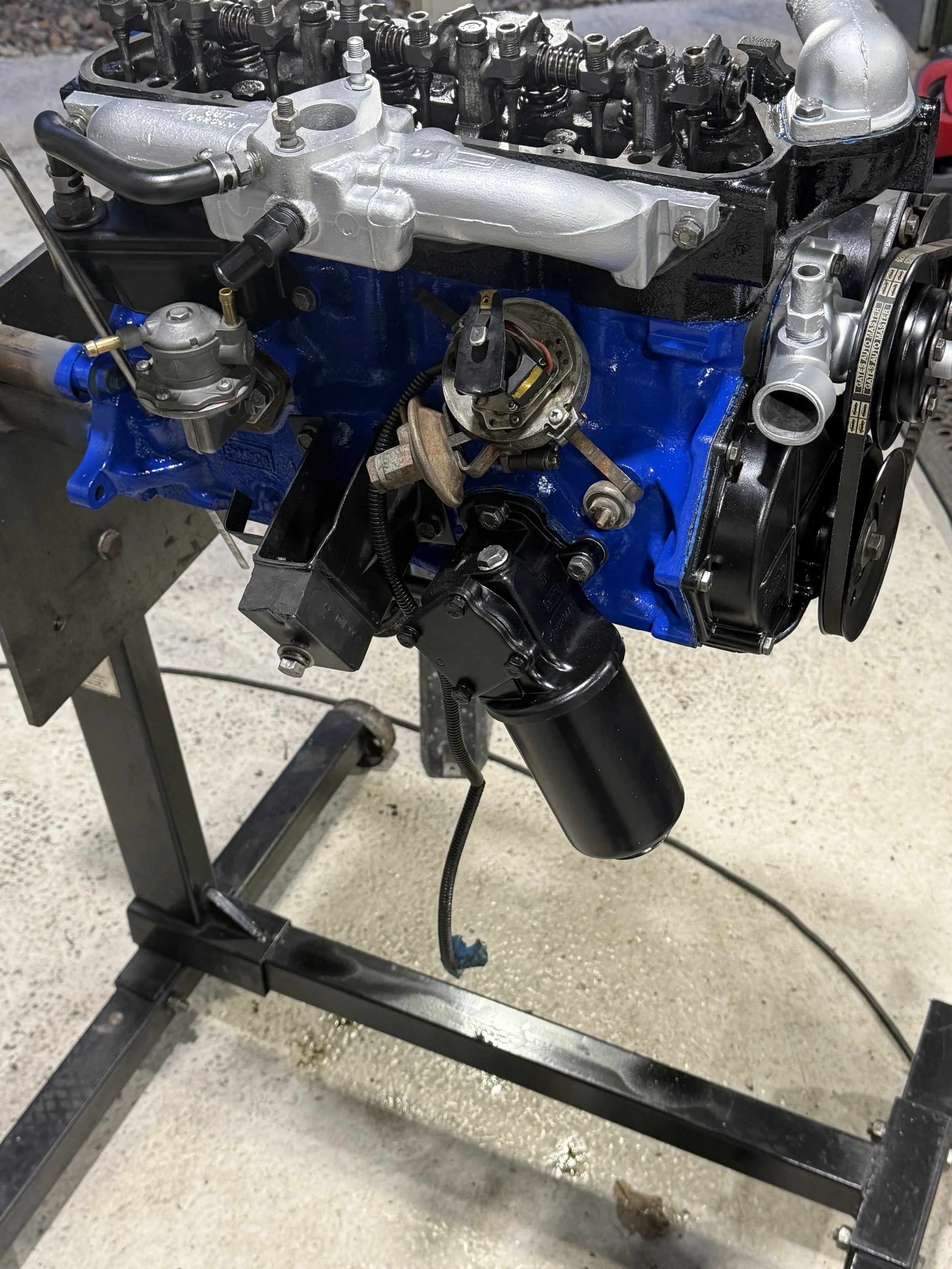
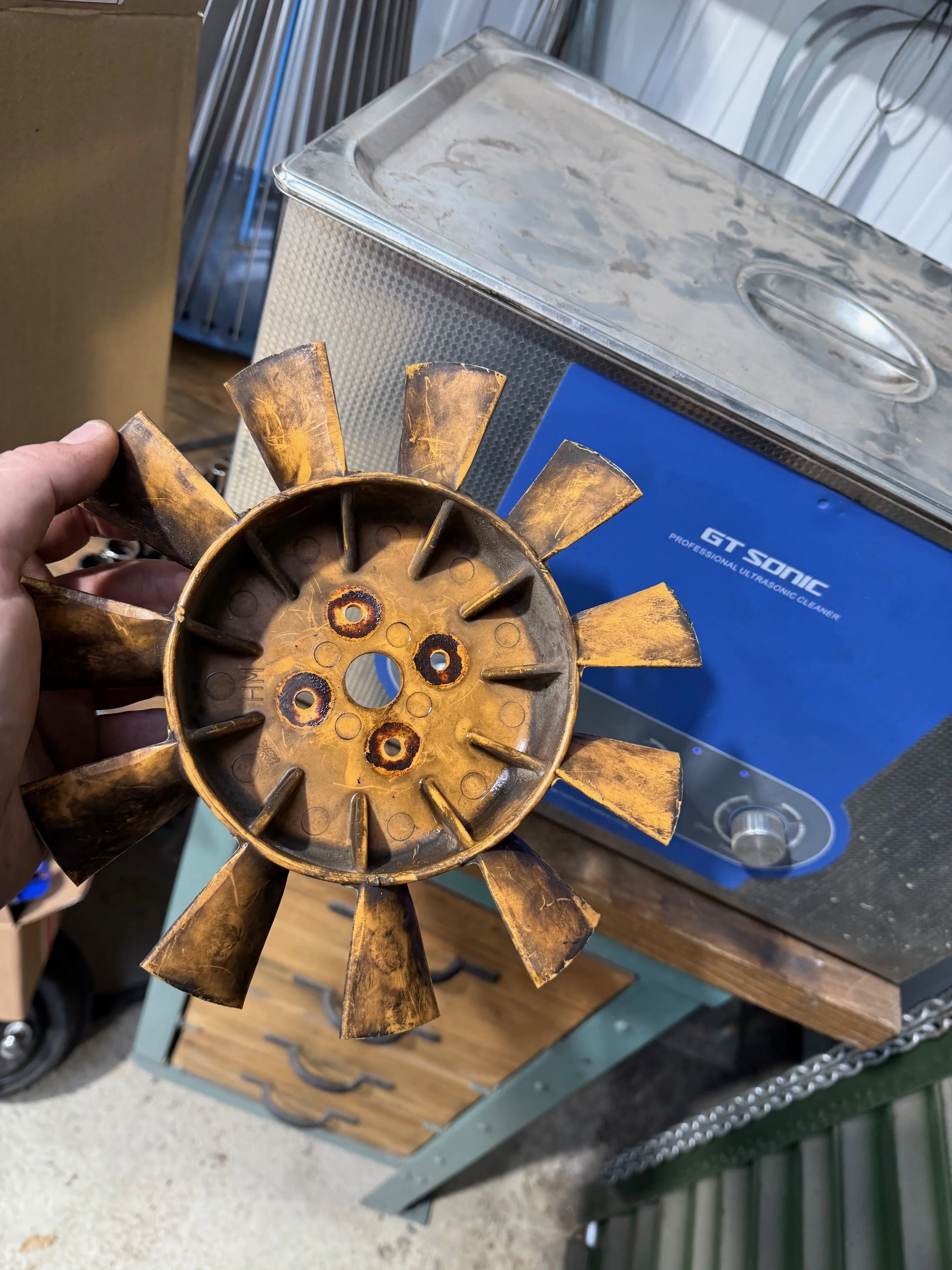
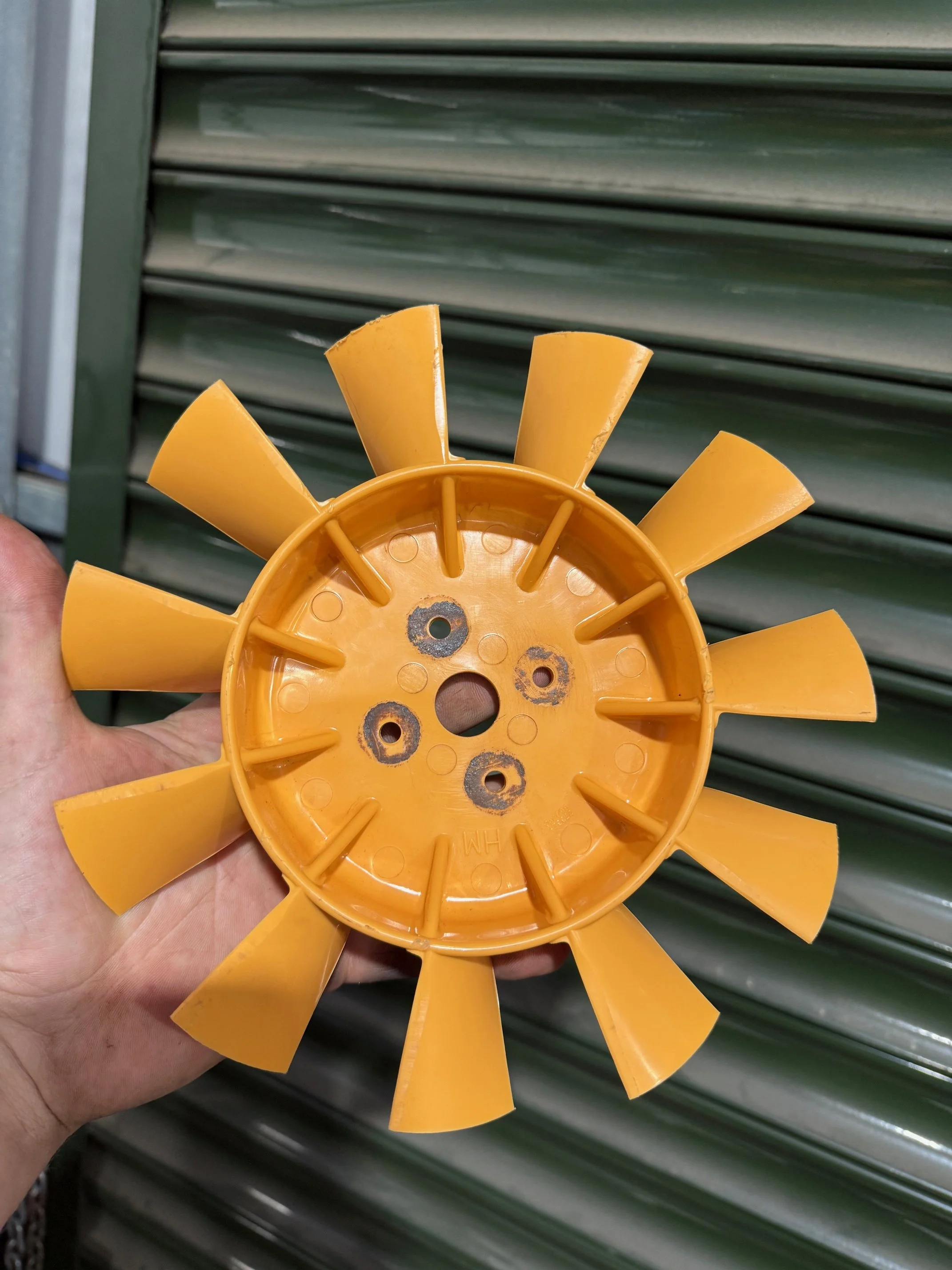
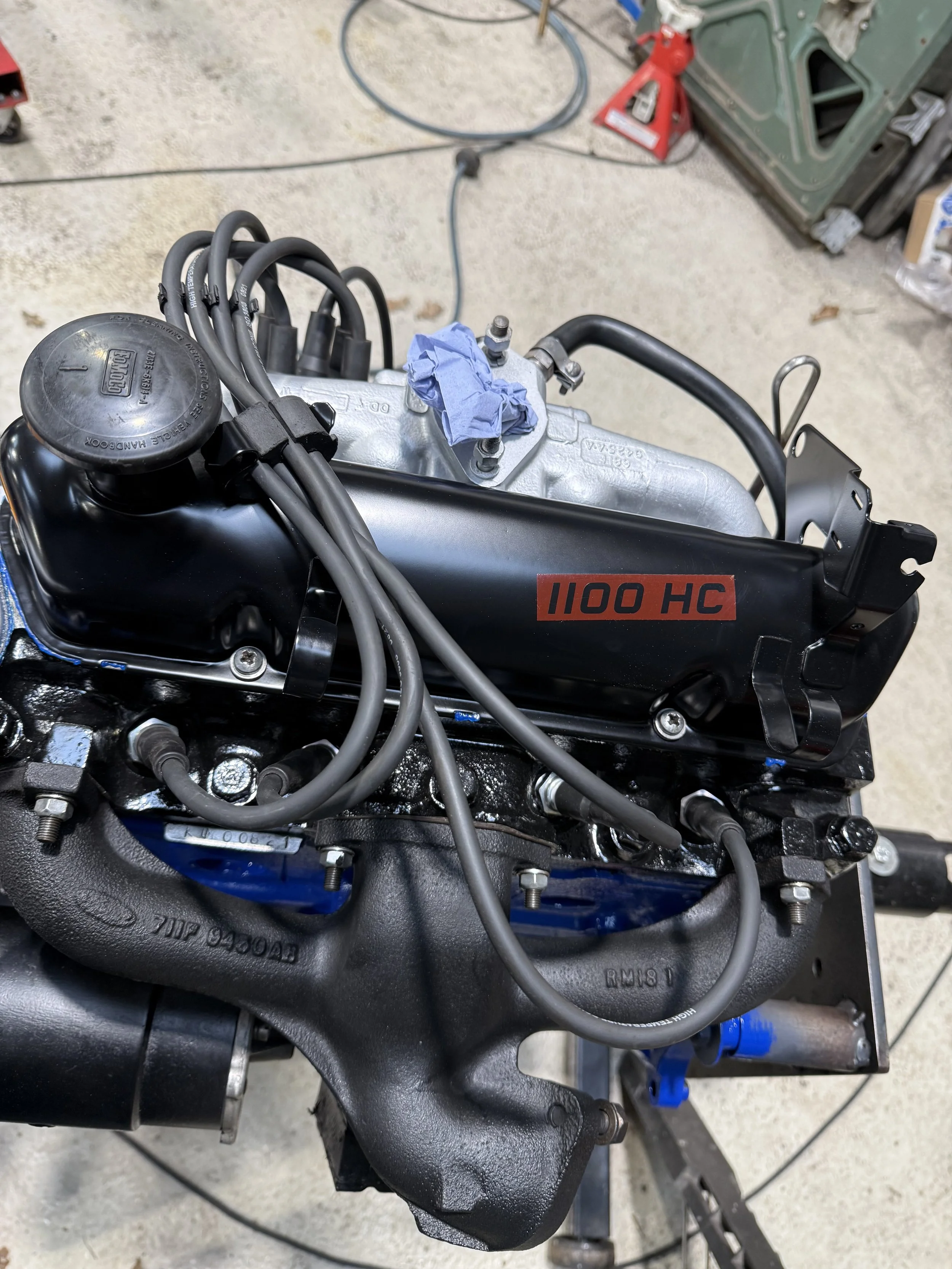
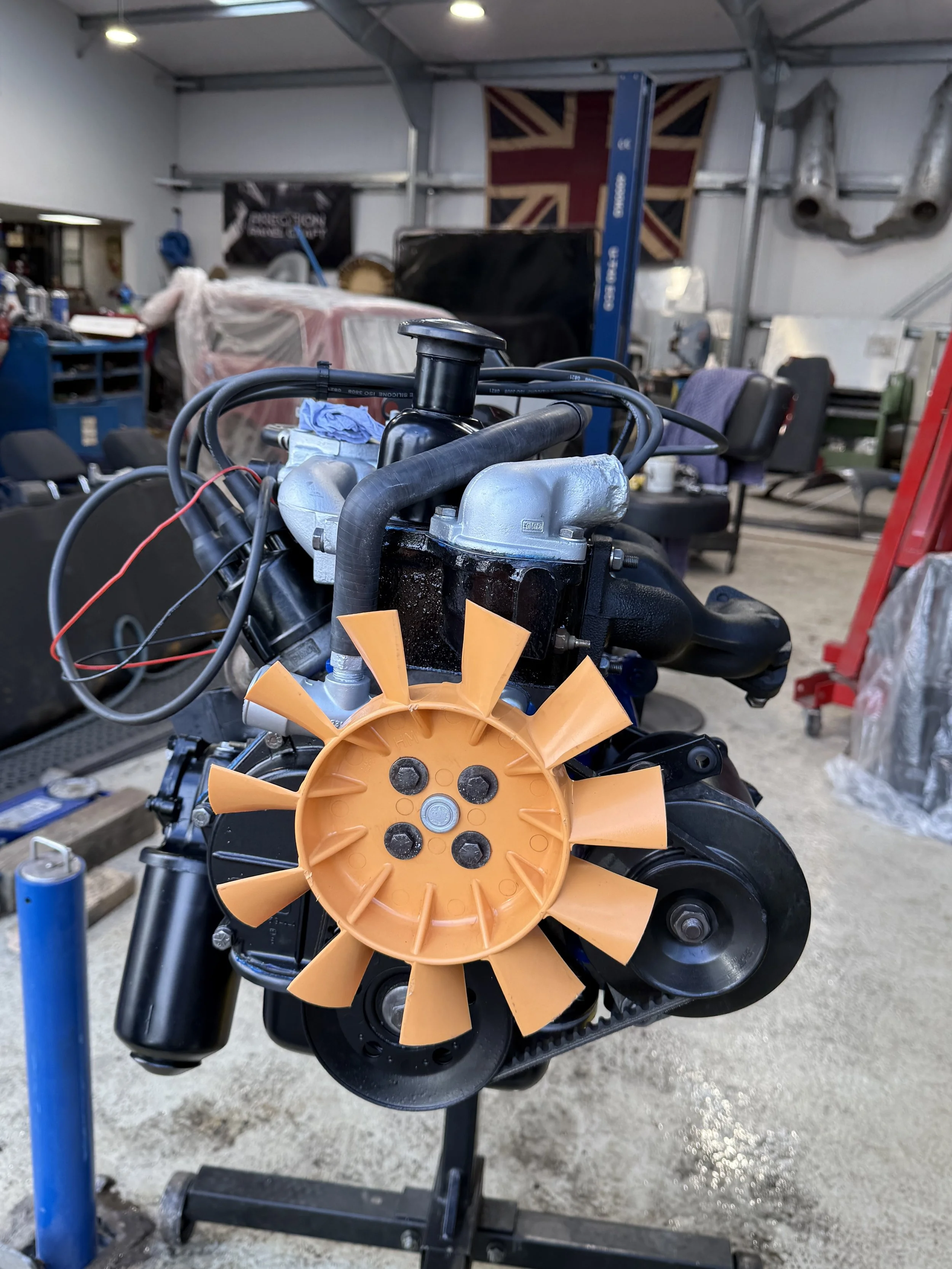
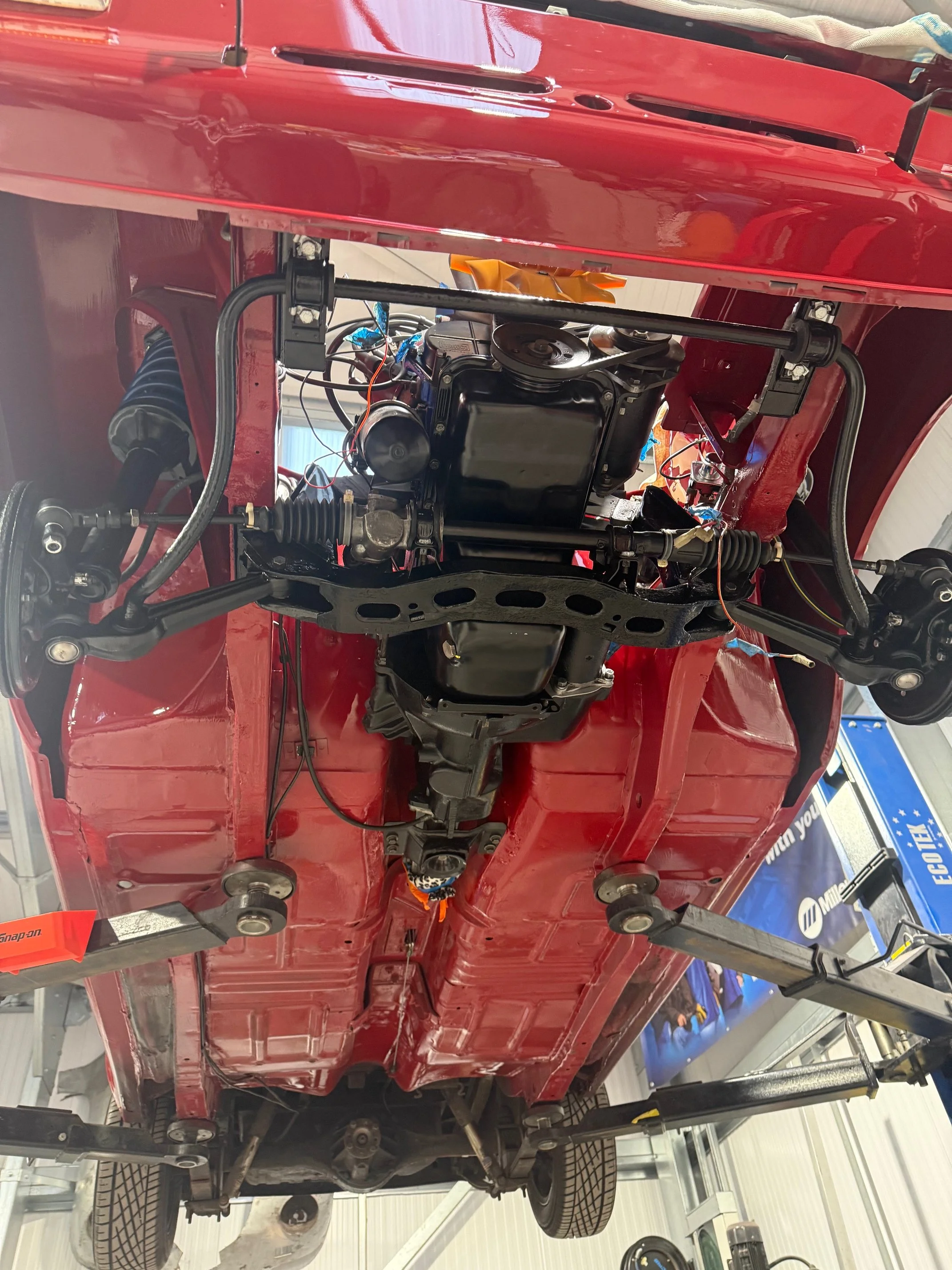
Both the original engine and gearbox were retained, carefully cleaned and fitted with new gaskets where required.
The original carburettor was subsequently tuned by John Wood of John Wood Race Engines, with the Escort producing a respectable 34 bhp at the wheels during its rolling road session.
A period-correct battery was supplied by Lincoln Batteries, complementing the attention to originality throughout the engine bay.
The only notable departures from the original factory specification are a subtle reduction in ride height of approximately one and a half inches and the fitment of period-style alloy wheels. Both the original wheels and suspension springs have been retained, allowing the vehicle to be returned to its original specification should we wish to do so in the future.
The Finished Vehicle
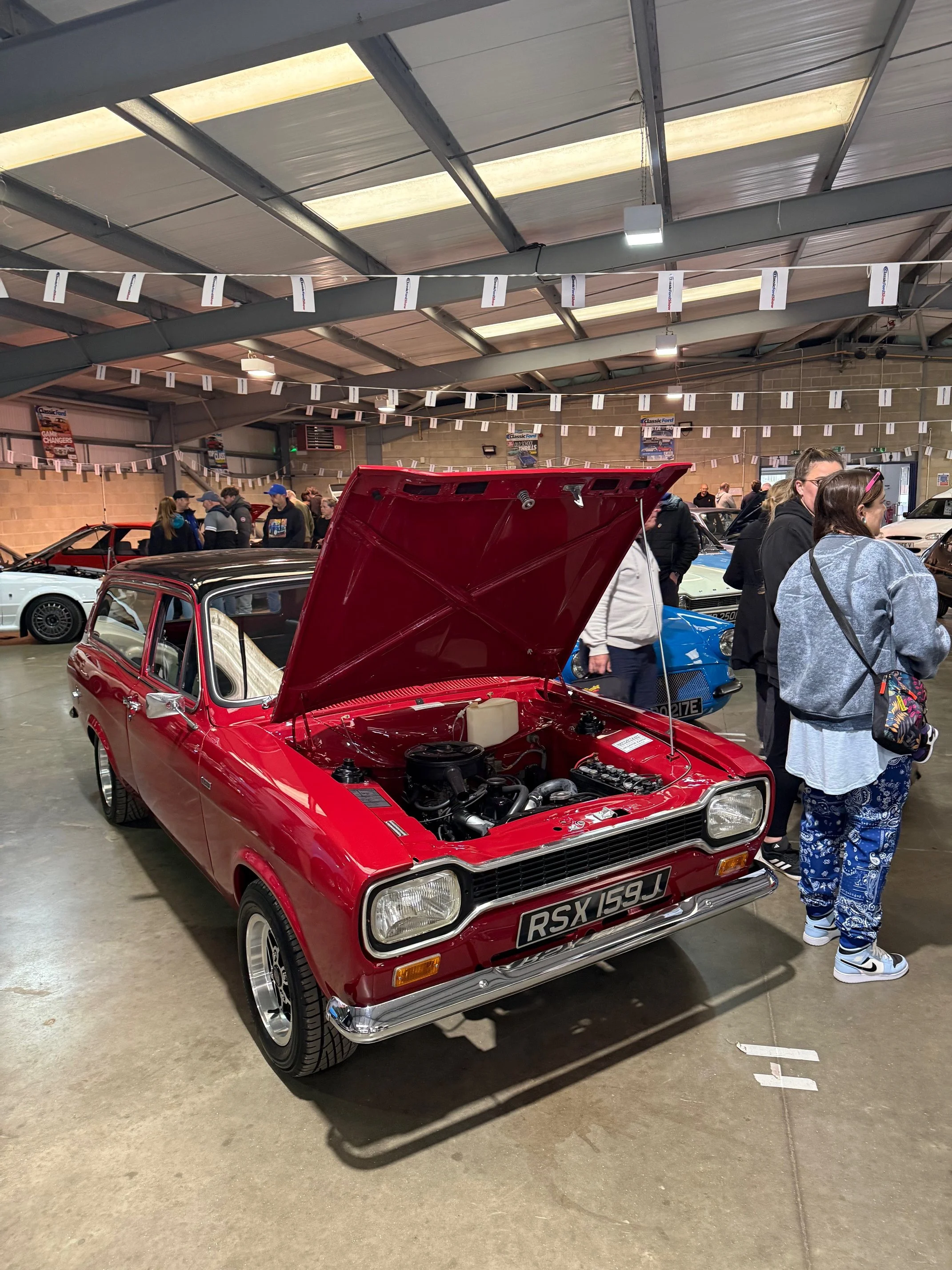
Following the completion of the restoration, the Escort made its public show debut at the Classic Ford Show, held at the South of England Showground in Ardingly, West Sussex, on Sunday 10th May 2026.
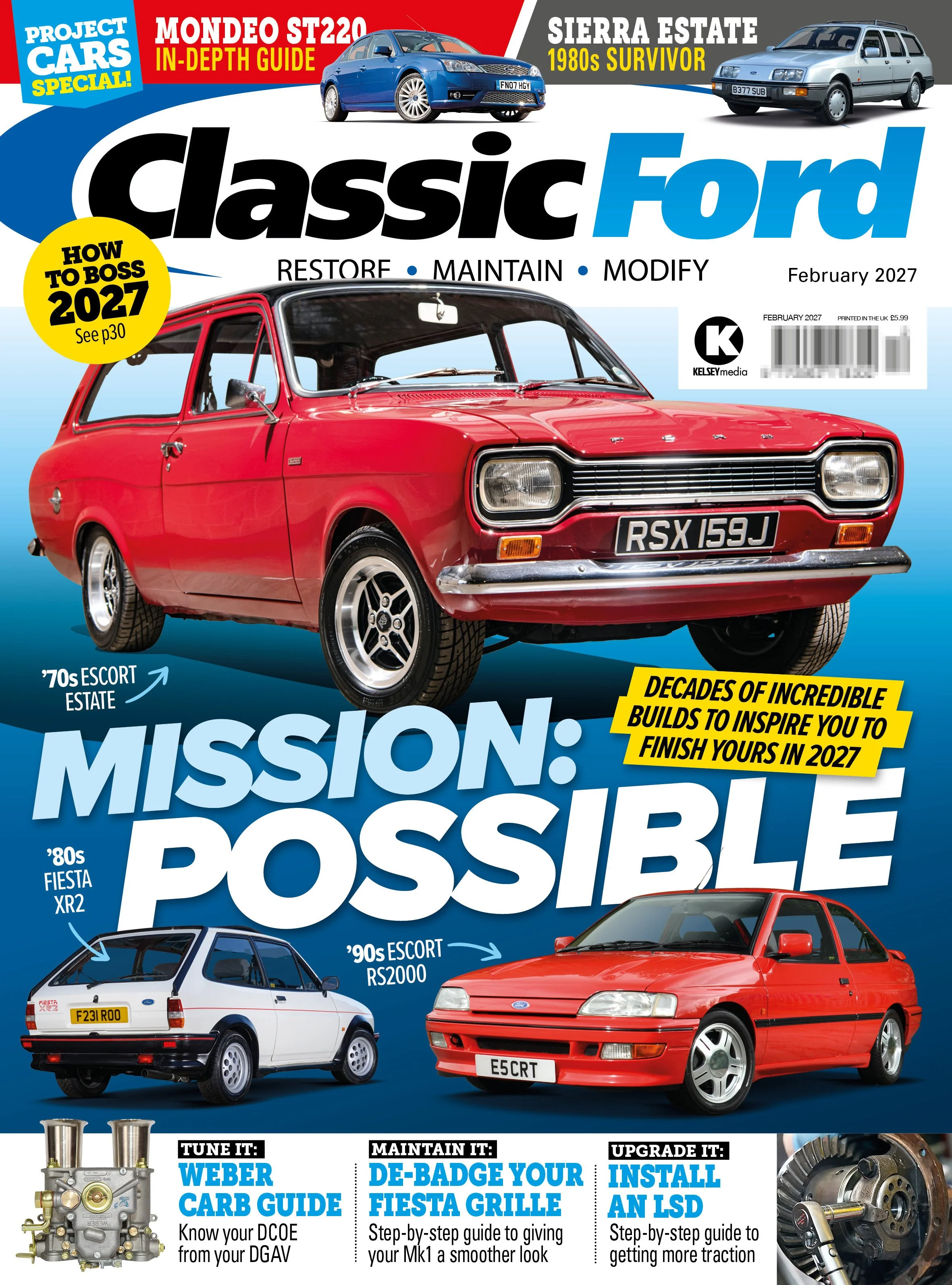
We are also incredibly proud that the Escort has been selected to feature on the front cover of Classic Ford magazine, with the accompanying article due to be available in stores from Friday 18th December 2026.
For a vehicle that began its life within our family as a Christmas present, to subsequently become a front-cover feature in one of the country’s most recognised classic Ford publications is a particularly rewarding achievement.
This restoration represents everything we believe in at Precision Panel Craft – preservation over unnecessary replacement, craftsmanship without compromise and an appreciation for even the smallest of details.
Not every restoration needs to result in a vehicle that is better than it left the factory. Sometimes, the greatest achievement is preserving the very details that made it what it was in the first place.
With thanks to Painting Classic Cars, Escort Tec, Jon Wood, Classic Ford Magazine, Turbo Breakers.